
Preserve the exposure decision
Do not release the bat until public health advises whether testing is needed. Arrange safe capture through trained help; do not use bare hands.
Find the local decision-maker
In the United States, use the Association of Fish & Wildlife Agencies’ state directory to reach your wildlife agency. Ask about the species, occupied nests, dependent young, allowed methods and the operator’s authorization. Elsewhere, use the regional authority routes. Do not assume another region’s rules apply.
Maryland, United States: bat-roost help
Maryland DNR recommends exclusion from September 1 to March 1 only when bats are not hibernating in the building. Flightless pups and protected species need particular care. During March 1–August 31, DNR’s guidance requires exemption paperwork when there are 10 or more bats, a rare/threatened/endangered species, or pups. Ask DNR how these conditions apply before arranging work; a date alone is not permission.
Read the current DNR bat guidance. If its website will not open, the DNR nuisance-wildlife service lists 1-877-463-6497 from Maryland numbers, or 410-349-8055 from other numbers, and a licensed-cooperator directory. These are wildlife-information contacts, not emergency medical services.
For possible human contact, use the Maryland local health-department directory promptly; for pet contact, call a veterinarian. Preserve the exposure/testing decision before releasing a bat.
Record your locality, the authority contacted, advice date, species/young assessment, permitted timing, entry repairs, cleanup scope and follow-up in your notebook. Download the blank wildlife handoff sheet for a professional.
Maryland sources checked 18 October 2026. This is a regional example, not nationwide legal advice or a guarantee of current permission.
Recognize the signs
- Do not handle for identification
- Observe from a distance. A tiny bite can be difficult to notice, and appearance cannot establish whether a bat carries rabies.
- One bat or a roost
- Repeated dusk exits from one opening suggest a roost; a single indoor bat does not establish its size or species.
Look more closely
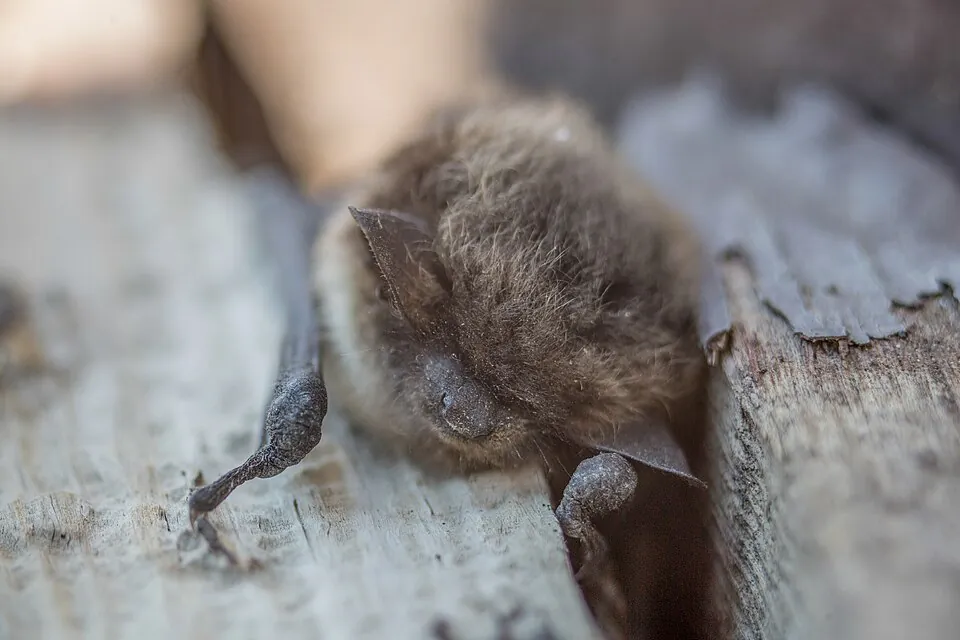
Compare the labeled examples and their limits. Images are independently enlarged, not shown at a common scale.
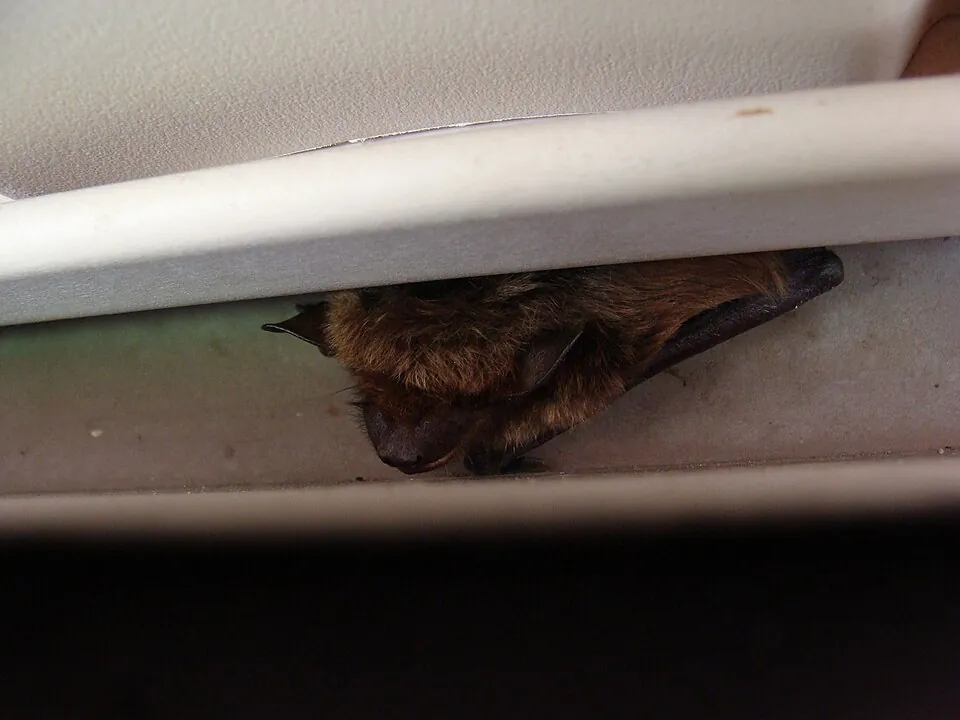
Identification limits & photo credit
The source identifies a little brown bat, but a resting bat in a crevice cannot reliably be identified to species from this view. No photo determines rabies status or whether a human exposure occurred. Do not approach or disturb a roost to obtain this view.
Little brown bat in a house eave in Pennsylvania. Photo: Bearerofthecup. Public domain (copyright-holder dedication). Original source · Public domain (copyright-holder dedication) & details
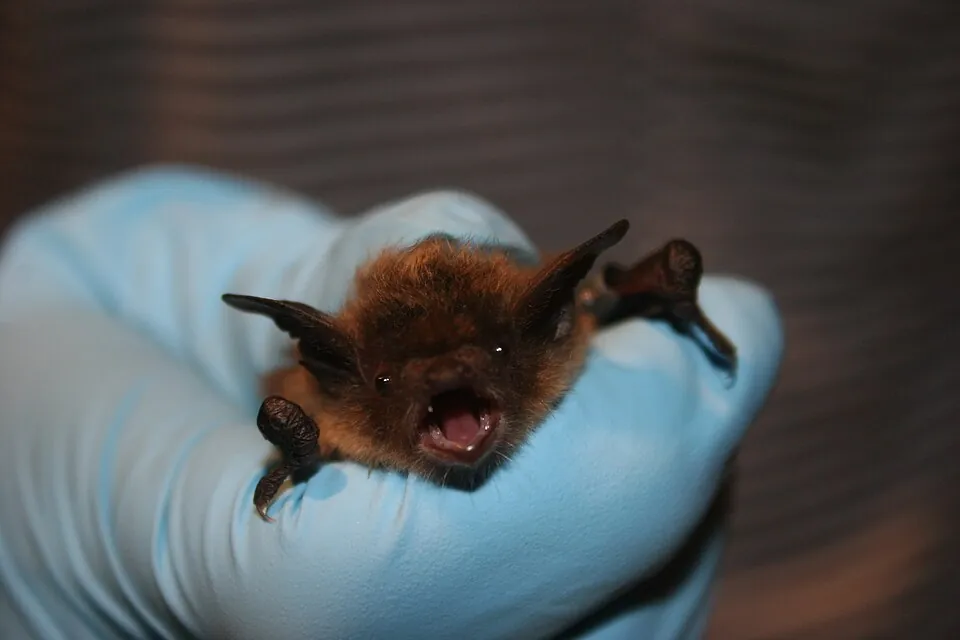
Identification limits & photo credit
A documented research-handling scene with gloves, not a handling instruction for residents. One species only; no photograph determines disease status or replaces exposure advice.
Little brown bat held by a USFWS biologist. Photo: Ann Froschauer / U.S. Fish and Wildlife Service. CC BY 2.0. Use does not imply government agency endorsement. Original source · CC BY 2.0 & details
Sources for this section
Differences that change the decision
A similar-looking organism can need a different response. Compare the evidence and what it changes.
Compare every column. On a narrow screen, scroll the table sideways.
| Type | What to check | What changes |
|---|---|---|
| Building-roosting bats | Several species use roof spaces and wall gaps; identification may require a specialist. | Plan exclusion around the actual colony and local protection. |
| Maternity colonies | Adults may leave while flightless pups remain. | Never infer an empty roost from adults flying out. |
| Overwintering bats | Some species can remain in buildings during cold weather. | A quiet roost may still be occupied; do not seal on a calendar assumption. |
Sources for this section
What else could it be?
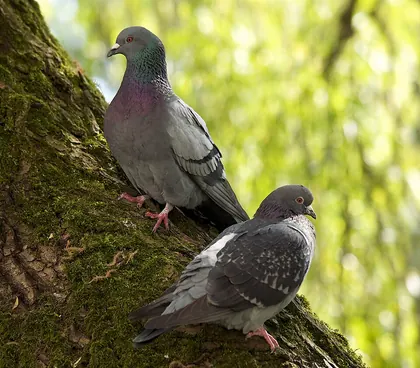
Chimney swifts or other birds
Birds can make chittering sounds and emerge from chimneys.
Compare birds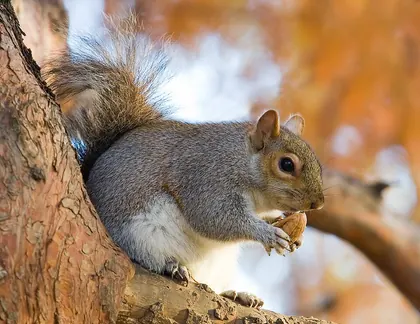
Sources for this section
Inspect the right places
Assess possible contact immediately
Keep people and pets away and contact local public health for bites, scratches or a situation where contact cannot be reliably ruled out, such as a bat found with a sleeping person or unattended child.
Observe the outside
From the ground, note entry gaps, staining and dusk exits for a qualified exclusion professional. Avoid disturbing guano.
Sources for this section
Centers for Disease Control and Prevention · Maryland Department of Natural Resources
Choose a proportionate response
For pesticides, the local product label determines the allowed pest, site, precautions and timing. Check safety and regional guidance.
Preserve the exposure decision
Do not release the bat until public health advises whether testing is needed. Arrange safe capture through trained help; do not use bare hands.
Commission a lawful roost plan
Ask about species, dependent young, hibernation, permits and confirmation that all bats can leave before permanent repairs.
Separate exclusion and cleanup
Have contamination and access assessed. A bat house may provide habitat but does not by itself remove bats from a building.
Write the handoff and follow-up scope
Record locality, species uncertainty, observed exits and dates. Ask the authority or operator to document the young/hibernation assessment, lawful timing, confirmation of departure, permanent repairs, ventilation, contamination work and return visits. Save these answers with dated observations; a low removal price may omit repairs or cleanup.
Avoid these mistakes
- Do not poison, fumigate or use glue traps on bats.
- Do not block the active entrance after watching only one exit.
- Do not wait for illness before seeking advice after possible exposure.
Sources for this section
Check whether it is working
Exposure advice is prompt. Exclusion observation and timing must follow the local species and qualified plan; Maryland's calendar is not global.
Verified departure, intact repairs and no renewed entry support success. Silence alone is insufficient.
Get help when…
- Any possible human exposure: local public health or urgent medical advice.
- Any possible pet exposure: veterinarian.
- Occupied roost, protected species or guano: trained local wildlife and cleanup help.
Sources for this section
Centers for Disease Control and Prevention · Maryland Department of Natural Resources
Prevent a return
- Maintain screens, vents and chimney protection after occupancy is resolved.
- Inspect roof and service gaps during routine maintenance.
- Check local bat protection before renovation.
Sources for this section
Common questions
Should I release a bat immediately?
Only after exposure concerns have been assessed. Releasing an involved bat can remove the opportunity for testing.
Can I use the same exclusion month everywhere?
No. Breeding, hibernation and legal requirements differ by species and region.
Sources for this section
Centers for Disease Control and Prevention · Maryland Department of Natural Resources
Sources & scope
References retain their geography and dates. A source-check date is not a claim of independent specialist review.
- Preventing Rabies from Bats
Centers for Disease Control and Prevention. United States; source date 2025-07-01; source check, not expert review Checked 2026-10-15.
- Bats in Houses
Maryland Department of Natural Resources. Maryland, US; local exclusion timing and permissions; source check, not expert review Checked 2026-10-18.
- Nuisance Wildlife: advice and licensed cooperators
Maryland Department of Natural Resources. Maryland, United States; contact and operator gateway, not individualized permission Checked 2026-10-18.
Individual medical or veterinary diagnosis, structural assessment, uncertain species identification and local treatment permissions require the appropriate professional. About our editorial process.
Keep investigating
Birds
Confirm which bird is using the site and whether eggs, chicks or dependent young are present.
Squirrels
Observe whether the animal uses trees, roof openings or ground burrows.
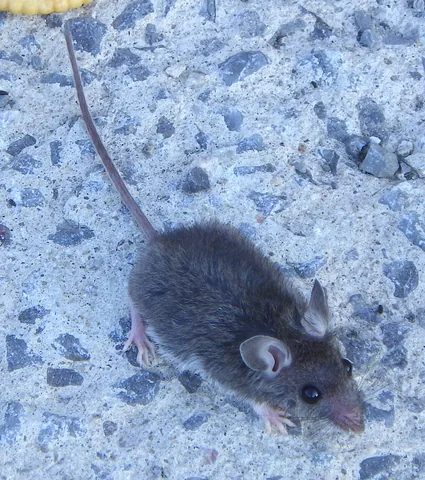
Mice
Confirm fresh mouse activity, protect food and plan exclusion with trapping.