
The specimen photographs in linked guides show selected examples, not every life stage, species or angle. Use the written differences, the source and a qualified identification when uncertainty matters.
Pantry moths, beetles and weevils
Photographed examples, independently enlarged. These are not at a common scale; inspect the named species and image limits.
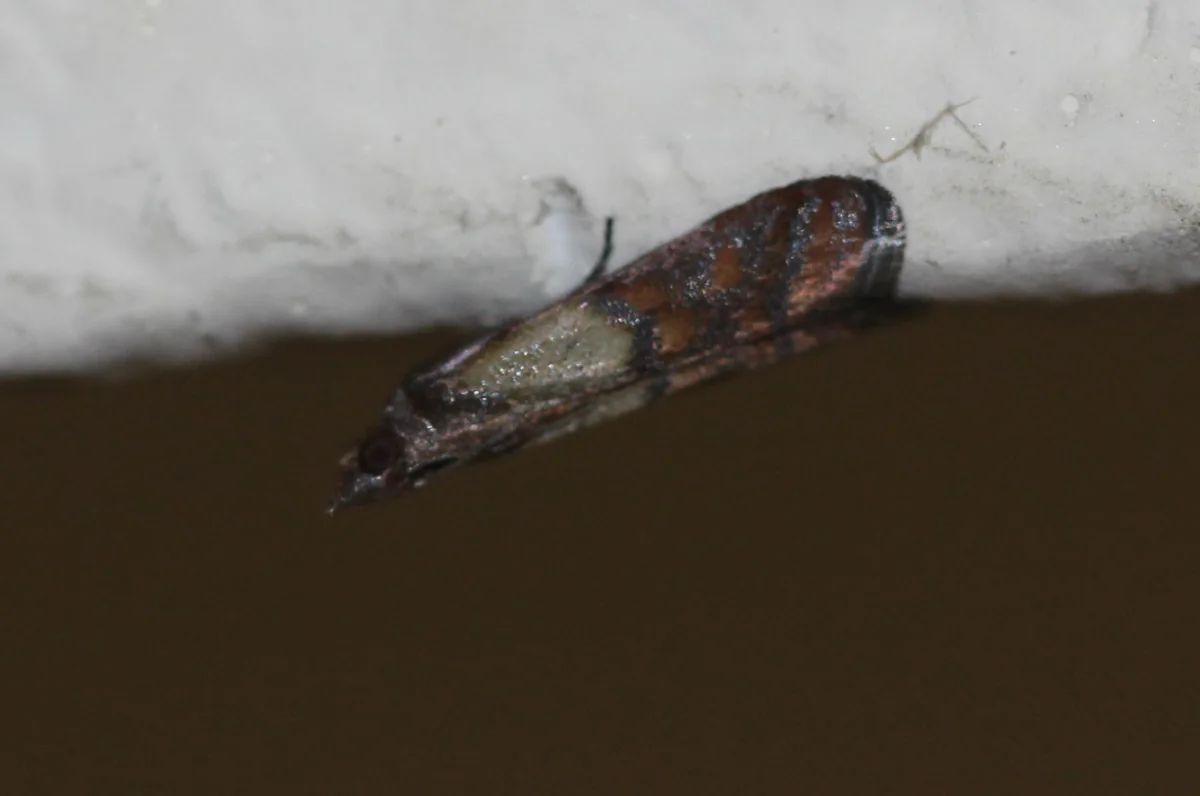
Check the two-tone forewing and inspect food for silk or larvae. An adult elsewhere does not locate the source.
Identification limits & photo credit
A single adult with folded wings. Lighting changes apparent color; confirm two-toned forewings and inspect stored food for larvae and webbing.
Indianmeal moth at rest on a surface. Photo: Fvukajlovic. CC BY 4.0. Original source · CC BY 4.0 & details
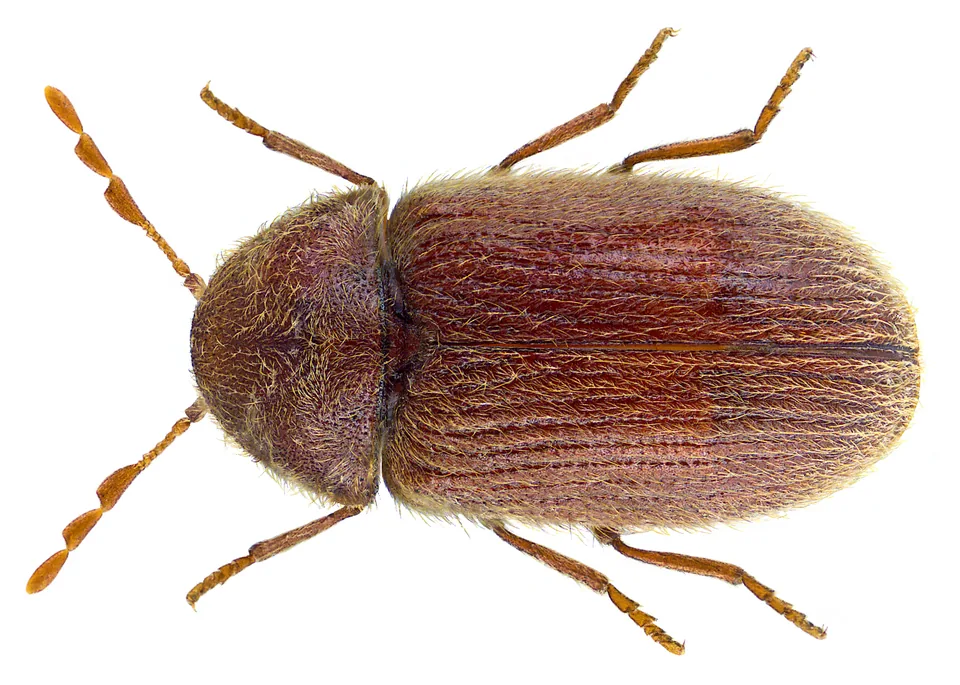
Check the lined wing covers and enlarged end segments of the antenna. Fine characters need magnification.
Identification limits & photo credit
One magnified stored-product beetle. The longitudinal wing-cover rows and clubbed antennae are fine characters; inspect suspect products and distinguish cigarette beetles or furniture beetles before choosing action.
Drugstore beetle, dorsal specimen view. Photo: Udo Schmidt from Deutschland. CC BY-SA 2.0. Original source · CC BY-SA 2.0 & details
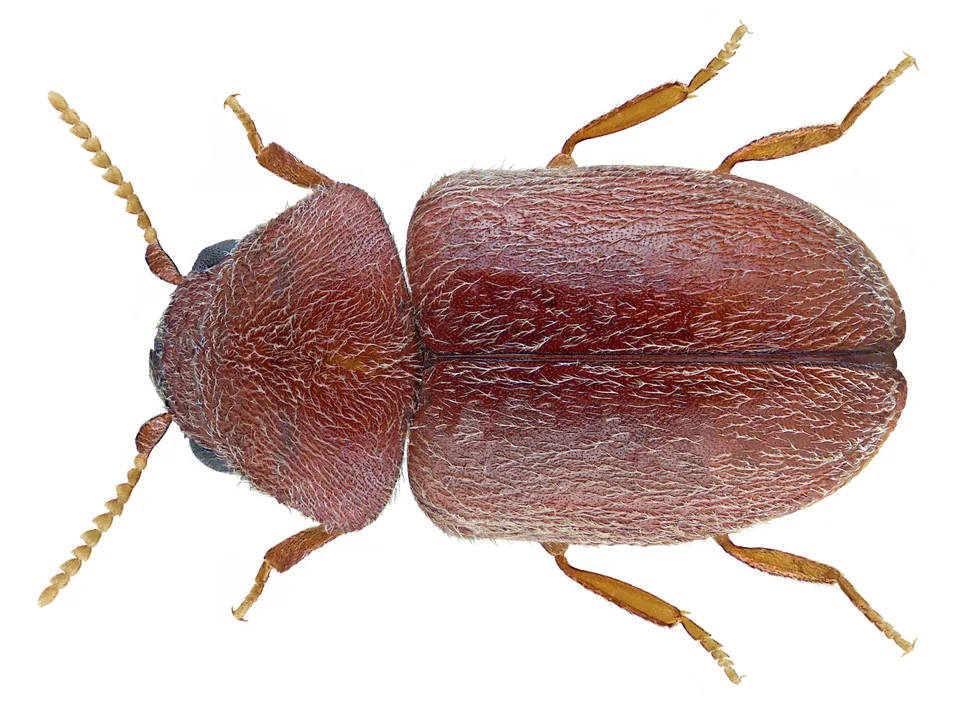
Compare the smoother wing covers and sawlike antenna with the drugstore beetle. Brown colour alone is not enough.
Identification limits & photo credit
One magnified adult. Fine serrated antennae and wing-cover texture help separate it from the drugstore beetle; overall brown color and a rounded outline alone are insufficient.
Cigarette beetle, dorsal specimen view. Photo: Udo Schmidt from Deutschland. CC BY-SA 2.0. Original source · CC BY-SA 2.0 & details
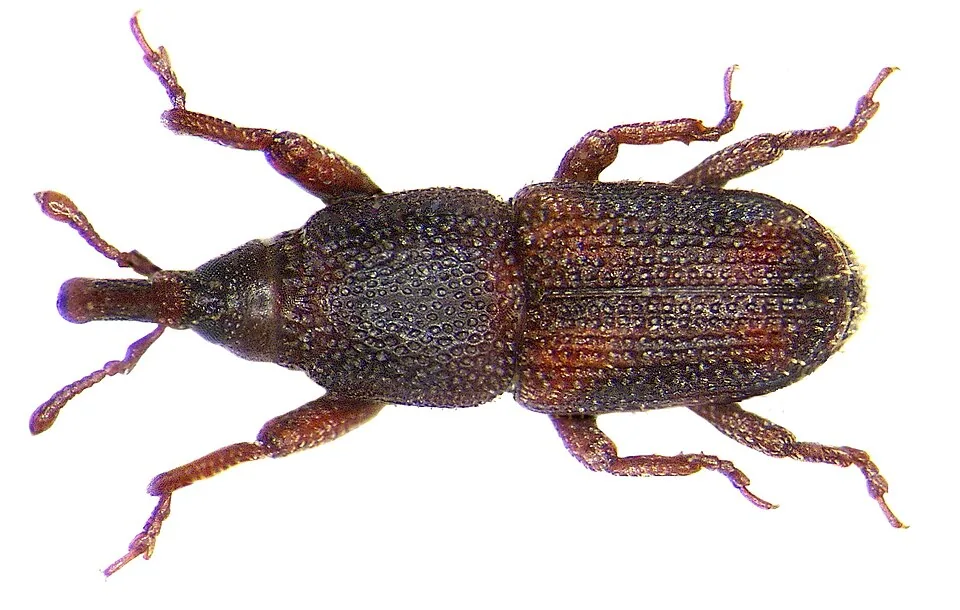
Look for the projecting snout; inspect whole grain for concealed stages and exit holes.
Identification limits & photo credit
One preserved snouted grain weevil. Rice and maize weevils are very similar and need fine characters for reliable separation. Inspect grains; the photograph does not identify all pantry beetles.
Rice weevil, dorsal specimen view. Photo: Udo Schmidt from Deutschland. CC BY-SA 2.0. Original source · CC BY-SA 2.0 & details
Moths
Indianmeal moth adults commonly have a two-tone forewing. Their larvae may leave silk in food and wander away to pupate. A moth resting far from a cupboard does not locate its source.
Beetles & weevils
Beetles have hardened forewings. A projecting snout supports some grain weevils; drugstore and cigarette beetles require closer antenna and wing-cover inspection. A tiny brown shape does not establish a species.
Primary references: University of California Statewide IPM Program · University of Minnesota Extension. Checked 15 October 2026; source jurisdictions apply.
Clothes moths or carpet beetles?
Photographed examples, independently enlarged. These are not at a common scale; inspect the named species and image limits.
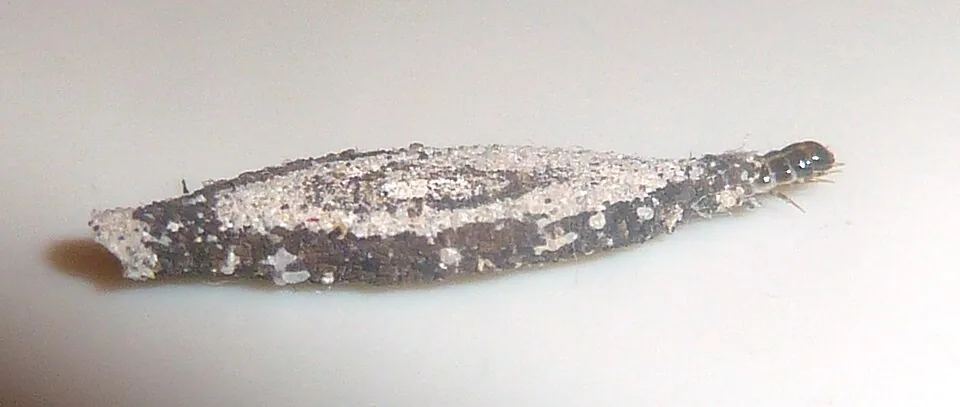
The portable case and caterpillar are different from a bristly carpet-beetle larva. Confirm the fabric or food source.
Identification limits & photo credit
A larva photographed in Pretoria, South Africa. Fibers affect the case color; other case-bearing insects differ. A photograph alone does not establish the source of fabric damage.
Case-bearing clothes moth larva with its case. Photo: JMK. CC BY-SA 4.0. Original source · CC BY-SA 4.0 & details
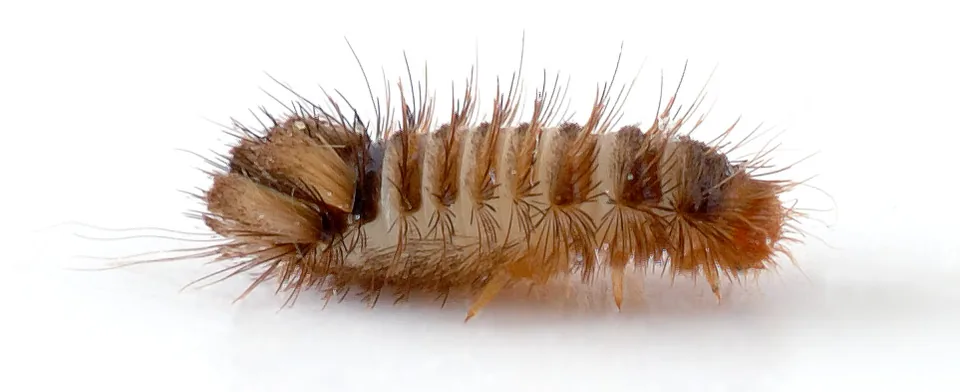
Bristles and shed larval skins matter. The larva, rather than the adult beetle, damages susceptible fabrics.
Identification limits & photo credit
Magnified hairy larva. Other dermestid larvae vary, and this specimen does not identify a skin reaction. Bed bugs are flattened insects with a different outline; retain a specimen when uncertain.
Varied carpet beetle larva, side view. Photo: André Karwath aka Aka. CC BY-SA 2.5. Original source · CC BY-SA 2.5 & details
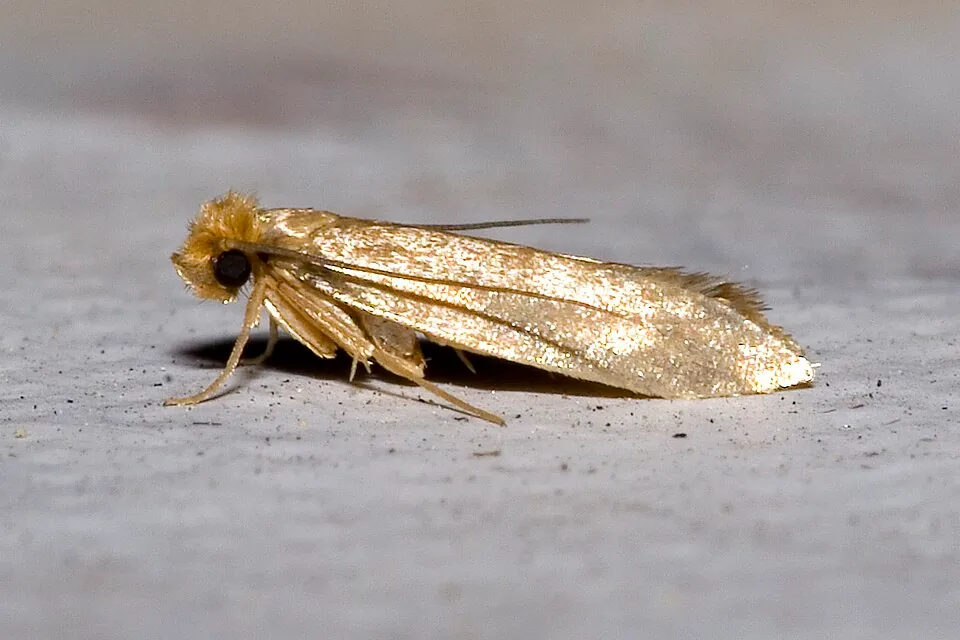
An adult example. Look in undisturbed susceptible textiles for the feeding larvae and silk.
Identification limits & photo credit
One adult moth with folded wings. Confirm larval activity in susceptible fabric; an adult alone does not prove fabric damage, and lighting affects apparent buff coloration.
Webbing clothes moth at rest. Photo: Olaf Leillinger. CC BY-SA 2.5. Original source · CC BY-SA 2.5 & details
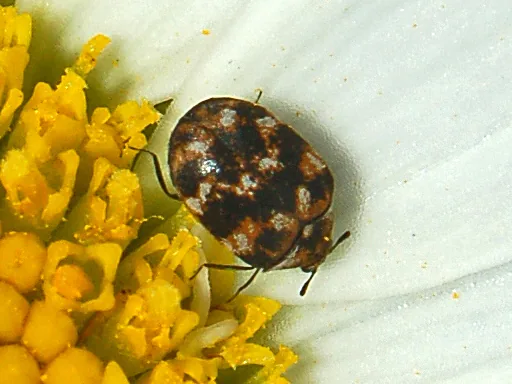
This patterned adult may visit flowers or windows. It does not by itself establish fabric damage.
Identification limits & photo credit
An adult of one carpet beetle species. Adults often occur at flowers or windows; inspect for larvae and a food source before concluding that fabric is infested.
Adult varied carpet beetle on a flower. Photo: Hectonichus. CC BY-SA 3.0. Original source · CC BY-SA 3.0 & details
Moth larvae
A pale caterpillar with a dark head, silk or a portable case in a quiet fabric fold supports clothes moths. The adult moth is not the textile-feeding stage.
Beetle larvae
Bristly larvae and cast skins support carpet beetles. Adult beetles at a bright window may have come from outdoors and do not prove fabric damage.
Primary references: University of California Statewide IPM Program · University of California Statewide IPM Program. Checked 15 October 2026; source jurisdictions apply.
Bed bugs, fleas and ticks
Photographed examples, independently enlarged. These are not at a common scale; inspect the named species and image limits.
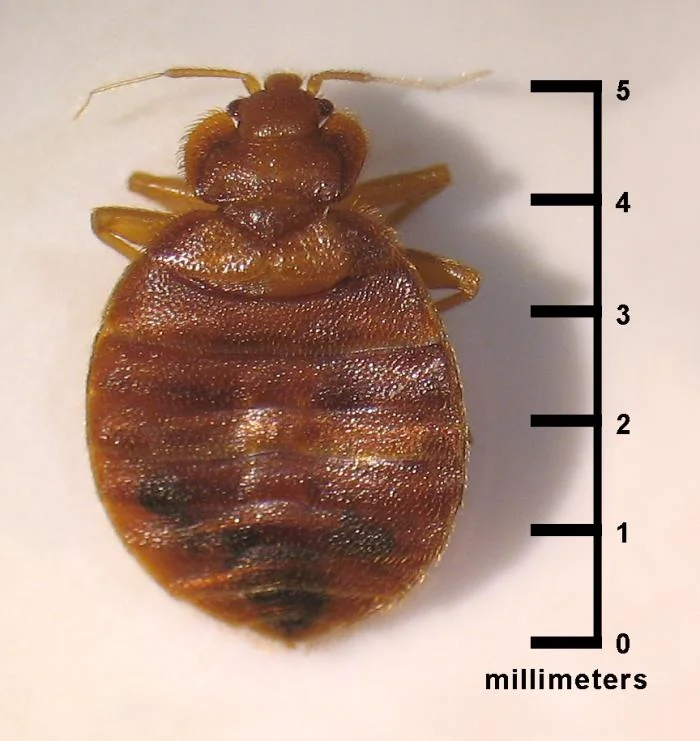
Identification limits & photo credit
Adult specimen only. Nymphs and recently fed bugs look different. The printed scale describes this specimen, not the image size on a screen. Bites alone cannot establish bed bugs.
Adult bed bug beside a millimeter scale. Photo: CDC / CDC-DPDx; Blaine Mathison. Public domain (U.S. government work). Source: CDC PHIL; original image available free from CDC. Use does not imply CDC, HHS, or U.S. Government endorsement. Original source · Public domain (U.S. government work) & details
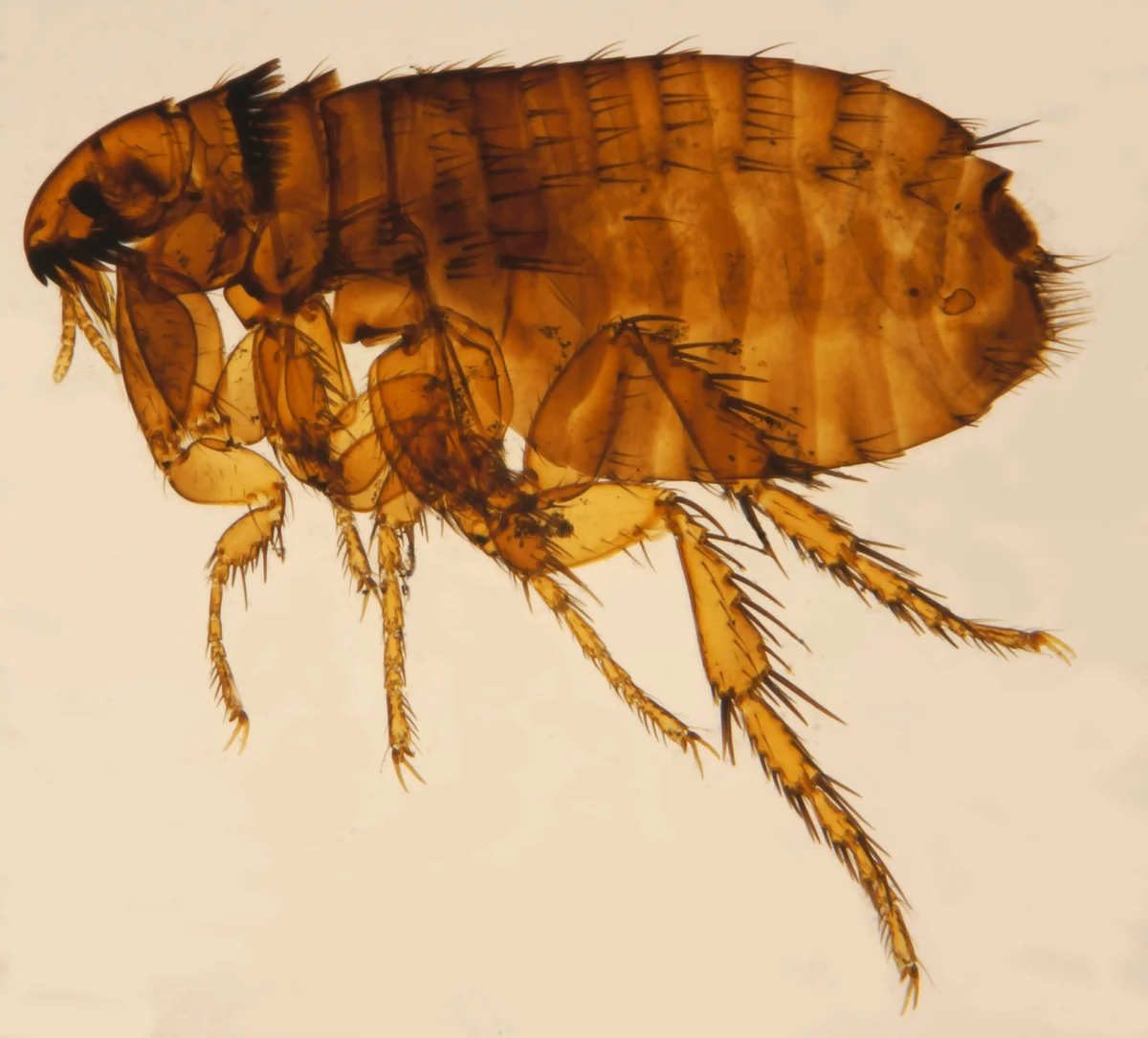
Identification limits & photo credit
Magnified preserved specimen in side view. Color and posture differ from a live flea. Flea species identification needs fine characters; this cannot diagnose an animal or a skin mark.
Female cat flea, preserved ZSM collection specimen. Photo: Katja ZSM. CC BY-SA 3.0. Original source · CC BY-SA 3.0 & details
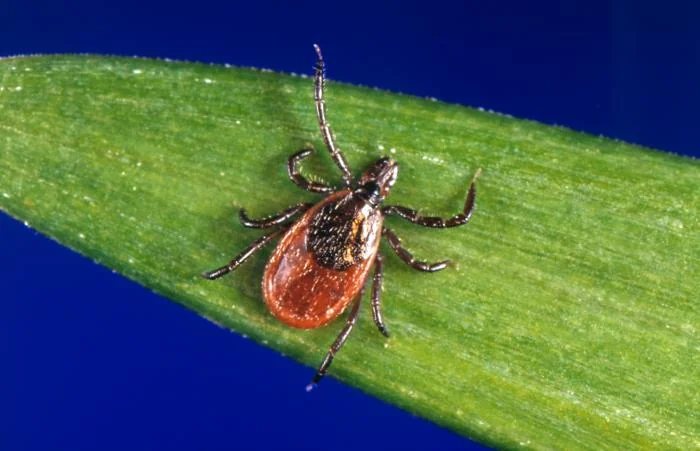
Identification limits & photo credit
One adult female; not a plate for all tick species or stages. Engorgement changes appearance. Do not infer infection or exposure risk from the image.
Adult female blacklegged tick on a leaf. Photo: Jim Gathany; CDC / Michael L. Levin. Public domain (U.S. government work). Source: CDC PHIL; original image available free from CDC. Use does not imply CDC, HHS, or U.S. Government endorsement. Original source · Public domain (U.S. government work) & details
Bristles and shed larval skins matter. The larva, rather than the adult beetle, damages susceptible fabrics.
Identification limits & photo credit
Magnified hairy larva. Other dermestid larvae vary, and this specimen does not identify a skin reaction. Bed bugs are flattened insects with a different outline; retain a specimen when uncertain.
Varied carpet beetle larva, side view. Photo: André Karwath aka Aka. CC BY-SA 2.5. Original source · CC BY-SA 2.5 & details
Bed bugs & fleas
Bed bugs have six legs and antennae; an unfed adult is broadly oval and flattened. Adult fleas are narrow from side to side and can jump. Small life stages and poor photos make these distinctions harder.
Ticks & other explanations
Nymphal and adult ticks have eight legs; tick larvae have six. Feeding changes a tick’s outline. A rash, the time of day or the spacing of skin marks cannot distinguish these pests or exclude a non-pest cause.
Primary references: University of California Statewide IPM Program · University of California Statewide IPM Program · Centers for Disease Control and Prevention · University of California Statewide IPM Program. Checked 15 October 2026; source jurisdictions apply.
Flying ants or termite swarmers?
Photographed examples, independently enlarged. These are not at a common scale; inspect the named species and image limits.
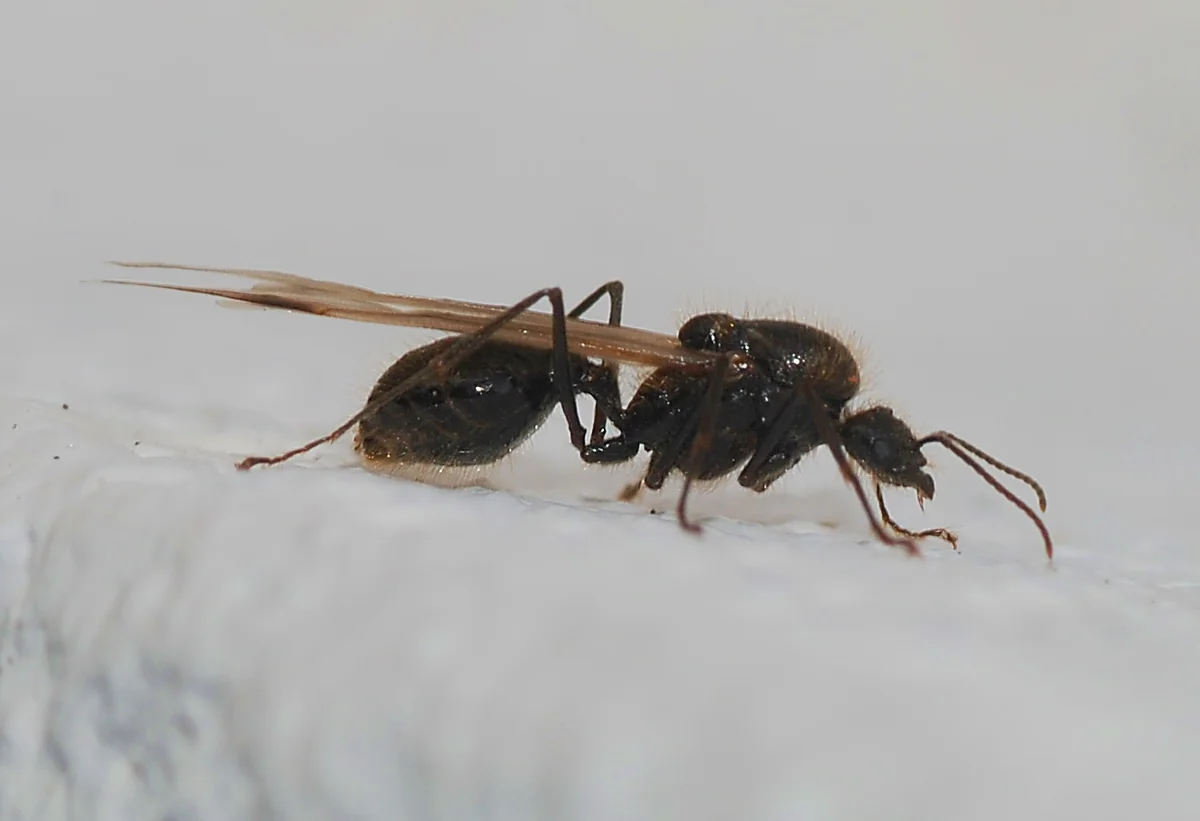
Identification limits & photo credit
A male ant with no species identification. Male antennae can look straighter than a worker or queen; do not use antenna angle alone to separate ants from termites.
Winged male ant during a swarm. Photo: Alvesgaspar. CC BY-SA 3.0. Original source · CC BY-SA 3.0 & details
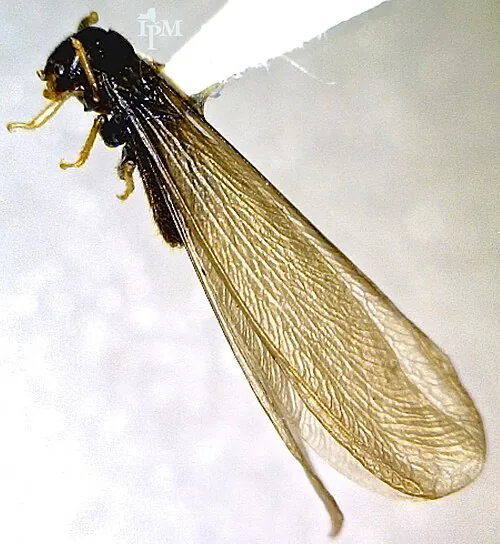
Identification limits & photo credit
The Cornell source identifies a winged termite without a species or collection location. This mounted specimen has overlapping wings and partly obscured body and antennae; it illustrates a swarmer's overall wing outline, not a complete waist, antenna or wing-count key. Do not infer a termite species, local distribution or infestation extent from it.
Mounted termite swarmer, species not specified. Photo: NY State IPM Program at Cornell University from New York, USA. CC BY 2.0. Original source · CC BY 2.0 & details
Ant swarmers
Ant workers and many female swarmers show a pinched waist and elbowed antennae. Front wings are longer than hind wings. Male ant antennae can be less obviously elbowed; viewing angle matters.
Termite swarmers
Termite swarmers generally have a broad waist, more bead-like antennae and two similar-length wing pairs. Loose wings alone are difficult to assess, and indoor presence does not measure structural damage.
Primary references: University of California Statewide IPM Program · US Environmental Protection Agency · University of California Statewide IPM Program. Checked 15 October 2026; source jurisdictions apply.
Fruit flies, drain flies or fungus gnats?
Photographed examples, independently enlarged. These are not at a common scale; inspect the named species and image limits.
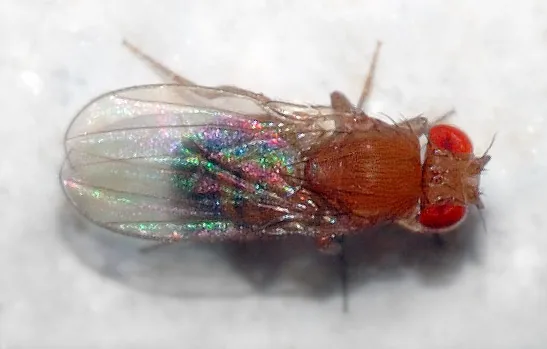
Inspect fermenting food and residues. A fly over a sink does not establish a drain source.
Identification limits & photo credit
A magnified adult fruit fly. Not all small flies have red eyes. Confirm the body shape and breeding material; this does not identify every vinegar fly or establish a source.
Fruit fly, dorsal view. Photo: André Karwath aka Aka. CC BY-SA 2.5. Original source · CC BY-SA 2.5 & details
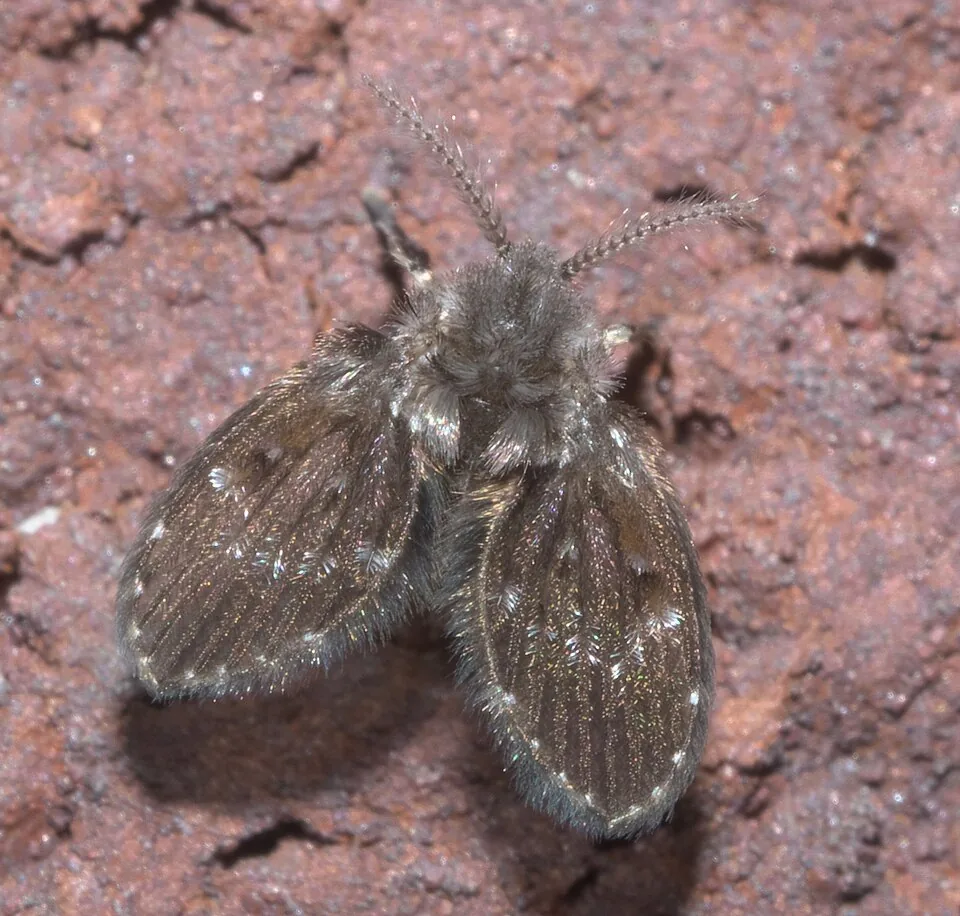
Fuzzy, mothlike wings support a drain-fly route; inspect wet organic film rather than treating only flying adults.
Identification limits & photo credit
One moth-fly species. The resting shape and hairy wings help distinguish this group, but the photo cannot identify which drain or other wet organic source is producing flies.
Drain fly with hairy wings. Photo: xpda. CC BY-SA 4.0. Original source · CC BY-SA 4.0 & details
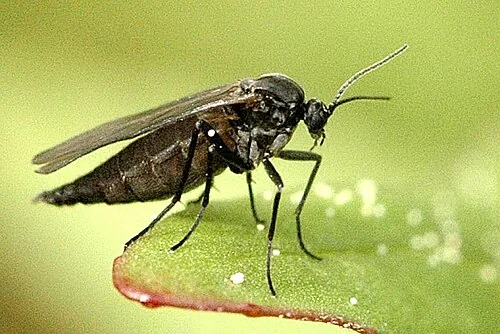
Compare the slender, long-legged adult and inspect moist growing media. Do not assume every kitchen fly breeds in soil.
Identification limits & photo credit
One fungus gnat species photographed in Belgium. Long legs and a slender body are visible, but species-level identification needs finer characters and the breeding source must be checked separately.
Fungus gnat, side view. Photo: James K. Lindsey. CC BY-SA 2.5. Original source · CC BY-SA 2.5 & details
Food & drains
Fruit flies are associated with fermenting material; fuzzy moth-like drain flies point toward wet organic films. Neither is confirmed simply because it is above a kitchen sink.
Potting mix & hidden sources
Slender fungus gnats commonly breed in moist growing media. Hump-backed phorid flies can point to decaying material or plumbing problems. Inspect the source rather than treating the air.
Primary references: University of Kentucky Extension Entomology · University of California Statewide IPM Program · University of California Statewide IPM Program · University of California Statewide IPM Program. Checked 15 October 2026; source jurisdictions apply.
A mouse or a young rat?
Photographed examples, independently enlarged. These are not at a common scale; inspect the named species and image limits.
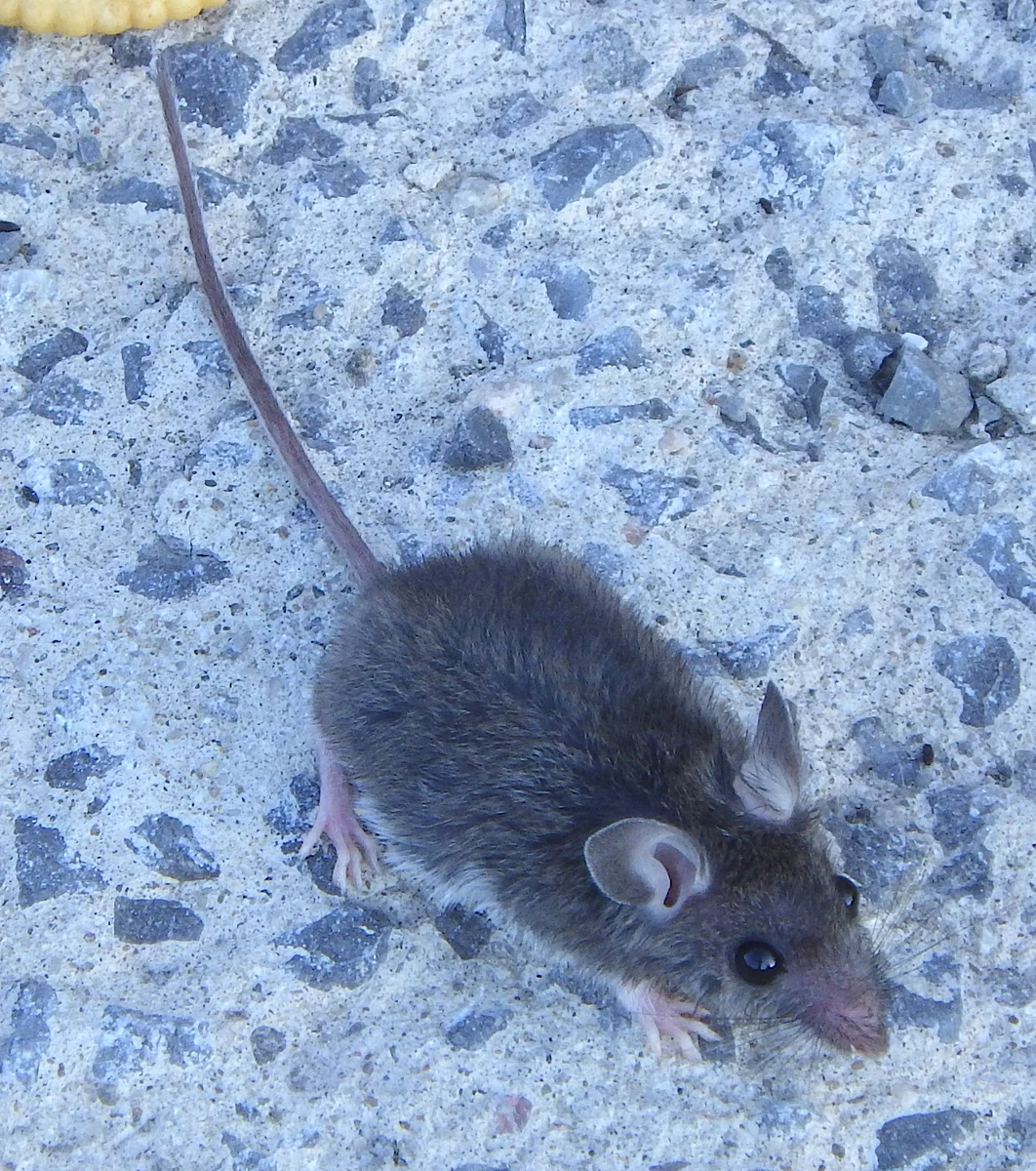
Identification limits & photo credit
One adult photographed from above. No scale is present; apparent image size cannot distinguish a mouse from a young rat. Confirm body proportions and other evidence.
House mouse photographed in Ottawa, Canada. Photo: Ahunt. CC0. Original source · CC0 & details
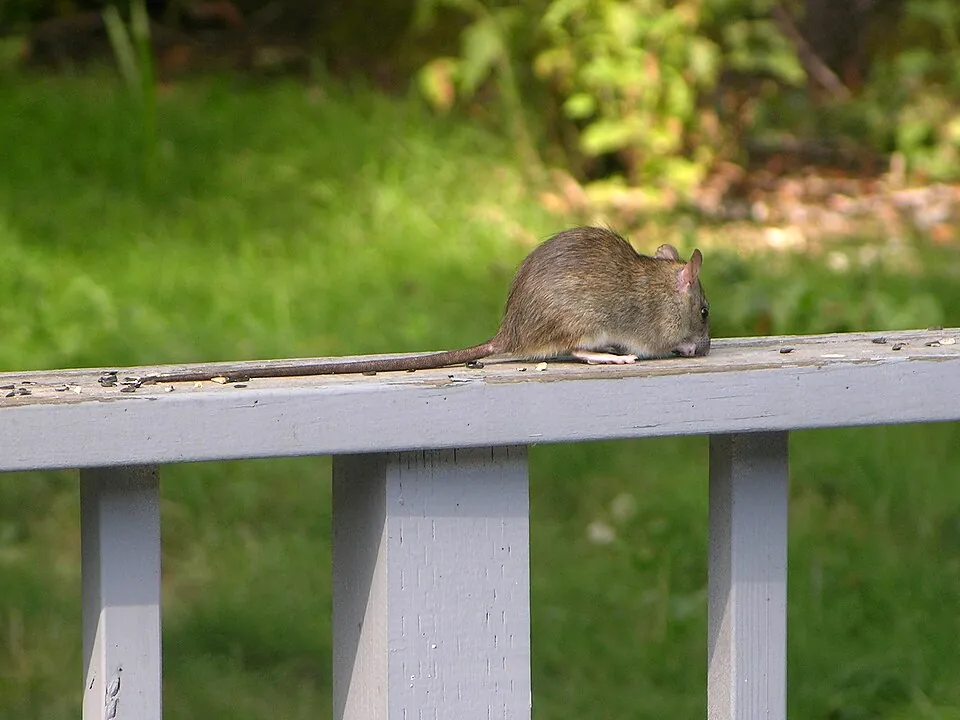
Identification limits & photo credit
The source identifies Rattus rattus; its tail extends left across the railing. Perspective and posture affect proportions, so use several traits and never image size alone to distinguish rat species.
Living roof rat with its long tail visible. Photo: Alex O'Neal. CC BY-SA 2.0. Original source · CC BY-SA 2.0 & details
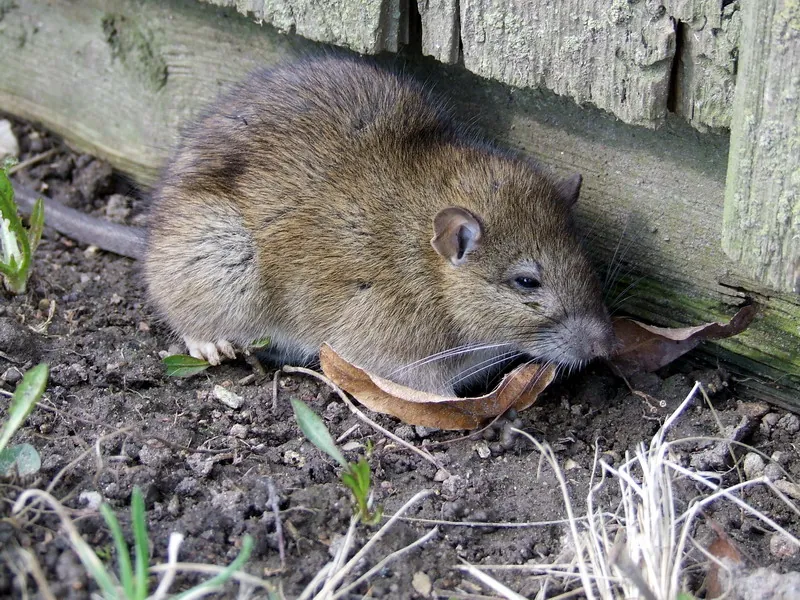
Identification limits & photo credit
A living Norway rat according to source provenance, with the robust body, head and ear profile visible. The tail tip leaves the left edge, so this photograph cannot support a tail-to-body length measurement.
Norway rat beside a wooden wall in Lithuania. Photo: Tocekas. CC BY-SA 4.0. Original source · CC BY-SA 4.0 & details
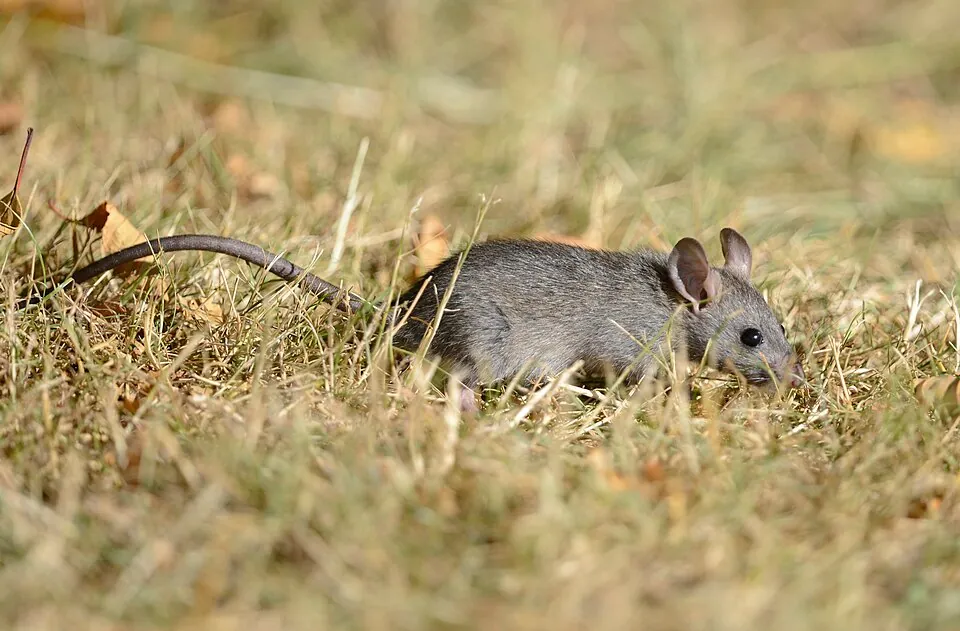
Identification limits & photo credit
The photographer explicitly labels this animal an infant Norway rat. Young rats can resemble mice and have different proportions from adults. Do not use this juvenile as an adult Norway-versus-roof-rat plate.
Young Norway rat in Western Washington State. Photo: VJAnderson. CC BY-SA 4.0. Original source · CC BY-SA 4.0 & details
Mouse evidence
Adult house mice are smaller and relatively fine-featured; deer mice can have a sharply two-coloured tail and pale underside. A blurry photo or a juvenile animal can defeat a size-only decision.
Rat evidence
Norway rats tend to have a stockier body; roof rats are more slender with proportionally longer tails. Droppings are useful inspection clues but are not a reliable species diagnosis or a reason to handle waste.
Primary references: University of California Statewide IPM Program · University of California Statewide IPM Program · Centers for Disease Control and Prevention. Checked 15 October 2026; source jurisdictions apply.
Moles, voles or pocket gophers?
Photographed examples, independently enlarged. These are not at a common scale; inspect the named species and image limits.
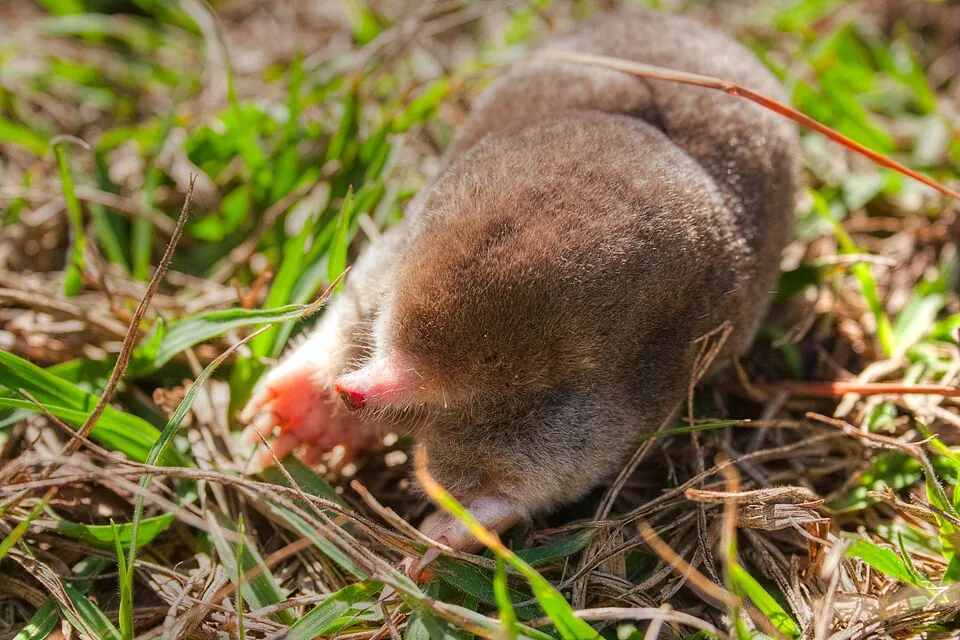
Identification limits & photo credit
Shows a pointed snout and broad digging forefeet. One mole species only; no burrow or lawn damage is shown, and a mole sighting does not identify every nearby tunnel.
Eastern mole above ground. Photo: Bert Cash from Brunswick , USA. CC BY 2.0. Original source · CC BY 2.0 & details
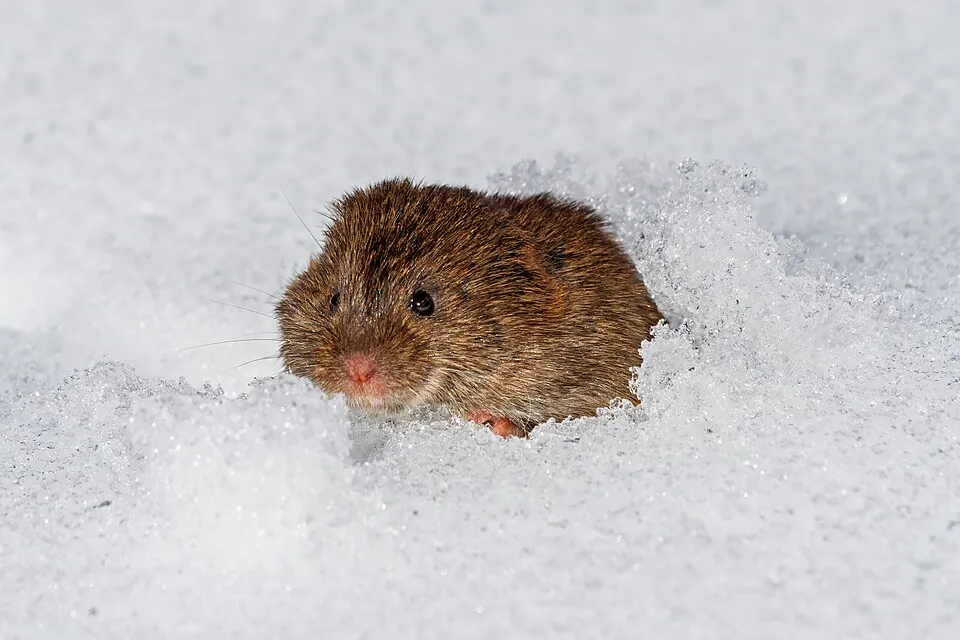
Identification limits & photo credit
A living vole with a blunt face and small ears partly concealed by fur. The tail and most of the body are hidden, so this is not a tail-length comparison or a plate for all vole species.
Eastern meadow vole emerging through snow. Photo: Chuck Homler d/b/a Focus On Wildlife. CC BY-SA 4.0. Original source · CC BY-SA 4.0 & details
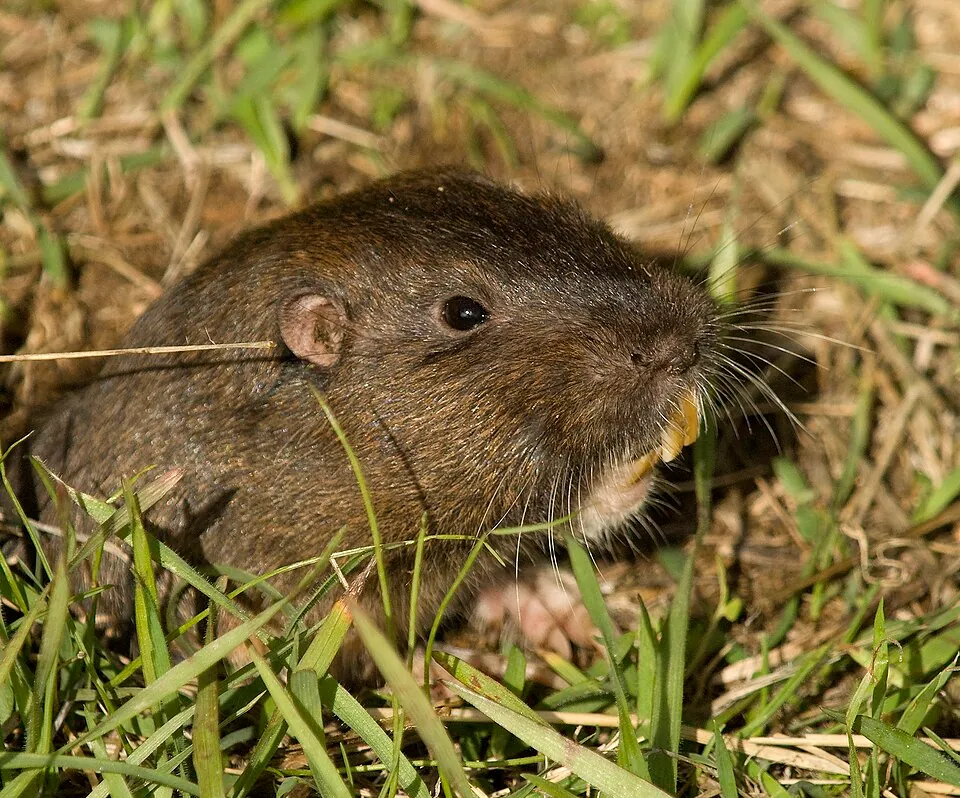
Identification limits & photo credit
Shows a source-identified pocket gopher with small ears, prominent incisors and forefeet. One pocket-gopher species only; the image does not establish what made a nearby mound or burrow.
Botta’s pocket gopher in grass. Photo: Chuck Abbe. CC BY 2.0. Original source · CC BY 2.0 & details
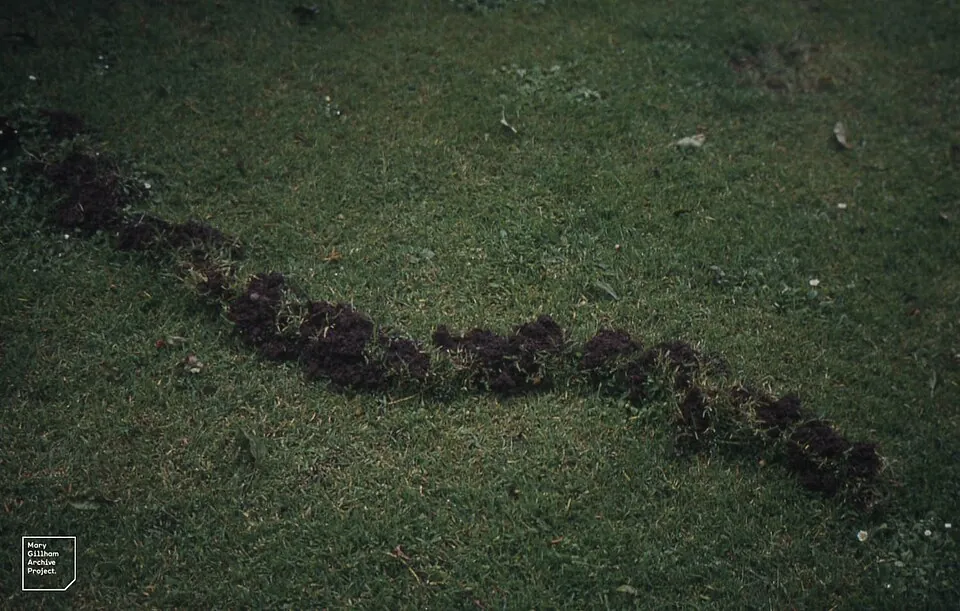
Identification limits & photo credit
The archive labels this as a European mole tunnel at Abbey Dore Gardens, Hereford, England. A source-labelled sign example, not an independent identification of an unknown hole or evidence for a specific North American mole species. Other animals can disturb turf.
Earth along a European mole tunnel in a Hereford garden. Photo: Dr Mary Gillham Archive Project. CC BY 2.0. Original source · CC BY 2.0 & details
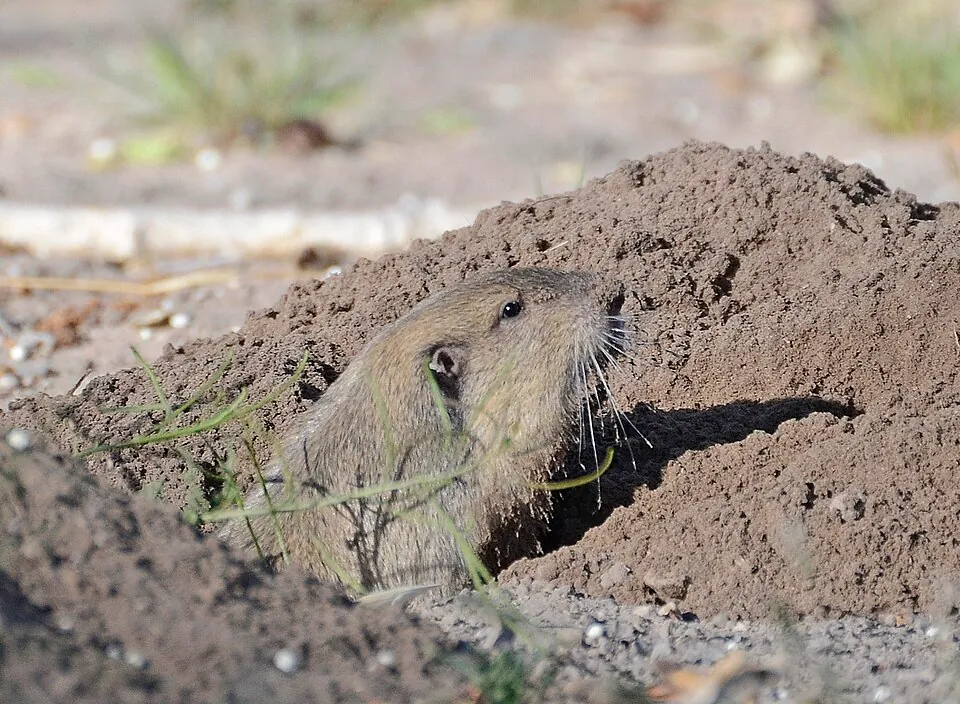
Identification limits & photo credit
The source identifies the visible animal as Botta’s pocket gopher. Loose soil and an opening are visible beside it, providing context that an unidentified hole cannot. The low angle and frame edges hide the full mound outline; this does not show a complete crescent-shaped mound from above or its usual plugged state after the animal withdraws.
Botta’s pocket gopher at a soil opening in southern Nevada. Photo: VJAnderson. CC BY-SA 4.0. Original source · CC BY-SA 4.0 & details
Surface tunnels & runways
Moles create raised soil ridges while hunting invertebrates. Voles more often leave shallow runways with clipped vegetation and can gnaw stems. Neither is established by a single hole.
Mounds & plugged openings
Pocket gophers often leave fan-shaped soil mounds and plugged openings. Species, soil and weather alter the signs. Ground squirrels, rats and other animals can also burrow.
Primary references: University of California Statewide IPM Program · University of California Statewide IPM Program · University of California Statewide IPM Program. Checked 15 October 2026; source jurisdictions apply.