
Make a dated, achievable plan
List affected rooms, evidence, actions and the next inspection. Include access needs, travel, children, pets and treatment preparation. A professional experienced with bed bugs can assess the extent and explain which items need treatment.
Sources for this section
US Environmental Protection Agency · US Environmental Protection Agency · US Environmental Protection Agency
Recognize the signs
- Insect and life stages
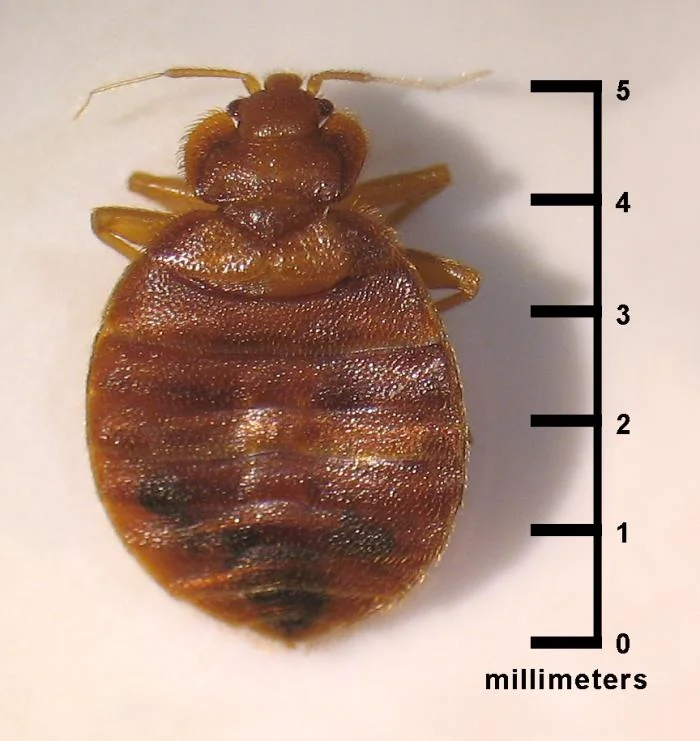
- Adults are flattened, oval and wingless, usually rusty brown; a recent blood meal makes them fuller and darker. Nymphs resemble smaller, paler adults. Tiny pale eggs and empty skins may accompany live bugs. A moving speck or a photograph without scale is insufficient for species confirmation.
- Evidence near a resting place
- Inspect mattress piping, frame joints and upholstered seating for live insects, eggs, cast skins and dark spotting. Stains alone are not proof. Photograph the finding beside a ruler and record its exact location before cleaning.
- Bites are an uncertain clue
- People differ in whether and how they react. Fleas, mosquitoes, skin conditions and irritants can produce similar marks. Obtain medical advice for concerning symptoms; investigate the room separately from the skin problem.
Look more closely
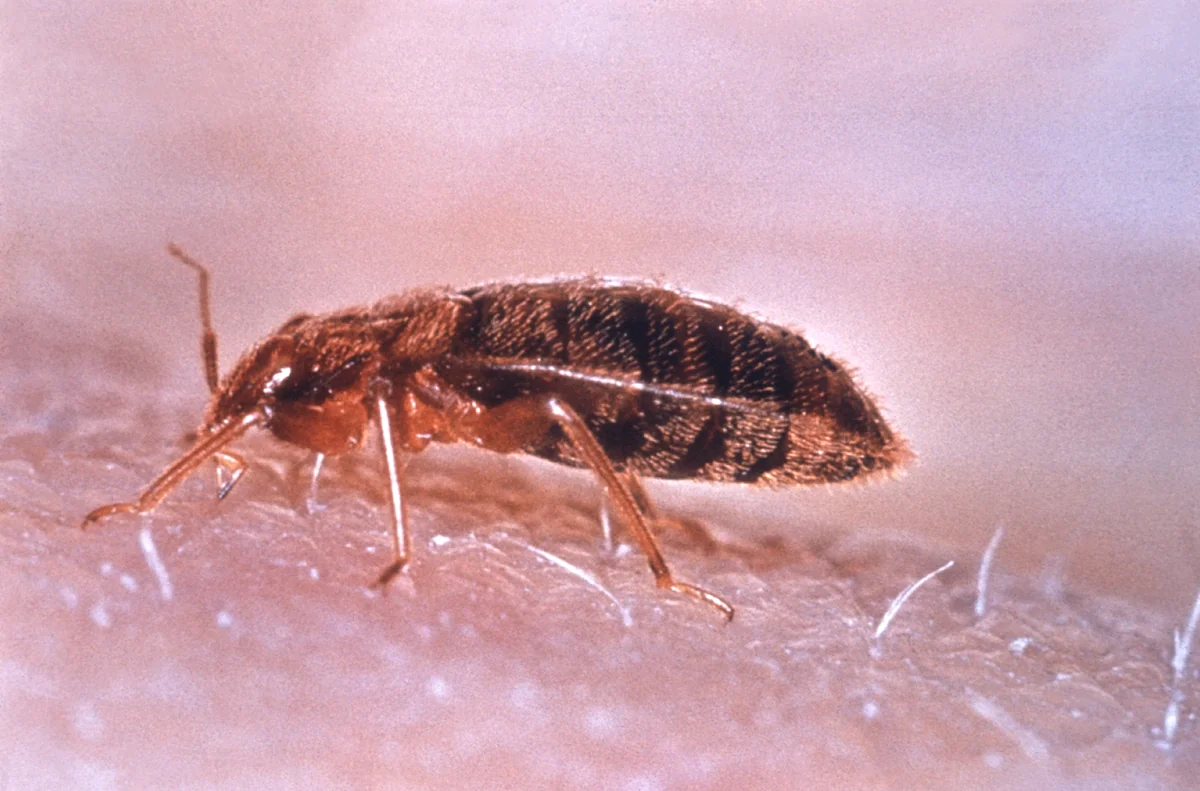
Compare the labeled examples and their limits. Images are independently enlarged, not shown at a common scale.
Identification limits & photo credit
Profile view of a feeding specimen; use the dorsal image for overall outline. This photograph cannot identify the cause of a skin mark or distinguish every Cimex species.
Adult bed bug in profile. Photo: CDC / World Health Organization, Geneva. Public domain. Source: CDC PHIL; original image available free from CDC. Use does not imply CDC, HHS, or U.S. Government endorsement. Original source · Public domain & details
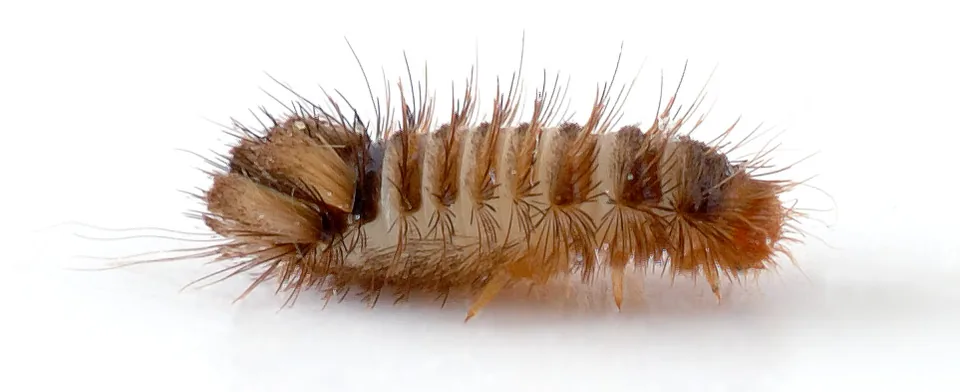
Bristles and shed larval skins matter. The larva, rather than the adult beetle, damages susceptible fabrics.
Identification limits & photo credit
Magnified hairy larva. Other dermestid larvae vary, and this specimen does not identify a skin reaction. Bed bugs are flattened insects with a different outline; retain a specimen when uncertain.
Varied carpet beetle larva, side view. Photo: André Karwath aka Aka. CC BY-SA 2.5. Original source · CC BY-SA 2.5 & details
Identification limits & photo credit
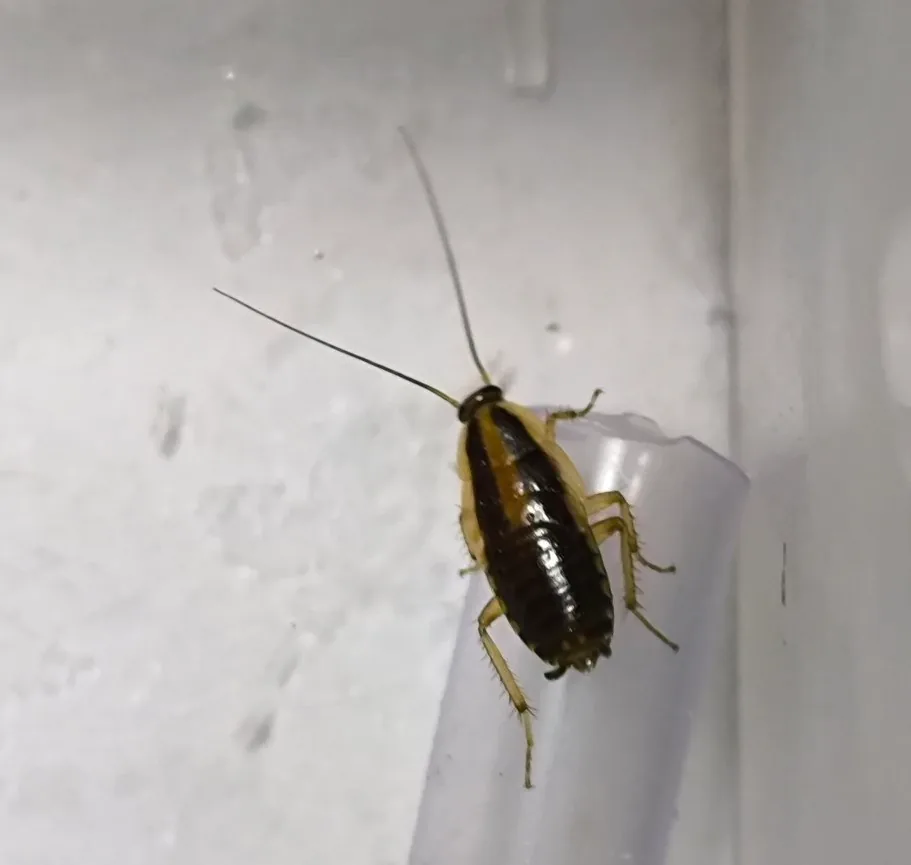
One juvenile, identified as a young German cockroach in the source's Japanese caption. Different instars and closely similar Blattella species need further examination; no scale is present. This photograph cannot measure infestation severity, establish a building's breeding source or identify a skin reaction.
Juvenile German cockroach, dorsal view. Photo: Misei sen. CC BY-SA 4.0. Original source · CC BY-SA 4.0 & details
Sources for this section
US Environmental Protection Agency · University of California Statewide IPM Program
Differences that change the decision
A similar-looking organism can need a different response. Compare the evidence and what it changes.
Compare every column. On a narrow screen, scroll the table sideways.
| Type | What to check | What changes |
|---|---|---|
| Common and tropical bed bugs | Cimex lectularius and C. hemipterus are human-associated bed bugs; geography alone does not identify a specimen. | Both require inspection around resting places and a coordinated treatment plan. Ask an identification service to resolve uncertain specimens rather than inferring species from travel history. |
| Bat and bird-associated bugs | Close relatives can appear nearly identical. Fine hairs and other features need magnification; attic, eave or former roost activity changes the investigation. | An expert should identify the bug and assess the animal source. Lawful, season-appropriate wildlife management may be needed alongside insect control; sealing an occupied roost is not a bed bug solution. |
Sources for this section
University of California Statewide IPM Program · University of Minnesota Extension
What else could it be?
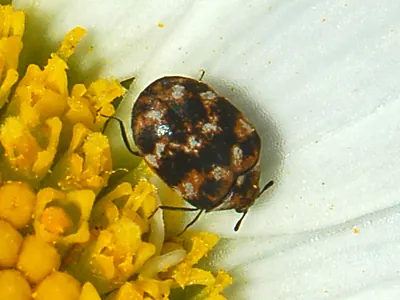
Carpet beetles
Hairy larvae or rounded, hard-shelled adults differ from a flat bed bug. Their source is often animal fibres or accumulated debris.
Compare carpet beetles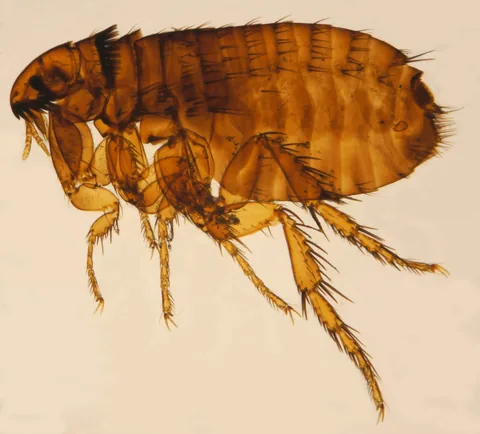
Fleas
Fleas are narrow from side to side and jump; bed bugs crawl. Check animal resting areas and obtain veterinary guidance where pets are involved.
Compare fleas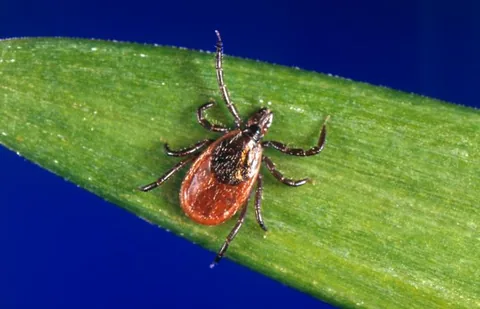
Ticks
Ticks are arachnids rather than insects; adults and nymphs have eight legs. A difficult specimen needs expert examination.
Compare ticksSources for this section
University of California Statewide IPM Program · University of Minnesota Extension
Inspect the right places
Work from the resting place outward
Use a flashlight. Examine seams and joints of the bed and nearby chairs, then adjacent furniture. Keep items in their original room while investigating. Do not dismantle electrical fittings or disturb wildlife to search.
Preserve a usable sample
If safely accessible, contain the insect without crushing it and ask a local extension or qualified identification service how to submit it. Label date and room. A clear close photograph is useful, but the examiner may need the specimen.
Coordinate a shared building
Tell the landlord or manager promptly about confirmed evidence. Ask who will inspect connected units and how preparation and follow-up will be coordinated. Responsibilities depend on local housing rules; treating one room cannot address an untreated source elsewhere.
Choose a proportionate response
For pesticides, the local product label determines the allowed pest, site, precautions and timing. Check safety and regional guidance.
Make a dated, achievable plan
List affected rooms, evidence, actions and the next inspection. Include access needs, travel, children, pets and treatment preparation. A professional experienced with bed bugs can assess the extent and explain which items need treatment.
Contain belongings before moving them
Bag affected laundry at its source. For dryer-compatible items, EPA describes a high-heat dryer cycle of 30 minutes; check fabric and appliance instructions and the treatment provider's procedure. Washing alone may be insufficient. Put treated items into clean sealed bags.
Reduce hiding places without spreading insects
Remove unnecessary clutter carefully. Vacuum accessible seams and crevices, then seal and discard collected contents outside. An intact bed-bug encasement can simplify inspection. Keep bedding off the floor and use suitable interceptors under accessible bed legs.
Choose a complete treatment
Ask how eggs and concealed insects will be addressed, what preparation is necessary and what follow-up is included. Heat, steam and pesticides have different limitations. Household room-heating attempts and casual freezer use are unreliable substitutes for a controlled process.
Check pesticide permission before use
In the US, select an EPA-registered product labelled for bed bugs and the specific surface; elsewhere use the local regulator's authorised product. Follow its restrictions. Repeated failure may reflect resistance, missed harbourages or reinvasion, not a need for more product.
Sources for this section
US Environmental Protection Agency · US Environmental Protection Agency · US Environmental Protection Agency
Avoid these mistakes
- Do not use bite patterns, a clean home or the absence of sightings as a definitive diagnosis.
- Do not spread loose powders across sleeping surfaces. Food-grade or pool-grade diatomaceous earth is not a substitute for a registered, correctly applied pesticide.
- Do not use alcohol, fuel, improvised heaters or a thermostat to treat a room. Fire and exposure risks accompany ineffective treatment.
- Foggers do not reach all harbourages and cannot be the sole control method.
- Do not leave discarded infested furniture available for reuse; arrange responsible disposal if treatment is unsuitable.
Sources for this section
US Environmental Protection Agency · US Environmental Protection Agency
Check whether it is working
EPA advises inspection at least every seven days during follow-up; inspect initial interceptors more often as directed. EPA also advises continuing checks for at least a year after apparent control. The saved reminder is editable and is not a scientific clearance interval.
Compare dated findings by room and monitor. Falling counts help assess progress, but a quiet week does not establish eradication. Keep the agreed professional follow-up and longer-term surveillance.
Get help when…
- Seek an experienced professional for confirmed activity, spread between rooms, treatment failure or difficulty completing preparation.
- Ask an identification service to reassess a specimen when attic or bird-roost evidence suggests a relative of bed bugs.
- Seek appropriate medical help for a severe reaction, infection or other concerning symptoms.
Sources for this section
US Environmental Protection Agency · University of California Statewide IPM Program
Prevent a return
- Inspect secondhand upholstered furniture before bringing it inside.
- Check accommodation sleeping areas and luggage storage; inspect belongings after a suspected exposure.
- At shared laundry facilities, keep affected and cleaned items in separate sealed bags.
- Check encasements for damage and keep resting-area inspection points accessible.
Sources for this section
Common questions
Must I throw away the mattress?
Not automatically. An experienced provider can explain whether treatment and an intact encasement are suitable. Discarding one object does not remove insects elsewhere.
Can I wait for them to starve?
Bed bugs can persist for months without feeding. Leaving a room unused is not a dependable control plan.
Why were there new insects after treatment?
Possible explanations include surviving bugs, newly hatched eggs, untreated harbourages or movement from another unit. Record the finding and have the plan reassessed; do not shorten a pesticide's labelled interval.
Sources & scope
References retain their geography and dates. A source-check date is not a claim of independent specialist review.
- How to Find Bed Bugs
US Environmental Protection Agency. United States; identification evidence and its limits. Checked 2026-10-15.
- Do-it-yourself Bed Bug Control
US Environmental Protection Agency. United States; coordinated control, unsafe methods and monitoring. Checked 2026-10-18.
- Preparing for Treatment Against Bed Bugs
US Environmental Protection Agency. United States; preparation and household dryer guidance. Follow item and appliance limits. Checked 2026-10-15.
- Protecting Your Home from Bed Bugs
US Environmental Protection Agency. United States; prevention and movement of belongings. Checked 2026-10-15.
- Pesticides to Control Bed Bugs
US Environmental Protection Agency. US pesticide authorisation only; current product label controls permitted use. Checked 2026-10-15.
- Bed Bugs
University of California Statewide IPM Program. California, United States; 2013 biology and identification. Older pesticide lists are not current recommendations. Checked 2026-10-15.
- Bed bugs
University of Minnesota Extension. Minnesota, United States; bed bug relatives and professional identification. Checked 2026-10-15.
Individual medical or veterinary diagnosis, structural assessment, uncertain species identification and local treatment permissions require the appropriate professional. About our editorial process.
Keep investigating
Carpet Beetles
A few adult beetles at a window do not establish a fabric infestation.
Fleas
Confirm a flea on an animal or in the environment, then coordinate veterinary care with cleaning where animals rest.
Ticks
An attached tick needs prompt removal before identification work.