
Remove the sustaining material
Clean accessible lint, hair and insect debris. Bag heavily infested disposable items. Wildlife-associated sources need lawful, safe access and may require professional help.
Sources for this section
Recognize the signs
- Different stages, different roles
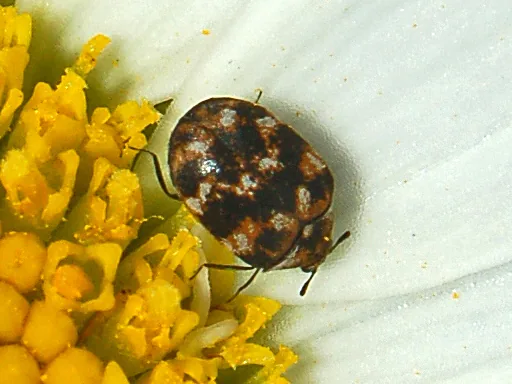
- Adults are small oval beetles, dark or mottled; they may visit flowers and enter buildings. Larvae are hairy, often brown and tapered, and leave bristly cast skins. The larvae damage susceptible material.
- Source evidence
- Fresh feeding, larvae and skins among animal fibres, hair or debris are more useful than an isolated adult. Damaged fabric alone does not establish the cause.
Look more closely
Compare the labeled examples and their limits. Images are independently enlarged, not shown at a common scale.
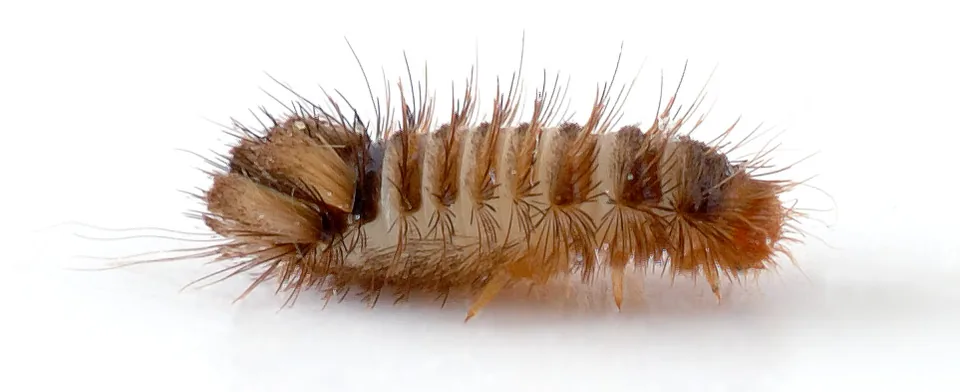
Bristles and shed larval skins matter. The larva, rather than the adult beetle, damages susceptible fabrics.
Identification limits & photo credit
Magnified hairy larva. Other dermestid larvae vary, and this specimen does not identify a skin reaction. Bed bugs are flattened insects with a different outline; retain a specimen when uncertain.
Varied carpet beetle larva, side view. Photo: André Karwath aka Aka. CC BY-SA 2.5. Original source · CC BY-SA 2.5 & details
Sources for this section
University of California Statewide IPM Program · NC State Extension
Differences that change the decision
A similar-looking organism can need a different response. Compare the evidence and what it changes.
Compare every column. On a narrow screen, scroll the table sideways.
| Type | What to check | What changes |
|---|---|---|
| Varied and furniture carpet beetles | Rounded adults have patterned scales that can wear off. Larval shape and hairs help experts separate them. | Inspect wool, fur, feathers and other animal material; fading adult markings do not reliably identify a different species. |
| Black carpet beetle | Adults are more elongate and dark; larvae taper and have a conspicuous rear hair tuft. | Include dry food and animal feed in the search as well as textiles. UC IPM notes stored-product importance in California and other dry areas. |
Sources for this section
What else could it be?
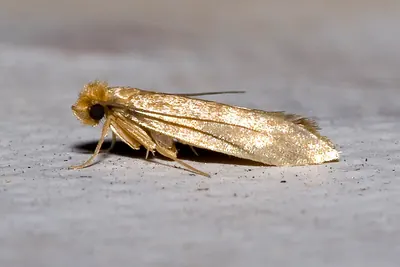
Clothes moths
Pale caterpillars, silken feeding patches or portable cases suggest moths.
Compare clothes moths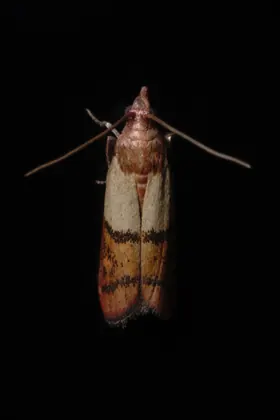
Pantry beetles
Insects in dry foods need stored-product identification; some dermestids use both animal and plant materials.
Compare pantry pests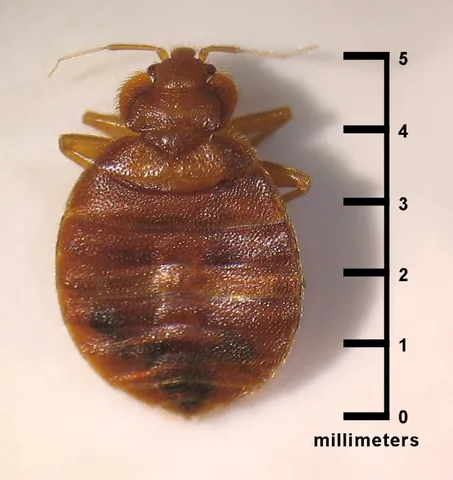
Bed bugs
A hairy larva or domed beetle differs from a flattened bed bug. A skin reaction cannot resolve the identification.
Compare bed bugsSources for this section
University of California Statewide IPM Program · NC State Extension
Inspect the right places
Trace the larval food
Check rug edges, beneath furniture, textile folds, pet-hair accumulations and stored feathers or taxidermy. Inspect forgotten pet food and dead insects in accessible places.
Map rather than guess
Label monitoring positions and record whether each catch is an adult or larva. A cluster directs the next inspection; the window itself may simply attract adults.
Sources for this section
Choose a proportionate response
For pesticides, the local product label determines the allowed pest, site, precautions and timing. Check safety and regional guidance.
Remove the sustaining material
Clean accessible lint, hair and insect debris. Bag heavily infested disposable items. Wildlife-associated sources need lawful, safe access and may require professional help.
Treat possessions appropriately
Launder or dry-clean suitable items, following their care limits. Ask a specialist about fragile collections or infested upholstery; a surface spray may miss larvae deep inside.
Protect cleaned items
Return pest-free materials to tightly closed storage. Vacuum source areas and dispose of collected contents. Use traps to assess continuing activity, not as proof that every larva is gone.
Sources for this section
Avoid these mistakes
- Do not spray clothing or bedding.
- Do not discard sound furnishings solely because one adult appeared.
- Do not use mothballs in open rooms or expose possessions to improvised heat, fumes or freezer procedures.
Sources for this section
National Pesticide Information Center, Oregon State University
Check whether it is working
UC IPM advises checking monitoring traps once or twice weekly. Adjust the saved reminder to the situation; it is not an eradication deadline.
Compare larvae, new damage and catches at consistent locations. Old skins remain after activity ends, so distinguish historical debris from new findings.
Get help when…
- Seek professional investigation when sources are inaccessible or repeated cleaning does not reduce activity.
- Ask a conservator before treating collections, valuable rugs or taxidermy.
Sources for this section
Prevent a return
- Inspect flowers and incoming susceptible objects.
- Store cleaned animal-fibre items in sealed containers.
- Maintain screens and remove recurring accumulations of hair or dead insects.
Sources for this section
Common questions
Must the carpet be replaced?
Not usually as a first step. Locate the actual larval source and assess whether appropriate cleaning can protect the item.
Can they survive without a wool carpet?
Yes. Hair, feathers, dead insects and some stored foods can sustain larvae even where flooring is synthetic.
Sources for this section
Sources & scope
References retain their geography and dates. A source-check date is not a claim of independent specialist review.
- Carpet Beetles
University of California Statewide IPM Program. California, United States; 2020 species distinctions and monitoring. Checked 2026-10-15.
- Carpet Beetles
University of Kentucky Extension. Kentucky, United States; revised March 2026; inspection, source removal and textiles. Checked 2026-10-15.
- Mothballs
National Pesticide Information Center, Oregon State University. United States; pesticide exposure precautions. Checked 2026-10-15.
- Tips for Preventing the Spread of Bed Bugs
NC State Extension. North Carolina, United States; physical bed bug lookalikes. Checked 2026-10-15.
Individual medical or veterinary diagnosis, structural assessment, uncertain species identification and local treatment permissions require the appropriate professional. About our editorial process.
Keep investigating
Clothes Moths
Confirm larvae, silk or fresh damage in susceptible material.
Pantry Pests
Moths or tiny beetles in a kitchen are a reason to inspect stored products, not proof that every packet is infested.
Bed Bugs
Start with a specimen or physical evidence near a sleeping place.