
Isolate affected items
Bag items before moving them. Have washable material laundered appropriately or use professional dry cleaning; follow care instructions instead of imposing a damaging hot cycle.
Sources for this section
University of Kentucky Extension · National Pesticide Information Center, Oregon State University
Recognize the signs
- Adults
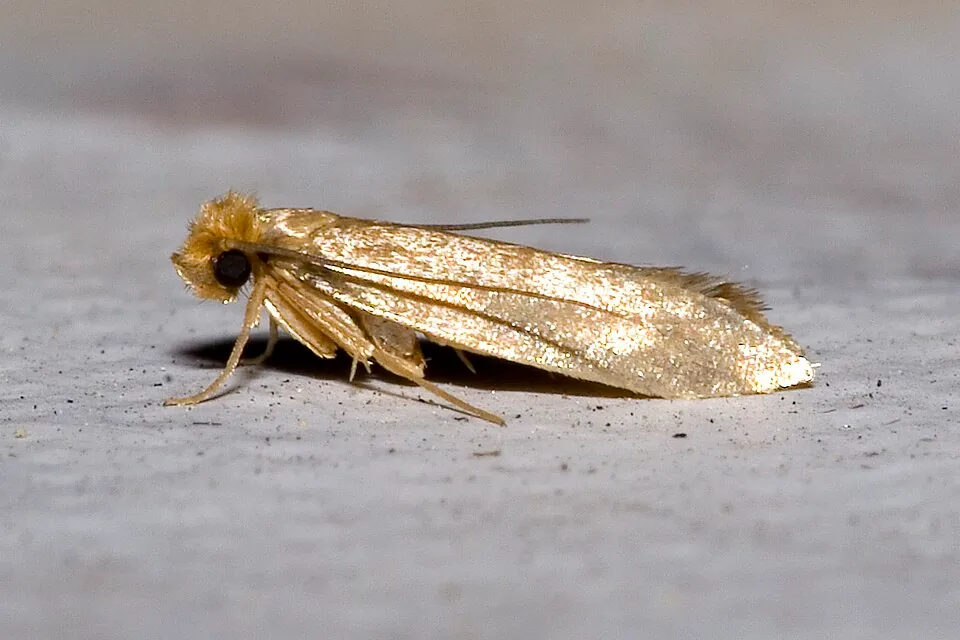
- Small buff or golden moths with fringed wings tend to remain near dark, undisturbed material. A moth flying in a bright kitchen may instead be a stored-food species.
- Larvae and damage
- Pale caterpillars with darker heads feed on animal-derived materials. Look inside folds for silk, small pellets, grazing and holes. Damage alone cannot distinguish moths from carpet beetles.
Look more closely
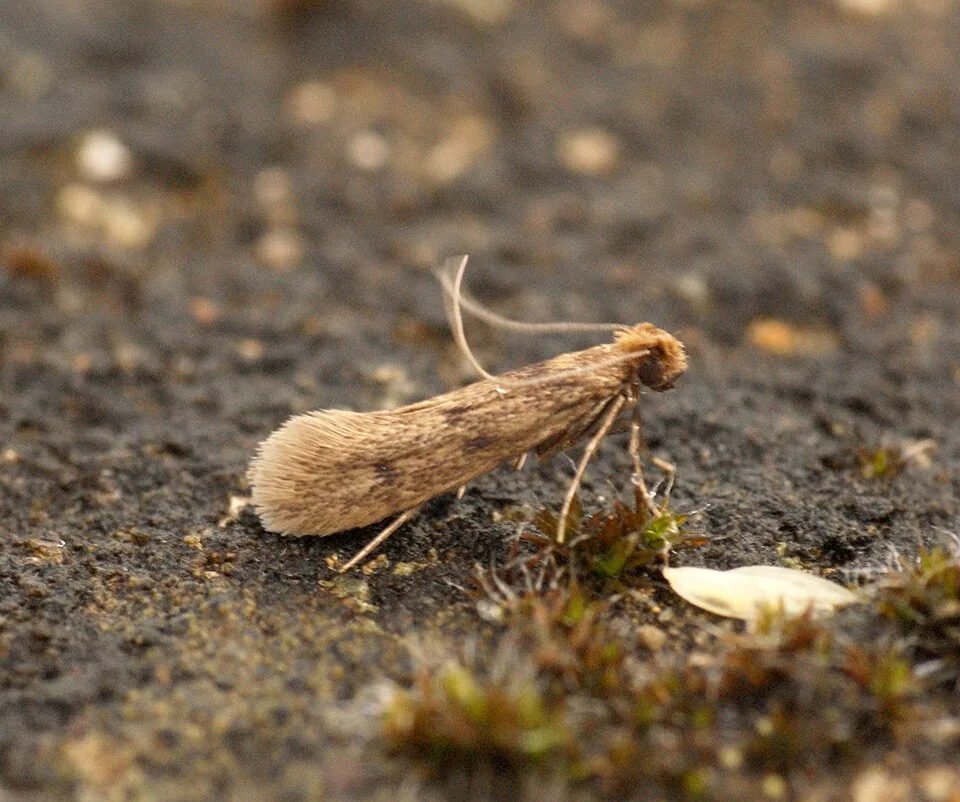
Compare the labeled examples and their limits. Images are independently enlarged, not shown at a common scale.
Identification limits & photo credit
One adult of a second clothes-moth species. Adults can be confused with other small moths; inspect fabric and seek the portable larval case rather than relying on color alone.
Case-bearing clothes moth at rest. Photo: Ben Sale from UK. CC BY 2.0. Original source · CC BY 2.0 & details
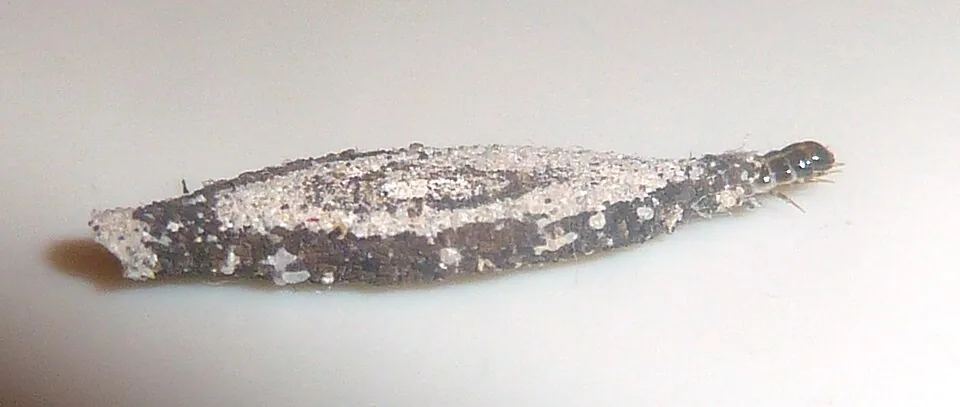
The portable case and caterpillar are different from a bristly carpet-beetle larva. Confirm the fabric or food source.
Identification limits & photo credit
A larva photographed in Pretoria, South Africa. Fibers affect the case color; other case-bearing insects differ. A photograph alone does not establish the source of fabric damage.
Case-bearing clothes moth larva with its case. Photo: JMK. CC BY-SA 4.0. Original source · CC BY-SA 4.0 & details
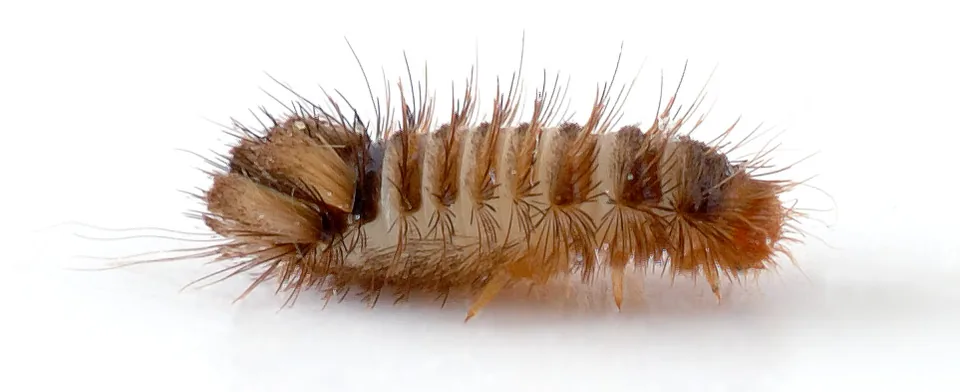
Bristles and shed larval skins matter. The larva, rather than the adult beetle, damages susceptible fabrics.
Identification limits & photo credit
Magnified hairy larva. Other dermestid larvae vary, and this specimen does not identify a skin reaction. Bed bugs are flattened insects with a different outline; retain a specimen when uncertain.
Varied carpet beetle larva, side view. Photo: André Karwath aka Aka. CC BY-SA 2.5. Original source · CC BY-SA 2.5 & details
Sources for this section
Differences that change the decision
A similar-looking organism can need a different response. Compare the evidence and what it changes.
Compare every column. On a narrow screen, scroll the table sideways.
| Type | What to check | What changes |
|---|---|---|
| Webbing clothes moth | Gold adults and silken feeding tubes or patches on the material. | Inspect the fabric surface, folds and adjoining storage space; abandoned webbing can remain after larvae move. |
| Casemaking clothes moth | Adults may have faint wing spots; the larva carries a portable silken case incorporating fibres. | Inspect shelving and wall junctions as well as textiles, because larvae may leave the item before pupating. Match a pheromone lure to the identified species. |
Sources for this section
What else could it be?
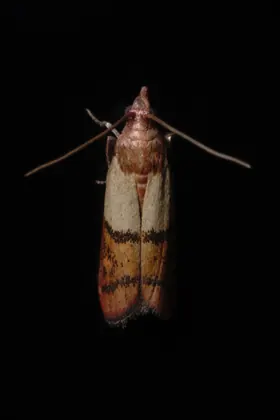
Pantry moths
Food association and coppery or banded wings redirect inspection to stored products.
Compare pantry pests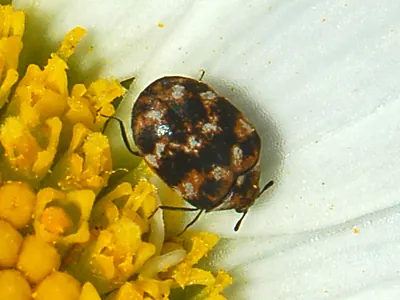
Carpet beetles
Hairy larvae and bristly skins rather than silken cases support a beetle source.
Compare carpet beetlesSources for this section
Inspect the right places
Start with undisturbed animal fibres
Check wool, fur, feathers, felt and blends: cuffs, collars, folded blankets, rug undersides and upholstery. Record the exact item with fresh evidence.
Look beyond clothing
Inspect accumulated pet hair and lint under furniture. Inaccessible nest debris or animal remains can sustain fabric pests; use qualified help rather than disturbing an occupied or protected nest.
Sources for this section
Choose a proportionate response
For pesticides, the local product label determines the allowed pest, site, precautions and timing. Check safety and regional guidance.
Isolate affected items
Bag items before moving them. Have washable material laundered appropriately or use professional dry cleaning; follow care instructions instead of imposing a damaging hot cycle.
Clean the source area
Vacuum accessible edges, cracks and debris, then dispose of collected contents promptly. Inspect nearby items before returning cleaned possessions.
Protect and monitor
Store cleaned, pest-free items in tightly closed containers. Use a species-appropriate lure as a detection aid; traps do not remove eggs and feeding larvae within fabric.
Sources for this section
University of Kentucky Extension · National Pesticide Information Center, Oregon State University
Avoid these mistakes
- Do not assume cedar or scented sachets will protect an infested garment.
- Do not scatter mothballs in an open closet. They are pesticides that release vapour and require the labelled enclosed use.
- Do not spray clothing or bedding, improvise fumigation, or put valuable objects through unverified heat or cold treatment.
Sources for this section
National Pesticide Information Center, Oregon State University
Check whether it is working
An editable weekly inspection reminder is an organisational suggestion, not a clearance interval. Check the same items and monitoring locations after cleaning.
Look for new larvae, cases, fresh damage and continued catches. Keep old damage photographed so it is not mistaken for new feeding.
Get help when…
- Use a pest professional for repeated or inaccessible activity.
- Use a textile conservator, rug specialist or piano technician for valuable or vulnerable objects.
Sources for this section
University of California Statewide IPM Program · University of Kentucky Extension
Prevent a return
- Clean susceptible garments before long storage.
- Inspect stored textiles periodically and keep storage accessible.
- Remove lint and hair from protected edges rather than only vacuuming open floor space.
Sources for this section
Common questions
Will a moth trap solve the problem?
It can reveal males and locate activity. The affected fabric still needs inspection and suitable treatment.
Does every hole mean insects?
No. Find larvae, silk or other corroborating evidence before selecting a pest treatment.
Sources for this section
University of California Statewide IPM Program · University of Kentucky Extension
Sources & scope
References retain their geography and dates. A source-check date is not a claim of independent specialist review.
- Clothes Moths
University of California Statewide IPM Program. California, United States; 2013 identification and life-stage evidence; historical treatment recipes not adopted. Checked 2026-10-15.
- Clothes Moths
University of Kentucky Extension. Kentucky, United States; revised March 2026. Inspection, textile cleaning and prevention. Checked 2026-10-15.
- Mothballs
National Pesticide Information Center, Oregon State University. United States; 2025 safety information; use only a locally authorised product according to its label. Checked 2026-10-15.
Individual medical or veterinary diagnosis, structural assessment, uncertain species identification and local treatment permissions require the appropriate professional. About our editorial process.
Keep investigating
Carpet Beetles
A few adult beetles at a window do not establish a fabric infestation.
Pantry Pests
Moths or tiny beetles in a kitchen are a reason to inspect stored products, not proof that every packet is infested.
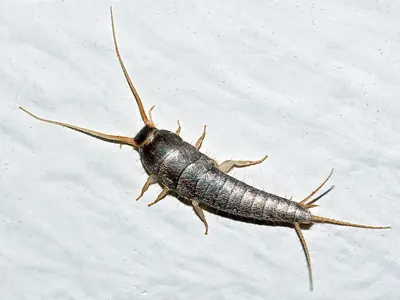
Silverfish
Three tail filaments and a tapering, wingless body suggest a silverfish relative.