
Remove confirmed sources
Seal affected products for disposal and take them out of the storage area. Do not spread material while sorting. Inspect neighbouring stock because more than one package can be involved.
Recognize the signs
- Match the insect to its source
- Live insects, larvae, webbing or emergence holes within a stored product are stronger evidence than a beetle on a windowsill. Eggs can be inconspicuous, and several stages may occur together.
- Moth versus beetle
- Moth caterpillars have abdominal prolegs in addition to three pairs near the head; beetle larvae lack those abdominal prolegs. Adult beetles have hard wing covers. Use a lens rather than guessing from colour.
- Wandering stages
- Mature pantry-moth larvae can leave food and pupate on walls or ceilings. The nearest ceiling corner is not necessarily the source. Flying adults may reach other rooms.
Look more closely
Compare the labeled examples and their limits. Images are independently enlarged, not shown at a common scale.
Identification limits & photo credit
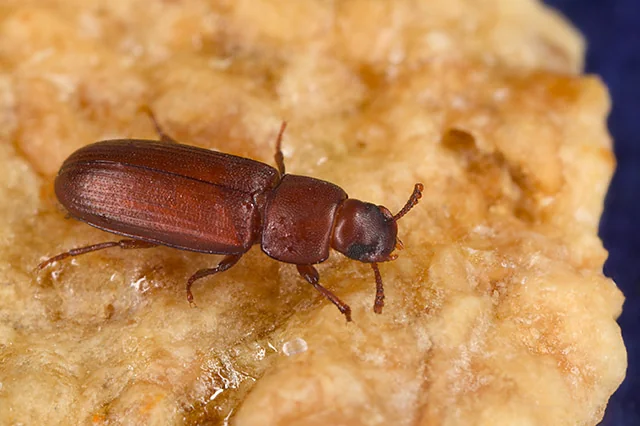
A magnified example of one pantry beetle. Fine antennal characters distinguish it from the confused flour beetle; other stored-product beetles require separate identification.
Adult red flour beetle. Photo: Peggy Greb, USDA Agricultural Research Service. Public domain. Use does not imply USDA ARS endorsement. Original source · Public domain & details
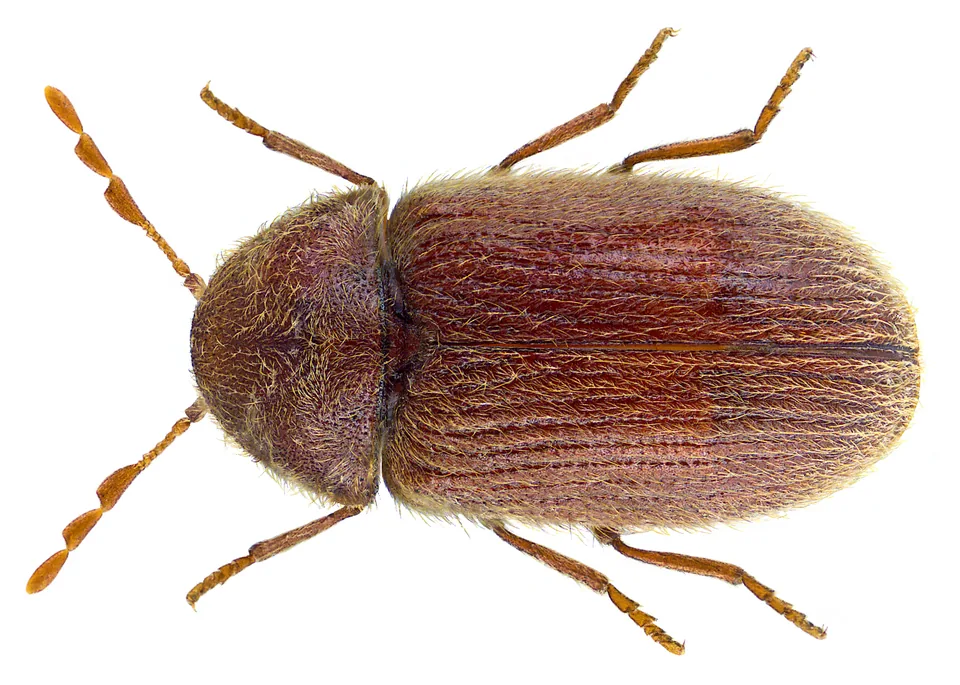
Check the lined wing covers and enlarged end segments of the antenna. Fine characters need magnification.
Identification limits & photo credit
One magnified stored-product beetle. The longitudinal wing-cover rows and clubbed antennae are fine characters; inspect suspect products and distinguish cigarette beetles or furniture beetles before choosing action.
Drugstore beetle, dorsal specimen view. Photo: Udo Schmidt from Deutschland. CC BY-SA 2.0. Original source · CC BY-SA 2.0 & details
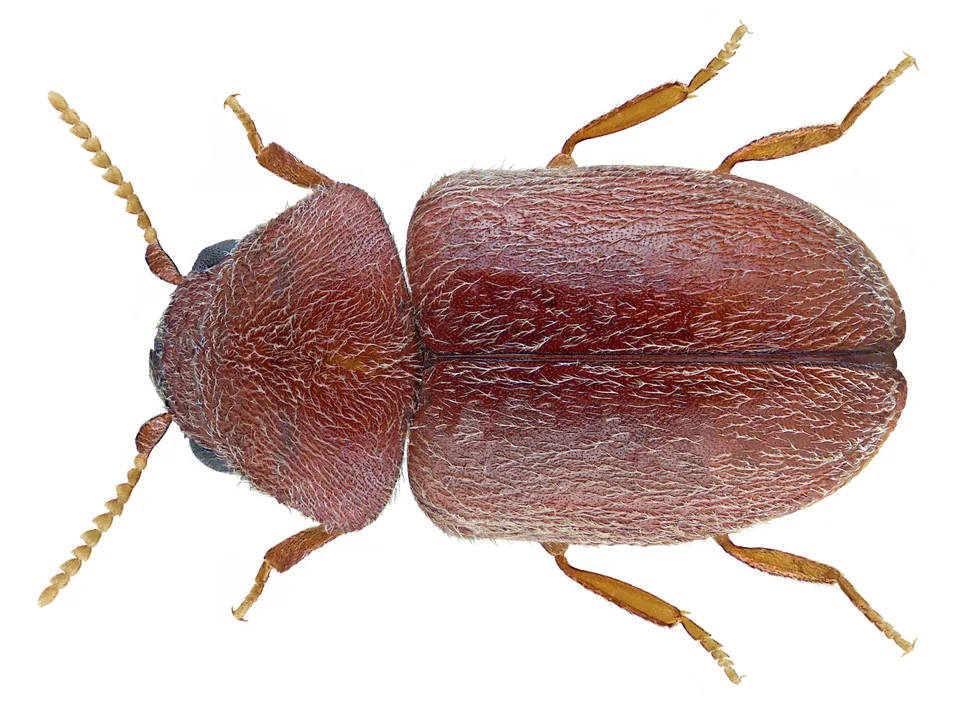
Compare the smoother wing covers and sawlike antenna with the drugstore beetle. Brown colour alone is not enough.
Identification limits & photo credit
One magnified adult. Fine serrated antennae and wing-cover texture help separate it from the drugstore beetle; overall brown color and a rounded outline alone are insufficient.
Cigarette beetle, dorsal specimen view. Photo: Udo Schmidt from Deutschland. CC BY-SA 2.0. Original source · CC BY-SA 2.0 & details
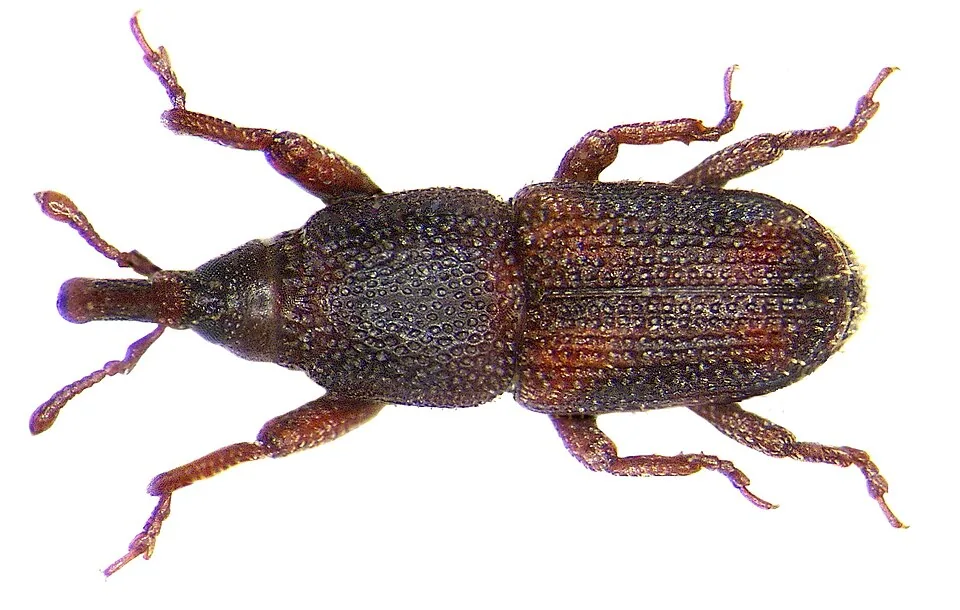
Look for the projecting snout; inspect whole grain for concealed stages and exit holes.
Identification limits & photo credit
One preserved snouted grain weevil. Rice and maize weevils are very similar and need fine characters for reliable separation. Inspect grains; the photograph does not identify all pantry beetles.
Rice weevil, dorsal specimen view. Photo: Udo Schmidt from Deutschland. CC BY-SA 2.0. Original source · CC BY-SA 2.0 & details
Sources for this section
University of California Statewide IPM Program · University of Maryland Extension
Differences that change the decision
A similar-looking organism can need a different response. Compare the evidence and what it changes.
Compare every column. On a narrow screen, scroll the table sideways.
| Type | What to check | What changes |
|---|---|---|
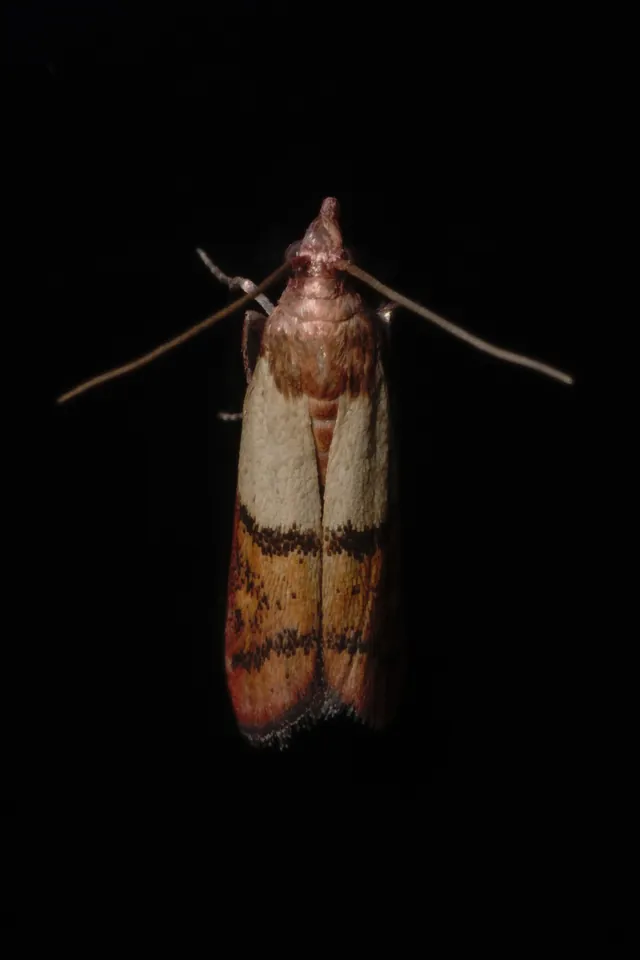
| Indianmeal moth | The forewing is pale near the body and coppery farther out; wear may obscure the pattern. Larvae leave silk in food. | Inspect grains, nuts, dried fruit, spices, animal food and nearby crevices. The larval stage contaminates food; an adult trap does not remove the source. |
| Meal and Mediterranean flour moths | Meal moths have reddish-brown bands around a paler central wing area. Mediterranean flour moths have pale grey forewings with dark wavy markings. | Keep an intact specimen when the Indianmeal pattern does not fit. Inspect flour, processed grain and seed storage; a different pantry-moth appearance is not evidence of clothes-moth damage. |
| Angoumois grain moth | A small pale yellow to brown moth; the larva develops inside a whole cereal kernel and the adult emerges through an exit hole. | Prioritise whole grain, seed and stored corn. Internal feeding can be missed by checking only for surface webbing, and an adult moth can be found away from the affected stock. |
| Drugstore and cigarette beetles | Both are small, rounded brown beetles. Drugstore beetles (Stegobium paniceum) have lined wing covers and a three-segment antenna club; cigarette beetles (Lasioderma serricorne) have smooth-looking covers and sawlike antennae. | Magnification is usually needed. Search spices, pet food and dried decorative material as well as flour; cigarette beetles can also develop in stored tobacco. |
| Red and confused flour beetles | Elongate reddish-brown adults occur with pale larvae in processed or damaged grain. Antenna form separates the similar species. | The homeowner response is source removal for either species. Examine flour, meal and residues rather than relying only on intact kernels. |
| Sawtoothed and merchant grain beetles | Flattened adults have small toothlike projections along the sides behind the head. | Their household management is similar. Check cereals, nuts, dried fruit and animal feeds; identifying the infested product matters more than separating these two species. |
| Warehouse and cabinet beetles | Hairy larvae or cast skins may occur among food; adults can be dark or patterned. | Inspect both food and animal-derived materials. Discard contaminated food; larval hairs are another reason not to salvage it by sifting. |
| Rice, maize and granary weevils | Adults have a conspicuous snout. Hidden larvae develop inside whole kernels, leaving exit holes. | Prioritise rice, grain and seed containers. A superficially clean packet can still contain internal stages. |
| Bean weevils and other seed borers | Bean weevils lack the obvious long snout and develop in dried pulses. Lesser grain borers are another stored-grain group. | Open suspect seed or pulse stock carefully over a tray. Preserve an unfamiliar borer for confirmation rather than calling it a structural wood pest. |
| Spider beetles | A rounded body and long legs can look spiderlike, but the adult is an insect with antennae. | Search neglected dry products and hidden organic material. A specimen helps avoid mistaking it for a tick. |
Sources for this section
University of California Statewide IPM Program · University of Minnesota Extension · University of Maryland Extension · University of Florida IFAS Extension · University of Florida IFAS Extension · University of Florida IFAS Extension · University of Arkansas Division of Agriculture Extension · Penn State Extension
What else could it be?
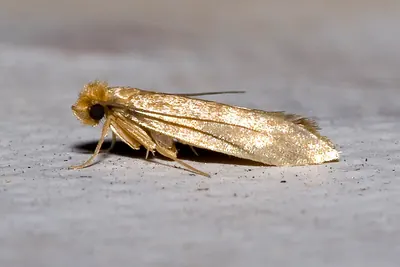
Clothes moths
Larvae associated with wool, feathers or stored textiles redirect the source search away from food.
Compare clothes moths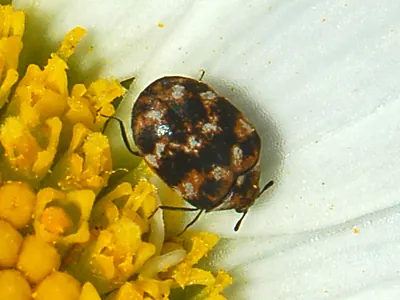
Carpet beetles
Hairy larvae may originate in animal fibres or debris; some related beetles also affect stored food. Match the source and specimen.
Compare carpet beetles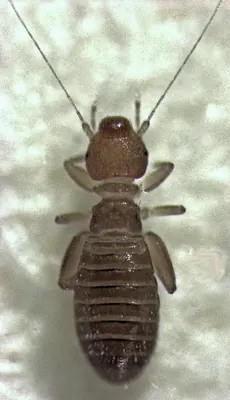
Booklice
Tiny soft-bodied insects around damp products suggest a moisture or mould issue rather than a hard-shelled pantry beetle.
Compare bookliceSources for this section
University of California Statewide IPM Program · Penn State Extension
Inspect the right places
Search beyond the obvious bag
Lay out a list of susceptible products: flour, cereal, pasta, seeds, nuts, dried fruit, spices, chocolate, pet food and birdseed. Include unopened paper or thin packaging. Inspect seams and product surfaces with a light.
Widen the search if nothing is found
Check forgotten snacks, dried flowers, decorative seed arrangements, stored animal food and spill pockets. Drugstore and cigarette beetles have broad food ranges, so a kitchen-only search can miss their source.
Separate findings from assumptions
Record which package contained insects and which only stood nearby. Photograph or contain a specimen. If there is no association with stored products, obtain identification before throwing away an entire pantry.
Choose a proportionate response
For pesticides, the local product label determines the allowed pest, site, precautions and timing. Check safety and regional guidance.
Remove confirmed sources
Seal affected products for disposal and take them out of the storage area. Do not spread material while sorting. Inspect neighbouring stock because more than one package can be involved.
Clean the empty storage space
Vacuum crumbs, shelf corners and cracks; empty the collected material promptly. Wash shelves and let them dry. Cleaning removes residues but does not create a lasting insect barrier.
Protect inspected food
Use tight glass, metal or substantial plastic containers. Thin bags and cardboard are not dependable barriers. Keep old and new stock separate so a continuing source remains traceable.
Use the right monitor
A lure must match the target species. Pheromone traps chiefly detect adults of particular species and often only males. Record catches, but continue inspecting food; an empty trap does not certify every package.
Avoid these mistakes
- Do not spray stored food or rely on household insecticides to reach insects within packages.
- Do not mix cleaning chemicals or use strong disinfectants as a supposed preventive barrier.
- Do not assume a kitchen beetle is a drugstore beetle from brown colour alone.
- Do not use a household oven or improvised fumigation to rescue contaminated food.
Sources for this section
University of California Statewide IPM Program · University of Florida IFAS Extension
Check whether it is working
Choose an editable weekly observation reminder to compare package findings and trap catches; this is an organisational default, not a scientific clearance interval.
No new infested products and declining sightings support progress. Minnesota Extension notes Indianmeal adults may still appear for up to three weeks after source removal; continued moths warrant another source search, not an automatic spray.
Get help when…
- Ask an identification service when the insect does not fit, no source is found or evidence points outside food.
- Seek professional investigation for inaccessible sources, repeated spread or a food business with stock-control obligations.
- For valuable collections or decorative objects, ask a conservator or qualified specialist before heat or cold treatment.
Sources for this section
Prevent a return
- Buy quantities that can be used promptly and rotate older stock first.
- Inspect incoming packages for damage and insect evidence.
- Clean reusable containers before refilling; never top up old stock without checking it.
- Keep bulk pet and bird food in inspectable, tightly closed containers.
Sources for this section
University of Minnesota Extension · University of Maryland Extension · University of Florida IFAS Extension
Common questions
Does this mean the kitchen is dirty?
No. An infestation can arrive in purchased material. Source location and protected storage matter more than assigning blame.
Why are there larvae on the ceiling?
Pantry-moth larvae can leave food to pupate. Inspect food sources throughout the area as well as removing accessible cocoons.
Should I keep buying moth traps?
Traps can reveal continuing activity, but they cannot replace removal of infested material. Verify the lure species and investigate persistent catches.
Sources & scope
References retain their geography and dates. A source-check date is not a claim of independent specialist review.
- Pantry Pests
University of California Statewide IPM Program. California, United States; 2013 identification, larval distinctions and stored-product groups. Checked 2026-10-15.
- Pantry pests: Insects found in stored food
University of Minnesota Extension. Minnesota, United States; 2024 review. Used for weevils, spider beetles and follow-up; reversed drugstore/cigarette scientific labels in the accessed page are not adopted. Checked 2026-10-15.
- Indian Meal Moth
University of Maryland Extension. Maryland, United States; updated 2024; source search and physical storage measures. Checked 2026-10-15.
- Drugstore Beetle
University of Florida IFAS Extension. Florida, United States; identification and source range. Historical heat, pesticide and fumigation procedures are not adopted. Checked 2026-10-15.
- Cigarette Beetle
University of Florida IFAS Extension. Florida, United States; identification, source range and monitoring limits. Product directions require current local labels. Checked 2026-10-15.
- Pantry and Stored Food Pests
University of Florida IFAS Extension. Florida, United States; stored-food group breadth, introduction and stock rotation only. Older chemical and fumigation instructions are not adopted. Checked 2026-10-15.
- Pest Management for Arkansas Field Crops: Angoumois Grain Moth
University of Arkansas Division of Agriculture Extension. Stored-grain biology only; commercial field-crop chemical programmes not adopted. Checked 2026-10-15.
- IPM for Pennsylvania Schools and Childcares
Penn State Extension. Stored-food versus clothes-moth identification table, read through indexed PDF text; direct fetch returned access denial. Checked 2026-10-15.
Individual medical or veterinary diagnosis, structural assessment, uncertain species identification and local treatment permissions require the appropriate professional. About our editorial process.
Keep investigating
Clothes Moths
Confirm larvae, silk or fresh damage in susceptible material.
Carpet Beetles
A few adult beetles at a window do not establish a fabric infestation.
Booklice
Booklice are small, non-biting insects often associated with damp, mould-supporting material.