
Remove small numbers physically
Vacuum accessible insects and debris. Widespread insecticide use is usually unnecessary.
Sources for this section
University of Minnesota Extension · Virginia Cooperative Extension
Recognize the signs
- Tiny soft-bodied insect
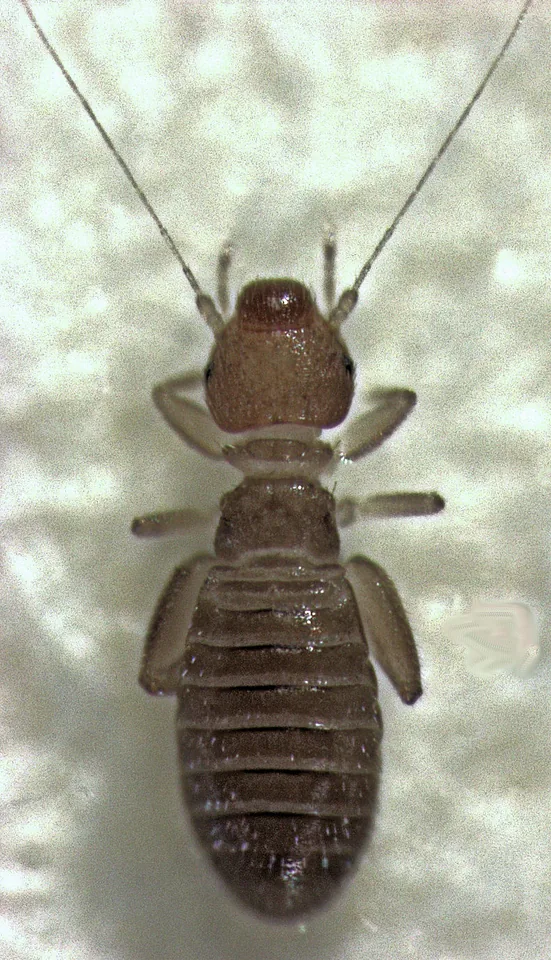
- Indoor booklice are commonly pale, grey or brown with slender antennae and a comparatively prominent head. Magnification helps; size and colour alone cannot distinguish every tiny household arthropod.
- Habitat clue
- Damp paper, cardboard, starches or mould-supporting surfaces fit booklice. Nymphs develop gradually toward the adult form. A sighting is a reason to check conditions, not proof of hidden structural decay.
Look more closely
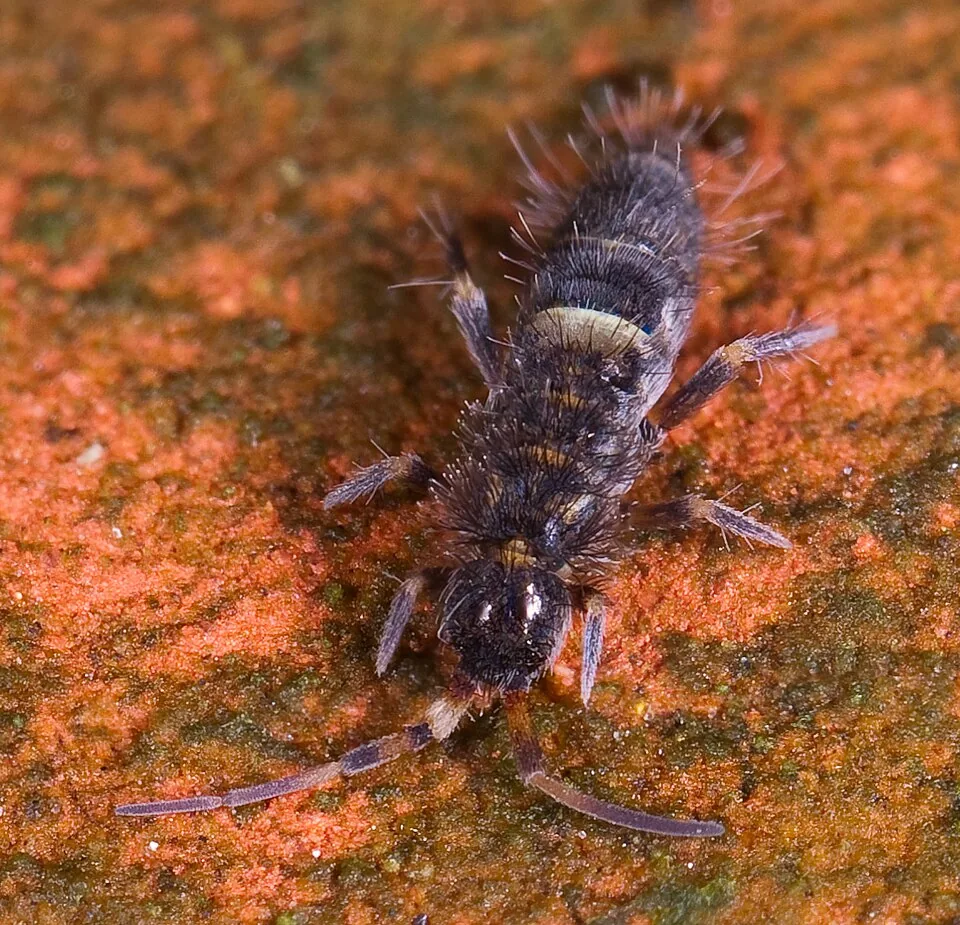
Compare the labeled examples and their limits. Images are independently enlarged, not shown at a common scale.
Identification limits & photo credit
A visibly marked springtail species photographed in Belgium. Many household springtails are paler or rounder. Jumping behavior and magnified structure help; the image alone does not identify a moisture source.
Springtail, Orchesella cincta. Photo: Mvuijlst. CC BY-SA 3.0. Original source · CC BY-SA 3.0 & details
Sources for this section
University of Minnesota Extension · Virginia Cooperative Extension
Differences that change the decision
A similar-looking organism can need a different response. Compare the evidence and what it changes.
Compare every column. On a narrow screen, scroll the table sideways.
| Type | What to check | What changes |
|---|---|---|
| Indoor booklice | Often wingless, associated with undisturbed damp material and fungal food. | Identify the moisture source and protect affected storage. |
| Outdoor barklice | Often winged or gathered on bark, feeding on surface organisms and debris. | They are not normally plant-damaging pests. An outdoor gathering does not justify spraying the tree. |
Sources for this section
University of Minnesota Extension · Virginia Cooperative Extension · Penn State Extension
What else could it be?
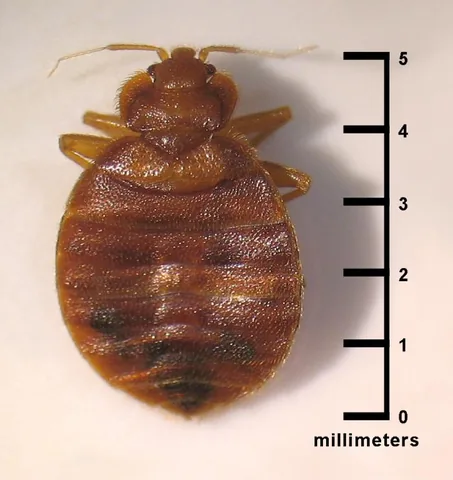
Bed bug nymphs
A bed bug diagnosis requires physical examination and evidence around resting areas; booklice have a different soft-bodied form.
Compare bed bugs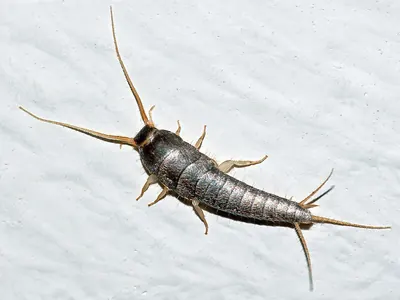
Sources for this section
Inspect the right places
Locate the damp area
Check stored boxes and paper near floors, cold surfaces or leaks. Record whether the insects occur on one object or repeatedly around the room.
Separate insects from symptoms
Contain a sample for an identification service if uncertain. Booklice do not bite; have unexplained skin symptoms assessed separately instead of assuming these insects caused them.
Sources for this section
Choose a proportionate response
For pesticides, the local product label determines the allowed pest, site, precautions and timing. Check safety and regional guidance.
Remove small numbers physically
Vacuum accessible insects and debris. Widespread insecticide use is usually unnecessary.
Correct moisture
Fix leaks and improve appropriate ventilation or dehumidification. Use a humidity reading to track conditions; Minnesota Extension identifies sustained humidity below roughly 45–50% as unsuitable for booklice, not an instant cure.
Protect affected goods
Keep paper off damp floors. Inspect food for contamination or mould and follow food-safety advice rather than spraying it. Ask a conservator about valuable affected books.
Sources for this section
University of Minnesota Extension · Virginia Cooperative Extension
Avoid these mistakes
- Do not use head-lice or skin treatments for a household booklouse.
- Do not rely on insecticide while moisture remains.
- Do not treat harmless barklice colonies on trees.
Sources for this section
University of Minnesota Extension · Virginia Cooperative Extension · Penn State Extension
Check whether it is working
Choose an editable weekly check of the same storage areas and humidity reading. It is a practical observation reminder, not a scientific clearance interval.
Improved moisture conditions and fewer insects support progress. Persistent dampness needs investigation even if insect numbers fall.
Get help when…
- Ask a building or moisture specialist about an unresolved leak or inaccessible damp area.
- Obtain specimen identification when the insect does not fit or continues after the habitat is corrected.
Sources for this section
University of Minnesota Extension · Virginia Cooperative Extension
Prevent a return
- Store boxes and paper off the floor.
- Allow newly damp materials to dry appropriately before enclosed storage.
- Keep ventilation and moisture-control repairs maintained.
Sources for this section
University of Minnesota Extension · Virginia Cooperative Extension
Common questions
Are booklice the same as head lice?
No. The similar common name does not mean they parasitise people.
Must all books be discarded?
No. Assess moisture, condition and value. Physical cleaning and habitat correction are the first investigation; fragile collections need specialist care.
Sources for this section
Sources & scope
References retain their geography and dates. A source-check date is not a claim of independent specialist review.
- Psocids (barklice, booklice)
University of Minnesota Extension. Minnesota, United States; reviewed 2024; identification, moisture management and harmlessness. Checked 2026-10-15.
- Psocids: Barklice and Booklice
Virginia Cooperative Extension. Virginia, United States; identification, incomplete development, non-parasitic biology and humidity management. Checked 2026-10-15.
- Tips for Preventing the Spread of Bed Bugs
NC State Extension. North Carolina, United States; booklice and bed bug distinctions. Checked 2026-10-15.
- Insects on Real Christmas Trees
Penn State Extension. Pennsylvania, United States; barklice biology and lack of human parasitism. Checked 2026-10-15.
Individual medical or veterinary diagnosis, structural assessment, uncertain species identification and local treatment permissions require the appropriate professional. About our editorial process.
Keep investigating
Silverfish
Three tail filaments and a tapering, wingless body suggest a silverfish relative.
Bed Bugs
Start with a specimen or physical evidence near a sleeping place.
Pantry Pests
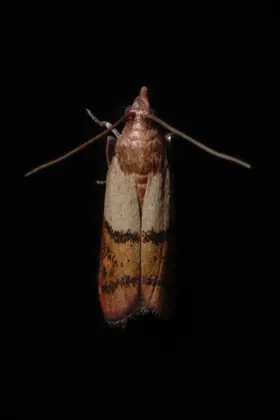
Moths or tiny beetles in a kitchen are a reason to inspect stored products, not proof that every packet is infested.