
Remove resources
Repair accessible leaks, improve appropriate ventilation and vacuum dust and crumbs. Store dry food tightly and move vulnerable paper away from damp floors.
Sources for this section
University of California Statewide IPM Program · Norwegian Institute of Public Health
Recognize the signs
- Body and young stages
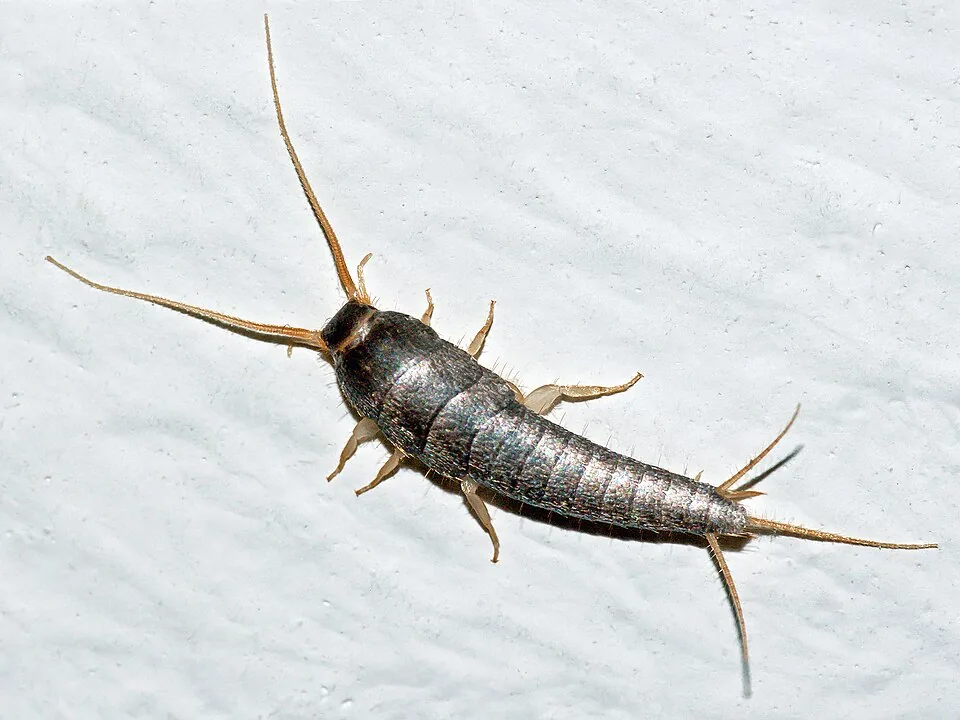
- Two long antennae, a tapered body and three fine tail appendages are useful clues. Young nymphs resemble adults but may be pale and lack conspicuous scales.
- Evidence of damage
- Grazing on paper, paste or susceptible stored material warrants inspection, but holes alone are not diagnostic. A caught insect helps establish the group.
Look more closely
Compare the labeled examples and their limits. Images are independently enlarged, not shown at a common scale.
Identification limits & photo credit
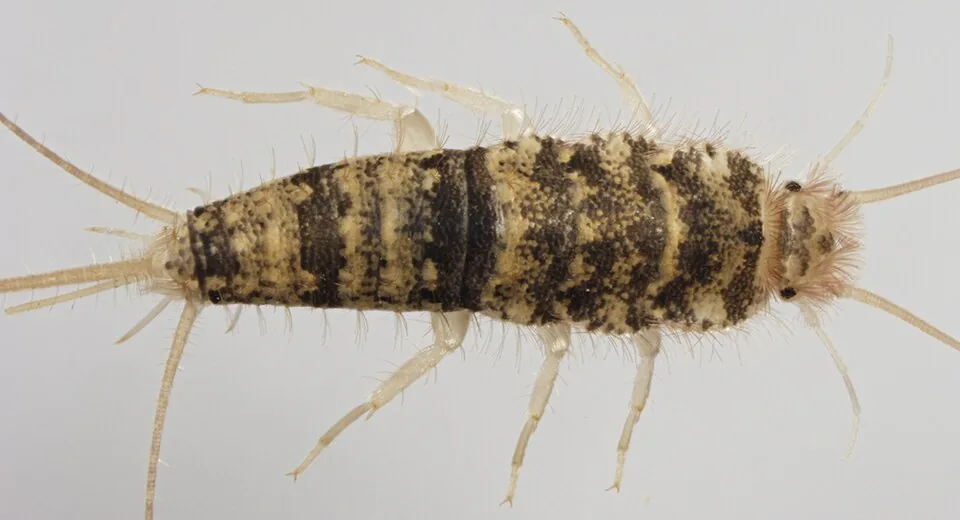
Source specimen was found in a North Carolina boiler room. Mottled coloration is an example, not a substitute for confirming warm habitat and the insect's structure.
Firebrat photographed under a microscope. Photo: KyleCMSmith. CC BY-SA 4.0. Original source · CC BY-SA 4.0 & details
Identification limits & photo credit
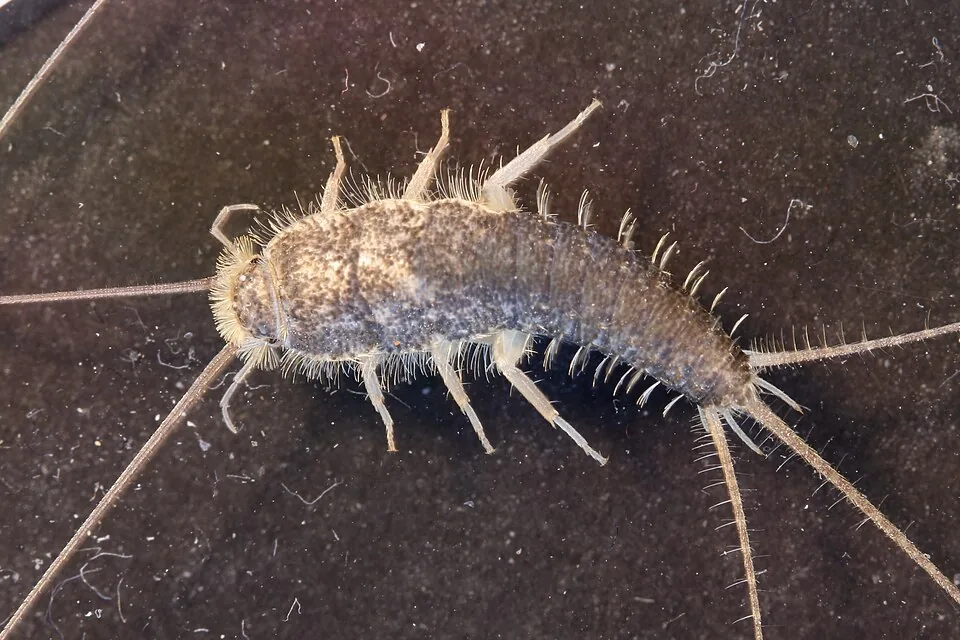
One long-tailed silverfish example. Some tail filaments extend beyond this source frame; do not measure tail-to-body ratios from it. Tail filaments and antennae are delicate on household specimens; color alone cannot separate silverfish species.
Long-tailed silverfish on a dark background. Photo: Rene Sylvestersen. CC BY-SA 4.0. Original source · CC BY-SA 4.0 & details
Sources for this section
Differences that change the decision
A similar-looking organism can need a different response. Compare the evidence and what it changes.
Compare every column. On a narrow screen, scroll the table sideways.
| Type | What to check | What changes |
|---|---|---|
| Common silverfish | Shiny silver appearance; often associated with humid bathrooms, basements and storage. | Investigate leaks, condensation and poor ventilation, then protect paper and food. |
| Firebrats | Mottled grey-brown appearance and preference for unusually warm places. | Inspect near heating equipment, ovens and hot pipes without opening appliances. Moisture control alone may miss the important hot harbourage. |
| Long-tailed or grey silverfish | Hairier, duller appearance and long tail filaments; they can persist in comparatively dry rooms. | Confirm species and map the building. Norwegian public-health guidance supports coordinated IPM and targeted authorised bait where needed; do not assume ordinary bathroom drying will resolve it. |
Sources for this section
University of California Statewide IPM Program · Norwegian Institute of Public Health
What else could it be?
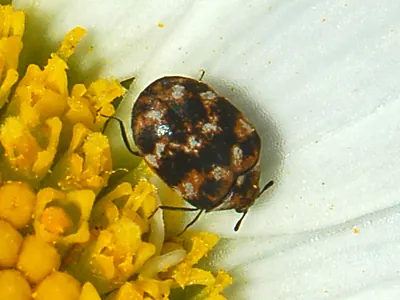
Carpet beetle larvae
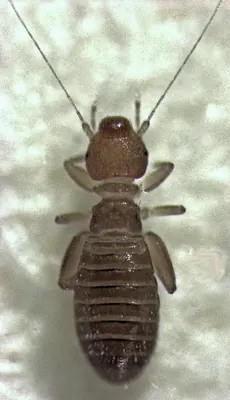
Bristly larvae are not the smooth, rapidly darting form of a silverfish relative.
Compare carpet beetlesSources for this section
Inspect the right places
Record room and conditions
Note sightings by room, near water or heat, and beside damaged material. Place small monitors along protected edges; keep them inaccessible to pets and children.
Check routes and possessions
Inspect paper storage, cardboard, food residues and pipe or cable penetrations. In a shared building, discuss findings across units rather than repeatedly treating one bathroom.
Sources for this section
Norwegian Institute of Public Health · Norwegian Institute of Public Health
Choose a proportionate response
For pesticides, the local product label determines the allowed pest, site, precautions and timing. Check safety and regional guidance.
Remove resources
Repair accessible leaks, improve appropriate ventilation and vacuum dust and crumbs. Store dry food tightly and move vulnerable paper away from damp floors.
Reduce hidden access
Seal suitable cracks and service gaps without obstructing ventilation or safety equipment. Coordinate building repairs with the responsible owner.
Match further control to identification
Occasional insects may need only removal and prevention. Persistent long-tailed silverfish merit an identified-species plan; any bait must be authorised locally and placed according to its label.
Sources for this section
University of California Statewide IPM Program · Norwegian Institute of Public Health
Avoid these mistakes
- Do not assume a silverfish found in a sink came through the drain.
- Do not equate every silverfish relative with a plumbing leak.
- Do not copy old pesticide lists or use a spray as a substitute for source and access work.
Sources for this section
Check whether it is working
Use an editable weekly observation reminder to compare catches and locations. This is a chosen recording schedule, not a clearance interval.
Look for a sustained reduction across the monitored rooms and protection of vulnerable material. A single empty trap is weak evidence for a concealed, mobile insect.
Get help when…
- Seek species identification if dry rooms remain affected after moisture work.
- Ask a professional about building-wide activity or damage to valuable papers and collections.
Sources for this section
Norwegian Institute of Public Health · Norwegian Institute of Public Health
Prevent a return
- Inspect stored cardboard and incoming objects.
- Keep food residues and paper clutter manageable.
- Maintain repairs and coordinate service-gap sealing in shared premises.
Sources for this section
Norwegian Institute of Public Health · Norwegian Institute of Public Health
Common questions
Are all silverfish moisture indicators?
No. Common silverfish often favour dampness; firebrats favour heat, and long-tailed silverfish tolerate drier rooms.
Are traps a complete treatment?
They help map activity and collect specimens. Norwegian guidance describes limited population control from glue traps alone.
Sources for this section
University of California Statewide IPM Program · Norwegian Institute of Public Health
Sources & scope
References retain their geography and dates. A source-check date is not a claim of independent specialist review.
- Silverfish and Firebrats
University of California Statewide IPM Program. California, United States; 2009 identification and habitat. Older product claims not adopted. Checked 2026-10-15.
- Long-tailed silverfish
Norwegian Institute of Public Health. Norway; updated May 2026. Biology and IPM; Norwegian bait practices do not establish authorisation elsewhere. Checked 2026-10-15.
- Examples of control of long-tailed silverfish with bait in different premises
Norwegian Institute of Public Health. Norway; 2023 case settings support building-wide coordination, not a universal treatment outcome. Checked 2026-10-15.
Individual medical or veterinary diagnosis, structural assessment, uncertain species identification and local treatment permissions require the appropriate professional. About our editorial process.
Keep investigating
Booklice
Booklice are small, non-biting insects often associated with damp, mould-supporting material.
Carpet Beetles
A few adult beetles at a window do not establish a fabric infestation.
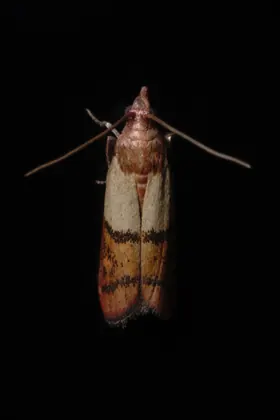
Pantry Pests
Moths or tiny beetles in a kitchen are a reason to inspect stored products, not proof that every packet is infested.