
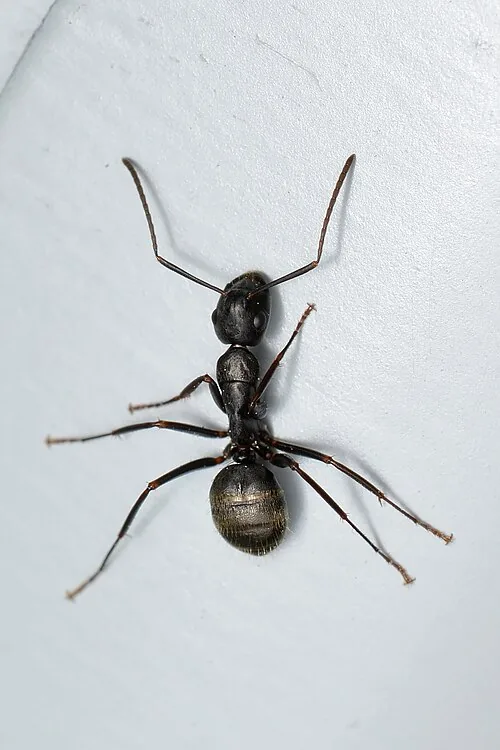
Arrange targeted nest investigation
For persistent indoor activity or structural evidence, ask an experienced professional to identify the ant and locate likely parent and satellite nests. Request an inspection scope and follow-up plan.
Sources for this section
University of Minnesota Extension · University of Kentucky Extension
Recognize the signs
- Ant structure
- Look for an elbowed antenna, narrow waist with one node and an evenly rounded profile behind the head. Workers in one colony vary in size; large and black alone is not enough.
- Nest evidence
- Coarse fibrous wood debris, sometimes mixed with insect fragments, may be expelled from galleries. Repeated activity or many winged ants indoors strengthens the case for inspection. Debris alone cannot establish damage extent.
Look more closely
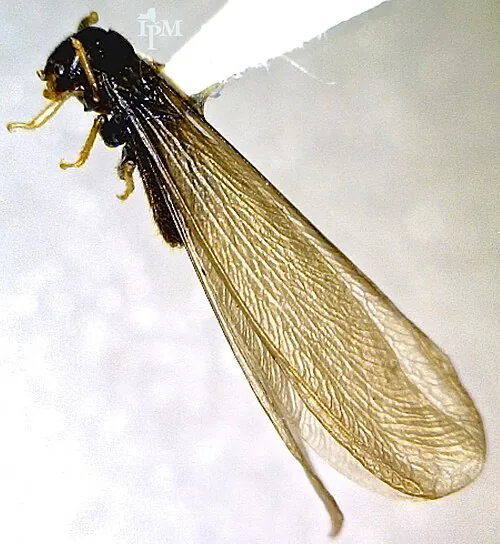
Compare the labeled examples and their limits. Images are independently enlarged, not shown at a common scale.
Identification limits & photo credit
The Cornell source identifies a winged termite without a species or collection location. This mounted specimen has overlapping wings and partly obscured body and antennae; it illustrates a swarmer's overall wing outline, not a complete waist, antenna or wing-count key. Do not infer a termite species, local distribution or infestation extent from it.
Mounted termite swarmer, species not specified. Photo: NY State IPM Program at Cornell University from New York, USA. CC BY 2.0. Original source · CC BY 2.0 & details
Sources for this section
Differences that change the decision
A similar-looking organism can need a different response. Compare the evidence and what it changes.
Compare every column. On a narrow screen, scroll the table sideways.
| Type | What to check | What changes |
|---|---|---|
| Regional Camponotus species | Western species such as C. modoc and C. vicinus differ in colour; other regions have different carpenter ants. | Use a local specimen identification rather than a colour-based universal key. The practical distinction is a wood-excavating ant versus a nonstructural lookalike. |
| Parent and satellite nests | A parent nest often occupies damp or decayed wood; satellite nests can occur in drier wood, insulation or voids. | An outdoor nest and indoor satellite may both matter. Repairing one damp board or killing exposed workers may leave the nest system intact. |
Sources for this section
What else could it be?
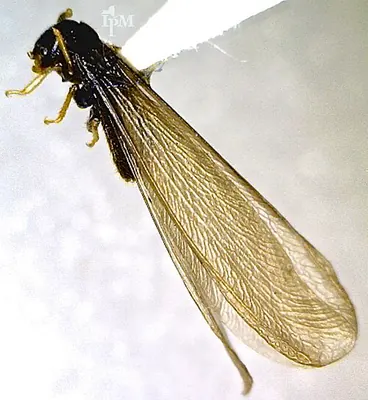
Termites
Termite swarmers have a broad waist, straighter antennae and approximately equal wings; ants have a pinched waist and shorter hindwings.
Compare termites
Other ants
Several ants are large or dark. Node count and side profile need a lens; obtain identification if uncertain.
Compare ants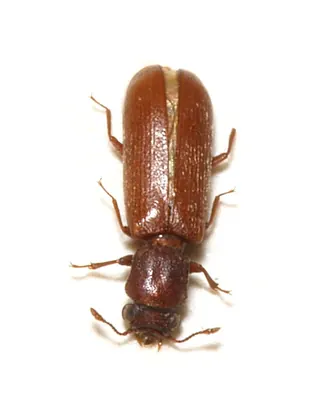
Wood-boring beetles
Round exit holes and fine or gritty boring powder suggest a different process.
Compare wood boring beetlesSources for this section
Inspect the right places
Follow activity safely
Observe established trails after dusk from accessible ground. Record direction, entry gaps and nearby trees or wood. Do not climb, handle utility lines or drill into a suspected wall void.
Investigate water history
Check around roof leaks, plumbing, window frames and wood-to-soil contact. Include past damage that may now look dry. A professional can use moisture measurements and inspect concealed areas.
Distinguish a visitor from a nest
A few workers can forage from outdoors or arrive with firewood. Record repeated locations, season and winged-ant activity. Cold-season conclusions in Minnesota guidance apply to that climate, not every country.
Sources for this section
Choose a proportionate response
For pesticides, the local product label determines the allowed pest, site, precautions and timing. Check safety and regional guidance.
Arrange targeted nest investigation
For persistent indoor activity or structural evidence, ask an experienced professional to identify the ant and locate likely parent and satellite nests. Request an inspection scope and follow-up plan.
Correct the supporting conditions
Repair leaks and appropriate ventilation, then assess damaged wood for replacement. Have structural concerns evaluated separately; pest treatment does not restore strength.
Reduce access and food
Keep food sealed, remove spills and manage branches touching the building through safe maintenance. Store firewood away from the structure and bring in limited quantities.
Evaluate bait by feeding
When a locally authorised ant bait is suitable, follow its placement and protection directions. Carpenter-ant food preferences vary. Record whether ants feed; do not contaminate bait with nearby sprays or mix a homemade toxicant.
Sources for this section
University of Minnesota Extension · University of Kentucky Extension
Avoid these mistakes
- Do not treat every large black ant as a structural infestation.
- Do not spray visible workers and assume the colony has been removed.
- Do not cut open or inject unknown wall spaces yourself; wiring, plumbing and concealed damage require competent assessment.
Sources for this section
Check whether it is working
Use an editable weekly trail and evidence review, alongside the professional or product-specific schedule. The reminder is an organisational default, not a cure interval.
Compare activity at the original routes and any new locations, verify moisture repairs and retain the provider's follow-up. Quiet trails alone do not prove inaccessible nests are gone.
Get help when…
- Seek professional inspection for repeated indoor swarmers, fresh debris or activity after control.
- Seek building assessment where wood is softened, distorted or suspected to be load-bearing.
Sources for this section
Prevent a return
- Maintain gutters, plumbing and roof repairs.
- Keep inspection access around vulnerable wood.
- Inspect firewood and stored timber before bringing it inside.
Sources for this section
Common questions
Do carpenter ants mean the house is being eaten?
They remove wood to create galleries rather than feeding on it. A substantial nest can still weaken timber, so determine location and extent.
Why did they return after the leak was fixed?
A satellite may occupy dry material or connect to a parent colony elsewhere. Continue the nest investigation rather than assuming moisture was the only factor.
Sources for this section
University of Minnesota Extension · University of Kentucky Extension
Sources & scope
References retain their geography and dates. A source-check date is not a claim of independent specialist review.
- Carpenter Ants
University of California Statewide IPM Program. California and western United States; species and nest-system biology. Older chemical advice not adopted. Checked 2026-10-15.
- Carpenter ants
University of Minnesota Extension. Minnesota, United States; seasonal evidence is climate-specific. Checked 2026-10-15.
- Carpenter Ants
University of Kentucky Extension. Kentucky, United States; prevention and professional control principles. Checked 2026-10-15.
Individual medical or veterinary diagnosis, structural assessment, uncertain species identification and local treatment permissions require the appropriate professional. About our editorial process.
Keep investigating
Termites
Swarms, tubes, pellets and damaged wood are clues that need interpretation.
Wood Boring Beetles
Exit holes and powder can outlast the insects that made them.