
Confirm activity and identity
Ask an identification service or qualified wood-pest specialist to assess the specimen and evidence. A measured inspection period may be appropriate where no immediate structural concern exists.
Sources for this section
Recognize the signs
- Hidden larval feeding
- Larvae do most of the feeding inside wood. Adults leave emergence holes; the adult may be found at a window far from its origin. A hole establishes emergence at some time, not necessarily an active present infestation.
- Keep several clues together
- Record the hole shape and size, powder texture, timber or object type and a specimen. These support identification; do not approve a costly treatment based on dust alone.
Look more closely
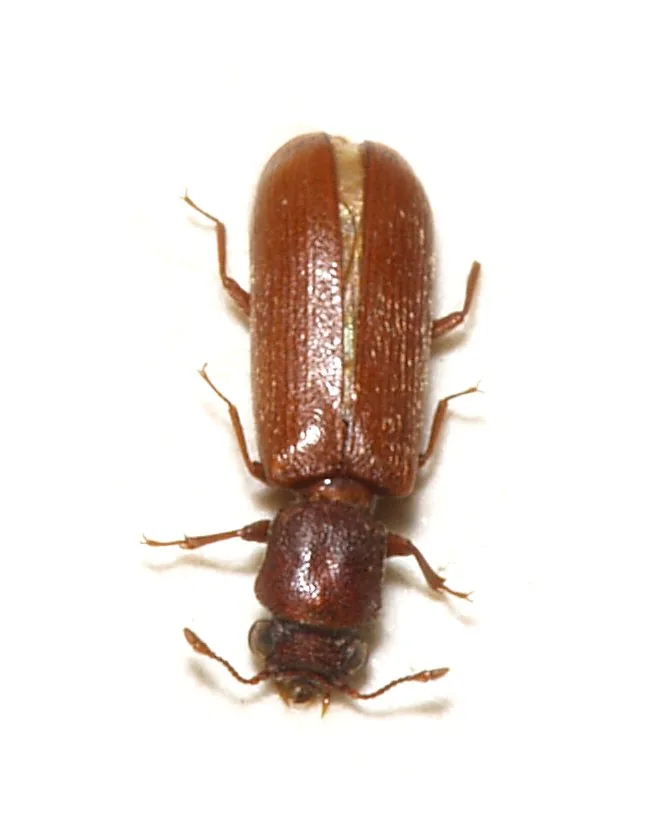
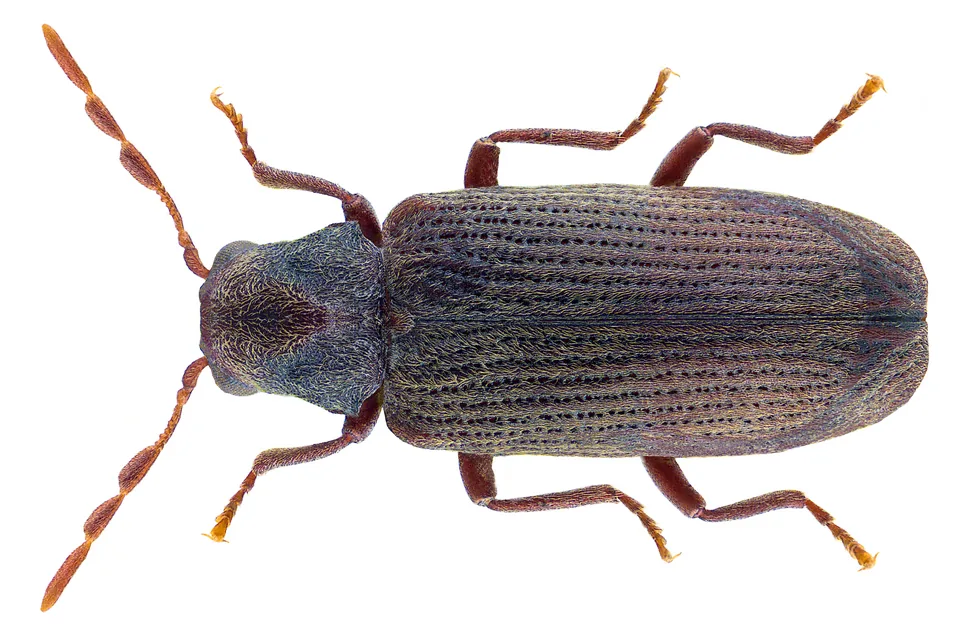
Compare the labeled examples and their limits. Images are independently enlarged, not shown at a common scale.
Identification limits & photo credit
One preserved adult. Similar wood-boring beetles require fine characters; an adult photograph cannot date exit holes or establish active structural damage.
Common furniture beetle, dorsal specimen view. Photo: Udo Schmidt from Deutschland. CC BY-SA 2.0. Original source · CC BY-SA 2.0 & details
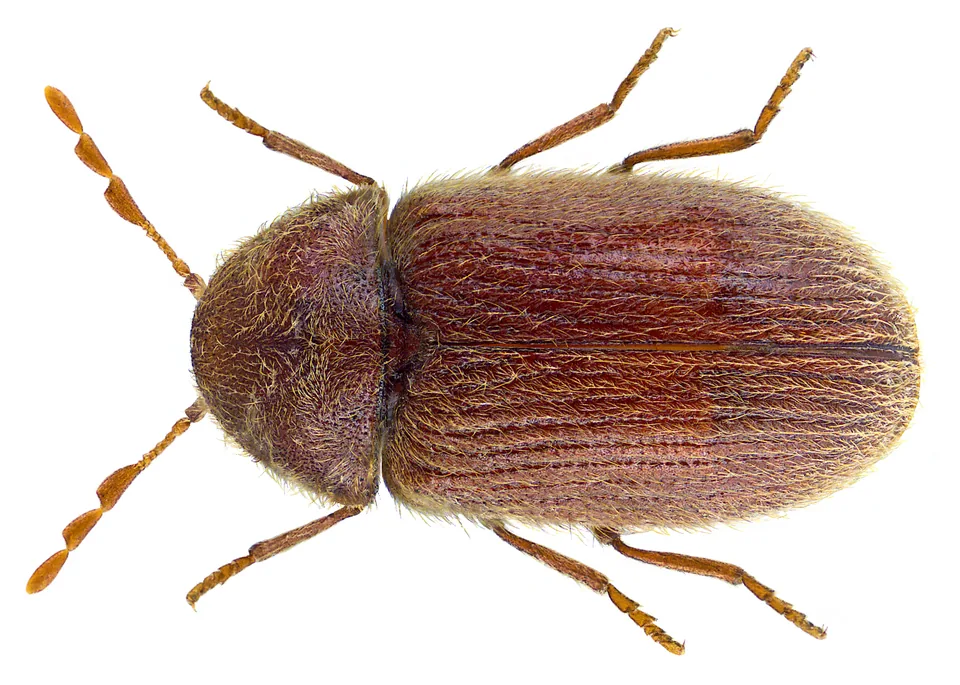
Check the lined wing covers and enlarged end segments of the antenna. Fine characters need magnification.
Identification limits & photo credit
One magnified stored-product beetle. The longitudinal wing-cover rows and clubbed antennae are fine characters; inspect suspect products and distinguish cigarette beetles or furniture beetles before choosing action.
Drugstore beetle, dorsal specimen view. Photo: Udo Schmidt from Deutschland. CC BY-SA 2.0. Original source · CC BY-SA 2.0 & details
Sources for this section
University of California Statewide IPM Program · University of Kentucky Extension
Differences that change the decision
A similar-looking organism can need a different response. Compare the evidence and what it changes.
Compare every column. On a narrow screen, scroll the table sideways.
| Type | What to check | What changes |
|---|---|---|
| True powderpost beetles | Small round holes and very fine flourlike powder; susceptible hardwood or bamboo is typical. | Inspect unfinished susceptible materials and recent flooring or furniture. Softwood framing is not the usual target of this group. |
| Deathwatch and furniture-beetle relatives | Boring powder may be grittier; some species favour damp or partly decayed timber. | Identify the local species and investigate moisture and wood condition. Do not generalise California species preferences to every furniture beetle. |
| False powderpost beetles | Often tightly packed, coarser boring material; some arrive in hardwood or bamboo products. | Trace the object or timber source and confirm reinfestation potential. A newly emerged imported beetle does not automatically mean all house timber is susceptible. |
| Old house borer | A longhorned beetle associated with coniferous structural timber; emergence holes are larger and oval. | Despite the name, newer timber can be involved. Obtain expert identification and inspect relevant softwood members rather than applying a hardwood powderpost assumption. |
| Forest and firewood borers | Various longhorned, flatheaded or bark beetles can emerge from firewood or previously infested milled wood. | Many cannot reinfest seasoned house timber. Preserve the adult and determine its biology before treating the building. |
Sources for this section
University of California Statewide IPM Program · University of Kentucky Extension · University of Maryland Extension · Penn State Extension
What else could it be?
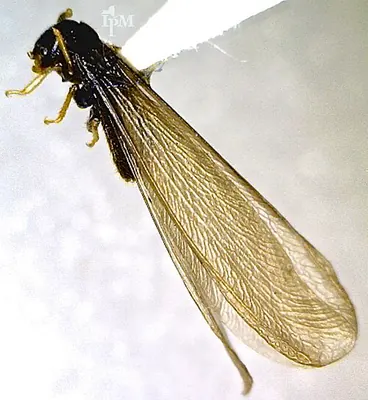
Drywood termites
Ridged pellets differ from flourlike dust; a specialist may need to examine the sample.
Compare termites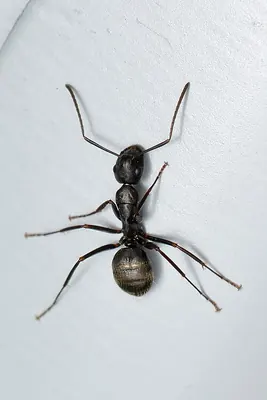
Carpenter ants
Coarse fibrous debris and ants suggest excavation rather than beetle emergence.
Compare carpenter ants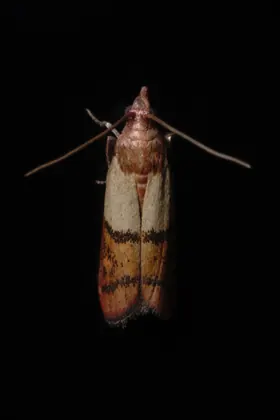
Pantry beetles
Small brown adults may originate in food rather than wood; inspect the source.
Compare pantry pestsSources for this section
Inspect the right places
Create a baseline
Photograph and date the affected area before cleaning loose debris. Note existing holes so later observations can distinguish a new hole from one already present.
Check timber and access
Record moisture problems, wood finish and recent furniture or building work. Have concealed or structural areas inspected safely; do not remove load-bearing material to search.
Sources for this section
Choose a proportionate response
For pesticides, the local product label determines the allowed pest, site, precautions and timing. Check safety and regional guidance.
Confirm activity and identity
Ask an identification service or qualified wood-pest specialist to assess the specimen and evidence. A measured inspection period may be appropriate where no immediate structural concern exists.
Choose a proportionate remedy
A limited infested piece may be removable or replaceable; widespread or inaccessible activity requires professional options. Discuss finish, penetration limits and reinfestation risk.
Correct moisture and introductions
Repair damp conditions, inspect incoming wood and keep firewood outdoors until needed. Ask a conservator about furniture or art rather than applying a general timber treatment.
Sources for this section
Avoid these mistakes
- Do not regard every longhorned beetle indoors as a structural pest.
- Do not paint over an active problem and assume larvae already inside are killed.
- Do not use homemade fumigation, oven treatment or an unverified freezer cycle on wood.
- Do not take a clean surface as proof that concealed timber is sound.
Sources for this section
Check whether it is working
Agree an evidence-check period with the inspector; emergence can be seasonal and development prolonged. An editable reminder records observations, not a scientific clearance interval.
Look for new emergence, confirmed live stages and fresh associated debris. Keep dated comparisons; short-term silence cannot rule out hidden larvae.
Get help when…
- Use a licensed specialist for inaccessible or widespread activity.
- Obtain a structural assessment where timber integrity is in question.
- Seek expert identification before moving suspect timber or valuable objects elsewhere.
Sources for this section
Prevent a return
- Inspect timber and secondhand wood objects.
- Use appropriately dried building materials and maintain suitable finishes.
- Control persistent dampness and keep inspection records.
Sources for this section
Common questions
Does woodworm mean one species?
No. It is a common description for wood-boring larvae. The species and timber determine the risk and treatment.
Will fumigation prevent another infestation?
It does not provide lasting protection by itself. Discuss preventive conditions and future monitoring with the provider.
Sources for this section
Sources & scope
References retain their geography and dates. A source-check date is not a claim of independent specialist review.
- Wood-Boring Beetles in Homes
University of California Statewide IPM Program. California, United States; powder/frass distinctions and non-reinfesting forest borers; older treatment recipes not adopted. Checked 2026-10-15.
- Powderpost Beetles
University of Kentucky Extension. Kentucky, United States; group distinctions, activity uncertainty and wood susceptibility. Checked 2026-10-15.
- Old House Borer
University of Maryland Extension. Maryland, United States; updated 2024; professional assessment, replacement and prevention. Checked 2026-10-15.
- Old House Borer
Penn State Extension. Pennsylvania, United States; accessed page updated 2026 with underlying 2007 revision. Used for identification; old fumigant list not adopted. Checked 2026-10-15.
Individual medical or veterinary diagnosis, structural assessment, uncertain species identification and local treatment permissions require the appropriate professional. About our editorial process.
Keep investigating
Termites
Swarms, tubes, pellets and damaged wood are clues that need interpretation.
Carpenter Ants
Carpenter ants excavate wood for shelter; they do not eat it.
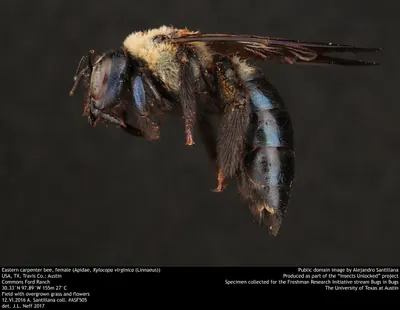
Carpenter Bees
A large bee entering a round timber hole may be a carpenter bee.