
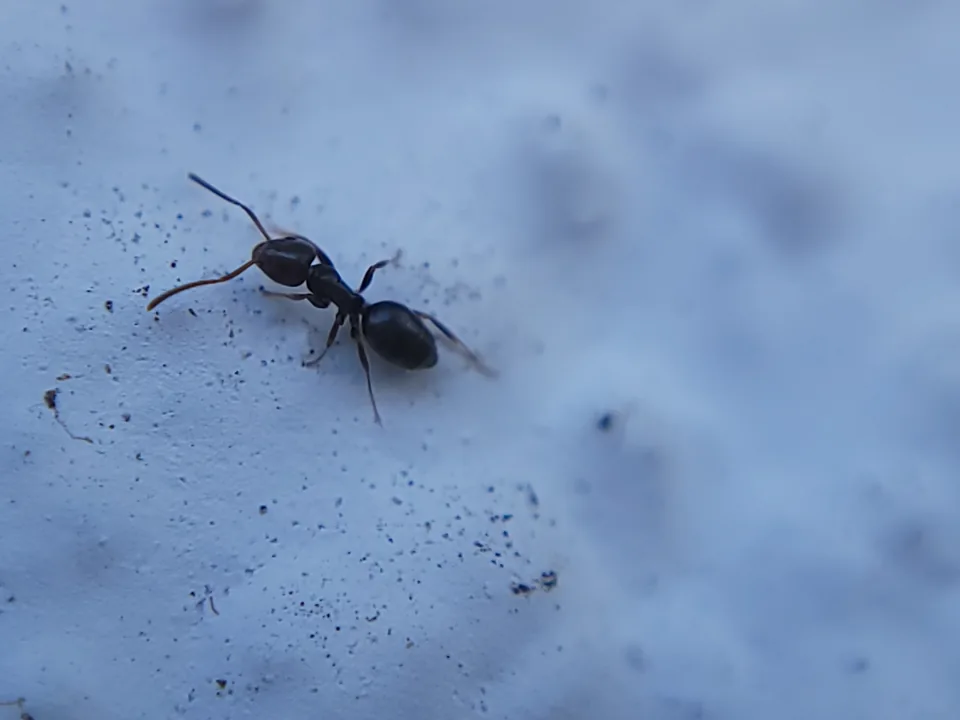
Remove the reason to enter
Seal food in containers, clean residues, empty and rinse recycling, and repair water sources. Close verified exterior gaps and trim plant bridges where safe. When a trail has been documented, vacuuming or routine surface cleaning can remove accessible workers.
Sources for this section
University of California IPM · University of Minnesota Extension · University of Florida IFAS · University of Florida IFAS · Penn State Extension · University of Florida IFAS · University of Florida IFAS · Texas A&M AgriLife Extension · Texas A&M University · Utah State University Extension
Recognize the signs
- A narrow waist and bent antennae
- Workers normally have six legs, elbowed antennae and one or two waist nodes. A clear side photograph can reveal the waist; a top photograph alone often cannot. Colour and size narrow the possibilities but do not settle them.
- Different workers are not necessarily different species
- Some colonies have workers of different sizes. Queens and winged males also look different from workers. Ants develop through egg, legless larva, pupa and adult; pale brood found with workers indicates a nest or a colony being moved.
- The trail is evidence
- Record whether ants come through one exterior gap, emerge from an interior void, visit a food spill or climb a plant with honeydew-producing insects. A trail to a window does not establish that the window frame contains the nest.
- A useful specimen
- For small non-stinging ants, obtain an intact specimen using the receiving identification service's instructions. Include location, approximate size, photographs from above and the side, and where the ants were feeding. Do not disturb a suspected stinging nest to get a photograph.
Look more closely
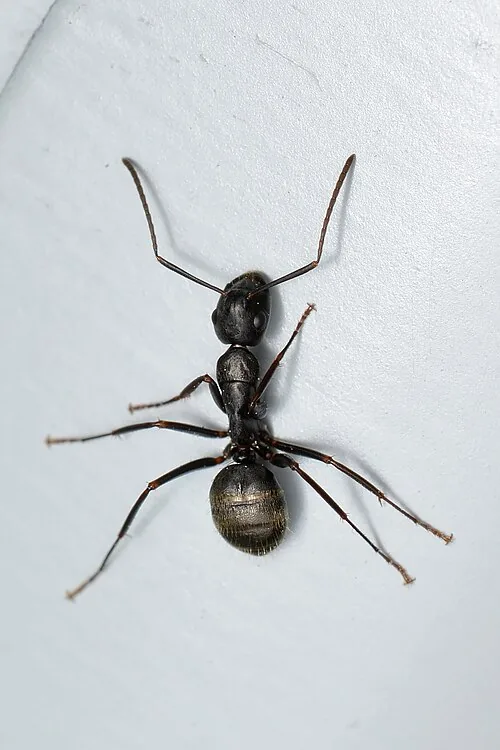
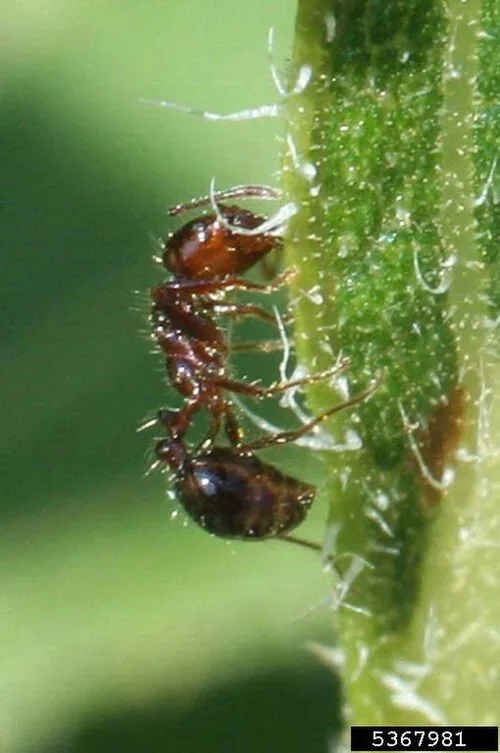
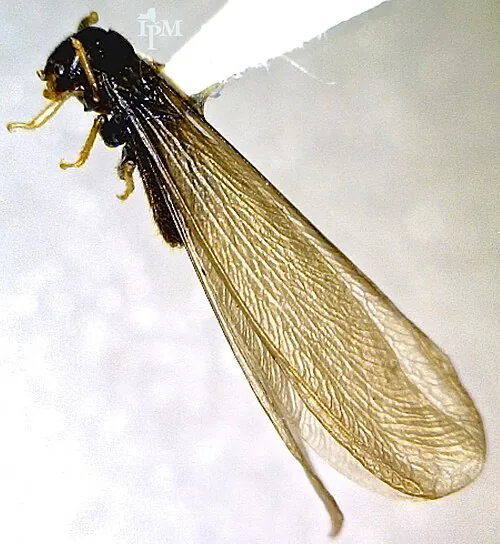
Compare the labeled examples and their limits. Images are independently enlarged, not shown at a common scale.
Identification limits & photo credit
One North American carpenter ant example. Other carpenter ants differ in color and size. The image does not establish nesting in a building or distinguish every similar ant.
Eastern black carpenter ant. Photo: Ryan Hodnett. CC BY-SA 4.0. Original source · CC BY-SA 4.0 & details
Identification limits & photo credit
One worker example. Other stinging ants and imported-fire-ant hybrids can look similar. Do not handle ants or disturb a mound to reproduce this view.
Red imported fire ant worker foraging. Photo: Russ Ottens / Forestry Images. CC BY 3.0 us. Original source · CC BY 3.0 us & details
Identification limits & photo credit
The Cornell source identifies a winged termite without a species or collection location. This mounted specimen has overlapping wings and partly obscured body and antennae; it illustrates a swarmer's overall wing outline, not a complete waist, antenna or wing-count key. Do not infer a termite species, local distribution or infestation extent from it.
Mounted termite swarmer, species not specified. Photo: NY State IPM Program at Cornell University from New York, USA. CC BY 2.0. Original source · CC BY 2.0 & details
Sources for this section
University of California IPM · University of Minnesota Extension
Differences that change the decision
A similar-looking organism can need a different response. Compare the evidence and what it changes.
Compare every column. On a narrow screen, scroll the table sideways.
| Type | What to check | What changes |
|---|---|---|
| Argentine ant | Small brown workers of similar size often form conspicuous trails. Multiple queens and interconnected outdoor nests can support repeated invasions. | Trace the exterior network and its food and water sources. A single indoor spray misses the larger colony. Sweet-feeding trails may accept labelled bait, but verify feeding and maintain the stations. |
| Odorous house ant | Small, dark workers have a waist node that is difficult to see from above. The characteristic odour is supporting evidence, not a reason to handle or crush unknown ants. | Inspect both outside nests and moist interior voids. Persistent trails after cleaning need identification and a colony-focused plan, rather than repeatedly treating the spot where workers appear. |
| Pavement ant | Two waist nodes and fine grooves on the head and thorax are visible under magnification. Soil displaced at paving joints and foundation cracks is a useful location clue. | Inspect slab edges and outdoor joints. A colony beneath a heated slab can produce winter activity; sealing an obvious surface crack alone may leave the nest in place. |
| Pharaoh ant | Very small yellowish ants can resemble thief ants. Antennal segments and the three-part club generally require magnification. | Arrange identification and coordinated bait management, especially in flats or large buildings. Repellent treatment or disturbance can split the infestation into daughter colonies. A room-by-room spray programme can make the problem harder. |
| Ghost ant | A dark head and middle body contrast with a very pale abdomen and legs. Tiny workers can be hard to see against light surfaces. | Inspect potted plants, cabinet edges and small moist voids as well as outside trails. Multiple small nest sites may be involved. Check whether a labelled bait is actually being fed on rather than judging by its placement alone. |
| Thief ant | Tiny yellow to light brown ants have two nodes, very small eyes and a two-part antennal club. Separating them from pharaoh ants usually needs a specimen. | Inspect fats and protein foods as well as sweet spills. Do not assume every tiny yellow ant will take a sugar bait; confirm the species and feeding response before escalating treatment. |
| Little black ant | Monomorium minimum is a particular tiny, shiny black, two-node ant. The everyday phrase little black ant also describes several unrelated species. | Confirm the waist and other features before treating it as this species. For confirmed activity, trace the small trails and check acceptance of an appropriate sweet bait; do not infer a species from colour alone. |
| Longhorn crazy ant | Dark workers have conspicuously long legs and antennae and often move rapidly in irregular directions. | Allow a wider inspection area: the nest can be far from a feeding site. Record the route toward sheltered nesting places instead of treating only the busiest kitchen patch. |
| Tawny crazy ant | Reddish-brown, similar-sized workers may occur in extremely large numbers in moist litter, pots and debris without a conventional soil mound. Related ants can require specialist separation. | Seek local identification and a professional integrated plan. Spraying alone is unreliable, reinvasion is possible, and repeated applications remain limited by the label. Ants around electrical equipment need a qualified service, not DIY access to live equipment. |
| Acrobat ant | The abdomen is heart-shaped when seen from above and may be raised over the body. Workers have two nodes. | Look for rotting wood, leaks and infested voids. Correct the moisture and damaged material. Do not automatically diagnose carpenter-ant structural excavation from the presence of these ants. |
| Field ant | Formica workers can be large and dark or reddish and are often mistaken for carpenter ants. Body profile and other features help an expert separate them. | Look for the soil nest before opening wood. In the Minnesota guidance these are outdoor nesters; incidental visitors generally do not justify treating a house as a carpenter-ant infestation. |
| Harvester ants | Many are relatively large ants associated with a cleared area, a central soil opening and seed collection. Species and colour vary; some deliver a powerful sting. | Keep people and pets away from an occupied nest while assessing the conflict. Preserve colonies where practical: they are part of local food webs. A nest in a play area needs a site-specific plan, not indiscriminate lawn treatment. |
| Texas leafcutting ant | Rust-brown workers of different sizes carry pieces of leaves along trails to a nest with numerous openings. Prominent spines distinguish them under close examination. | Confirm ants carrying cut foliage before blaming them for leaf holes. Protect affected plants through local extension advice; a deep, extensive fungus-growing colony is a different problem from ants visiting nectar. |
| Pyramid ants | A small pyramid-like projection on the rear of the thorax is the key feature. Small crater-shaped soil entrances often occur in open sunny ground. | These are chiefly outdoor nesters. Follow indoor workers back to the entry gap, remove the attraction and exclude them. Tolerate an outdoor nest that creates no practical conflict. |
| White-footed ant | Dark workers have contrasting pale feet. Florida guidance identifies the common pest as Technomyrmex difficilis, a name formerly confused with another species. | Inspect tree and shrub bridges, honeydew sources and multiple connected nesting sites. Large persistent infestations usually benefit from professional coordination; one treated trail may leave many other populations. |
| Yellow or citronella ants | Larger yellow ants are pale yellow to reddish brown and associated with a citronella-like odour when disturbed. Winged forms may emerge from soil beneath a heated slab. | Confirm that swarmers are ants. Minnesota guidance describes them as a nuisance rather than wood-destroyers; collect or vacuum accessible swarmers and investigate the route before commissioning structural treatment. |
Sources for this section
University of California IPM · University of Minnesota Extension · University of Florida IFAS · University of Florida IFAS · Penn State Extension · Mississippi State University Extension · University of Florida IFAS · University of Florida IFAS · University of Florida IFAS · Texas A&M AgriLife Extension · Texas A&M University · Utah State University Extension
What else could it be?
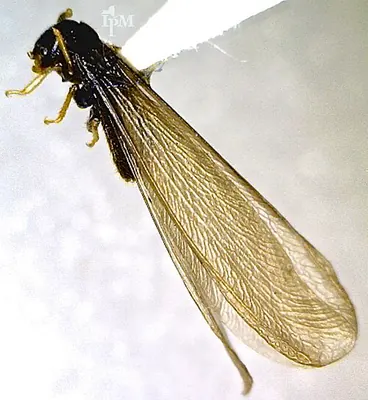
Termite swarmers
Termites have a broad waist, relatively straight beaded antennae and four similarly sized wings. Winged ants have a pinched waist and shorter hind wings. Keep an intact specimen when the distinction is unclear.
Compare termites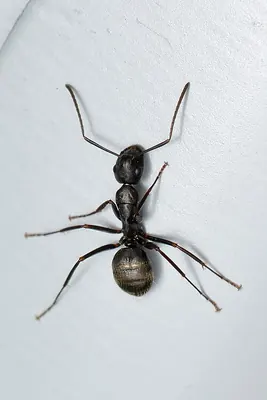
Carpenter ants
Large ants alone are insufficient evidence. Carpenter ants excavate wood; fibrous debris, nest location and worker anatomy help distinguish them from field ants.
Compare carpenter ants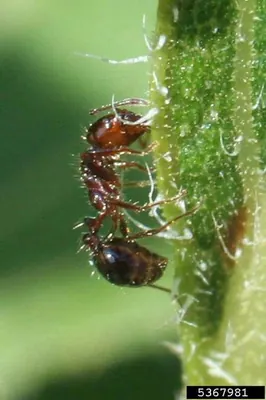
Fire ants
Red colour is not diagnostic. Variable worker size, nest features and specialist identification matter; do not test an unknown nest by provoking a sting.
Compare fire antsSources for this section
Inspect the right places
Map one trail before cleaning it
Note the date, room, food or water source and exact entry point. Watch from a safe distance to see whether workers travel outside or disappear into a wall. Photograph the route, then clean the food residue and trail. This preserves useful evidence while removing the immediate attraction.
Inspect the kitchen as a resource map
Check beneath small appliances, sticky bottle bases, recycling, stored pet food and the sink cabinet. Fix drips and check condensation. If ants keep returning to a clean counter, extend the search toward their entry route rather than repeatedly increasing cleaning chemicals.
Continue outside
Look along the foundation, irrigation leaks, touching branches, pots and honeydew-producing insects. Keep the species question open: the ants on a plant may be collecting honeydew, while the cause of the plant's damage is another organism.
Check an interior-nest hypothesis
Repeated emergence from a void, brood or swarmers warrants closer assessment. Save evidence before repairs. In a shared building, report the locations to management so adjacent rooms and services can be considered together.
Sources for this section
University of California IPM · University of Minnesota Extension · University of Florida IFAS · University of Florida IFAS · Texas A&M University
Choose a proportionate response
For pesticides, the local product label determines the allowed pest, site, precautions and timing. Check safety and regional guidance.
Remove the reason to enter
Seal food in containers, clean residues, empty and rinse recycling, and repair water sources. Close verified exterior gaps and trim plant bridges where safe. When a trail has been documented, vacuuming or routine surface cleaning can remove accessible workers.
Choose a colony-directed response when needed
For a confirmed nuisance species, use only a locally authorised bait labelled for that pest and placement. Place it where the ants encounter it and children or animals cannot. Follow label inspection and replacement directions; dried, exhausted or ignored bait is not a completed treatment.
Judge feeding before judging success
A species may accept one food base and ignore another, and needs can change. Record whether ants feed, which trails remain and whether new rooms become involved. Do not mix a homemade formulation or increase a pesticide concentration to force a faster result.
Keep incompatible treatments apart
Do not spray ants or trails that are being used to carry bait. For suspected pharaoh ants, obtain a coordinated professional plan before attempting repellent sprays. For white-footed or tawny crazy ants, ask how all nesting areas and reinvasion will be addressed.
Make outdoor control proportionate
An ant mound without stings, invasion or plant damage may need no treatment. Obtain local advice for leafcutters, harvesters or an unfamiliar invasive ant before treating a whole garden. Preserve useful ants wherever the household task can be solved by exclusion.
Sources for this section
University of California IPM · University of Minnesota Extension · University of Florida IFAS · University of Florida IFAS · Penn State Extension · University of Florida IFAS · University of Florida IFAS · Texas A&M AgriLife Extension · Texas A&M University · Utah State University Extension
Avoid these mistakes
- Calling every small ant a sugar ant or grease ant and choosing a pesticide from that nickname.
- Treating a short-lived absence of workers as proof that all queens and nests are gone.
- Using a repellent spray on suspected pharaoh ants, which can encourage colony splitting.
- Pouring fuel, boiling water or improvised chemicals into nests; these create hazards and do not provide a reliable household plan.
- Applying a product to a drain, food surface, electrical void, edible plant or pet area unless that exact use is authorised on its label.
Sources for this section
University of California IPM · University of Minnesota Extension · University of Florida IFAS · University of Florida IFAS
Check whether it is working
Use an editable observation reminder to revisit the recorded trail locations and check bait feeding. Product labels set servicing and application limits. UF guidance suggests checking ghost-ant bait feeding within one or two days; this is an acceptance check, not an eradication deadline.
Comparable observations show fewer workers and fewer occupied trails, with food and water sources corrected and no new interior locations. A clean counter on one day cannot establish that a complex colony has been eliminated.
Get help when…
- Tiny yellow ants, widespread indoor colonies or activity in a shared building: seek specimen identification and coordinated pest management.
- Wood debris, moisture damage or repeated emergence from structural timber: use the carpenter-ant or termite route and obtain an appropriate inspection.
- Stinging ants, a suspected reportable invasive species or ant activity in electrical equipment: keep clear and contact the relevant local authority or professional.
Sources for this section
University of California IPM · University of Florida IFAS · University of Florida IFAS
Prevent a return
- Repair leaks and condensation rather than treating water-seeking trails indefinitely.
- Store food and pet feed tightly closed; clean spills in inaccessible appliance gaps.
- Maintain door seals, screens and service-entry seals; prune vegetation touching the building.
- Inspect incoming pots and outdoor items before moving them into another room or property, particularly in invasive-ant areas.
Sources for this section
University of California IPM · University of Florida IFAS · University of Florida IFAS · University of Florida IFAS
Common questions
Why are there more ants after I put out bait?
A feeding site can recruit workers. First check that the product is labelled for the species and location and that ants actually feed. Use the observation record to distinguish temporary recruitment from activity spreading into new rooms; do not add a conflicting spray.
Why does the same kitchen trail return?
The food or water source may remain, the nest may be outside, or several nest sites may feed the trail. Document the entry point and species before repeating a treatment that affects only visible workers.
Do winged ants mean the house is damaged?
No. Confirm ants versus termites and record whether they emerged inside or flew through an opening. Nesting location and species determine the significance; a swarm by itself does not measure damage.
Should I remove every ant nest in the lawn?
Usually the useful decision is whether that particular nest causes stings, invasion, obstructive mounds or verified plant injury. Many outdoor ants need no control. Fire ants and locally regulated invasive ants require their own assessment.
Sources & scope
References retain their geography and dates. A source-check date is not a claim of independent specialist review.
- Ants
University of California IPM. California household IPM; older product examples are not adopted as current approvals. Checked 2026-10-15.
- Ants
University of Minnesota Extension. Reviewed 2024; north-central United States biology and indoor/outdoor distinctions are region-labelled. Checked 2026-10-15.
- Ghost Ant
University of Florida IFAS. Florida species biology; historical control material is used for bait-acceptance and exclusion principles. Checked 2026-10-15.
- Pharaoh Ant
University of Florida IFAS. Species biology and colony budding; product availability is not inferred. Checked 2026-10-15.
- Ants
University of Florida IFAS. Florida household identification and integrated management. Checked 2026-10-15.
- Thief Ant
Penn State Extension. North American identification and food preferences; tiny species require specimen examination. Checked 2026-10-15.
- Bug-Wise: Household Ant Identification and Control
Mississippi State University Extension. 2009 identification table used for little black ant morphology and bait response, not current pesticide registration. Checked 2026-10-15.
- Longhorn Crazy Ant
University of Florida IFAS. Species identification and long-ranging foraging behaviour. Checked 2026-10-15.
- Integrated Pest Management of the Tawny Crazy Ant
University of Florida IFAS. Florida and southern United States; population suppression and monitoring rather than a fixed cure promise. Checked 2026-10-15.
- White-footed Ant
University of Florida IFAS. Florida biology; historic range and product statements are not presented as current. Checked 2026-10-15.
- Red Harvester Ants
Texas A&M AgriLife Extension. 2006 Texas publication; used for nesting, sting risk and conservation context. Checked 2026-10-15.
- Texas Leaf Cutting Ant
Texas A&M University. Texas species biology; outdated registration claims and chemical instructions are not adopted. Checked 2026-10-15.
- Pyramid Ants
Utah State University Extension. Current primary page; outdoor nesting, identification and exclusion. Chemical drench instructions not adopted. Checked 2026-10-15.
Individual medical or veterinary diagnosis, structural assessment, uncertain species identification and local treatment permissions require the appropriate professional. About our editorial process.
Keep investigating
Carpenter Ants
Carpenter ants excavate wood for shelter; they do not eat it.
Fire Ants
Keep people and pets away from a suspected fire-ant nest and arrange identification without disturbing it.
Termites
Swarms, tubes, pellets and damaged wood are clues that need interpretation.