
Remove food, water and shelter
Clean grease and crumbs, seal food and rubbish, repair leaks and reduce cardboard clutter. These measures improve treatment but should not delay help for established indoor activity.
Sources for this section
University of Kentucky Extension · University of Florida IFAS Extension · University of Florida IFAS Extension
Recognize the signs
- Body and stages
- Roaches have long antennae and flattened bodies. Wingless nymphs resemble smaller adults; a newly moulted individual can be pale. Beanlike egg cases, shed skins and repeated nymph catches help assess breeding.
- A monitor is stronger than a nickname
- Palmetto bug and water bug are imprecise names. Preserve a specimen or clear top-view photograph with scale. Record the room and whether it flew rather than assigning a species by size alone.
Look more closely
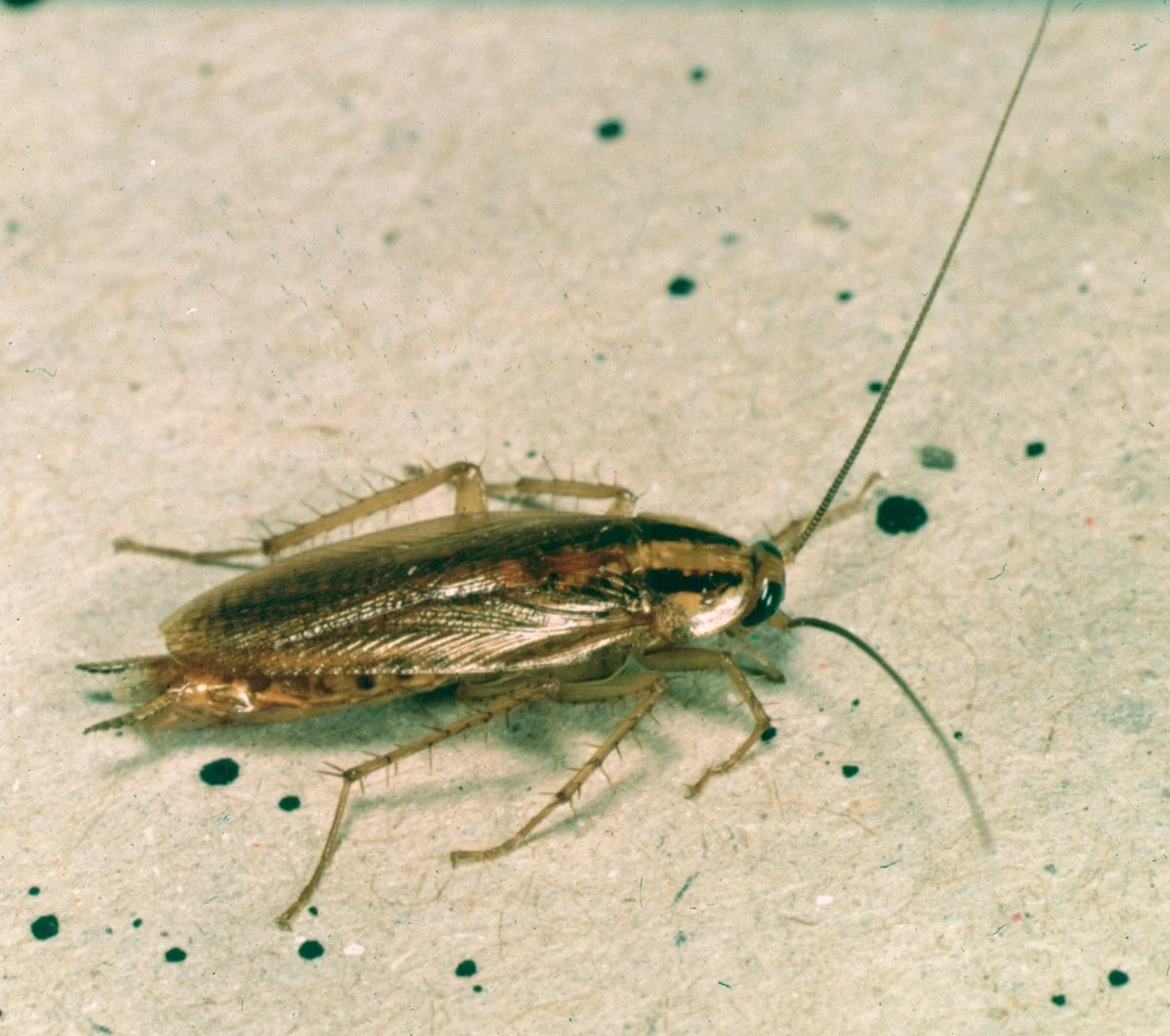
Compare the labeled examples and their limits. Images are independently enlarged, not shown at a common scale.
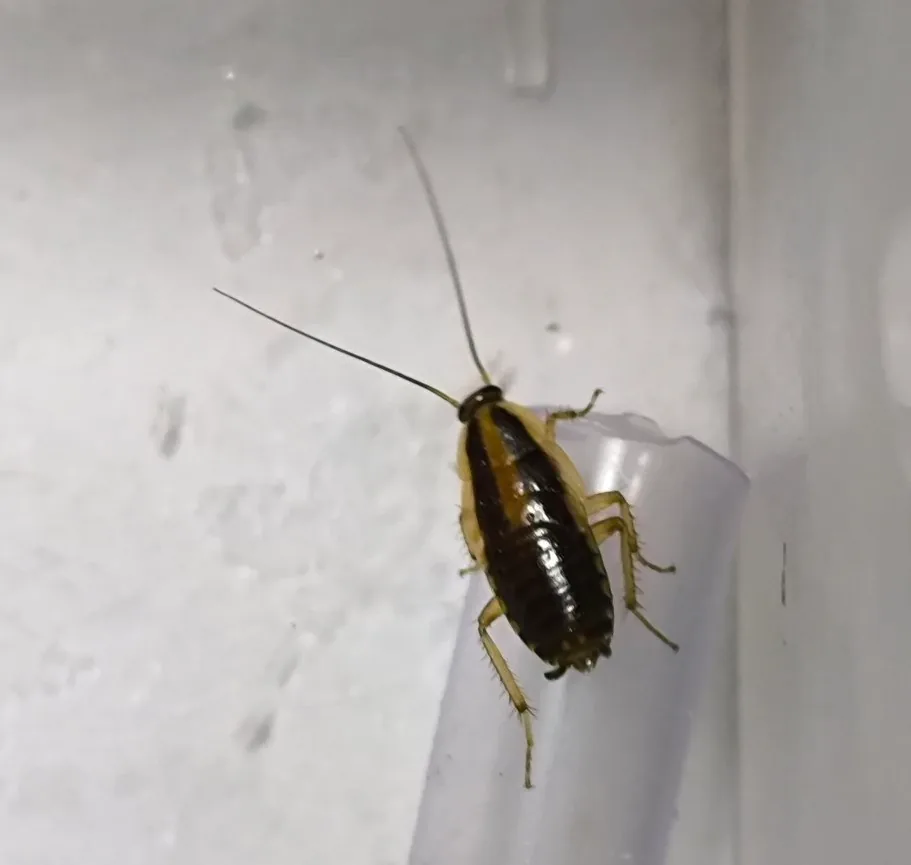
Identification limits & photo credit
One juvenile, identified as a young German cockroach in the source's Japanese caption. Different instars and closely similar Blattella species need further examination; no scale is present. This photograph cannot measure infestation severity, establish a building's breeding source or identify a skin reaction.
Juvenile German cockroach, dorsal view. Photo: Misei sen. CC BY-SA 4.0. Original source · CC BY-SA 4.0 & details
Sources for this section
Differences that change the decision
A similar-looking organism can need a different response. Compare the evidence and what it changes.
Compare every column. On a narrow screen, scroll the table sideways.
| Type | What to check | What changes |
|---|---|---|
| German cockroach | Small tan adults have two dark stripes behind the head; nymphs are darker. | Inspect kitchen and bathroom crevices, appliance edges and connected units. Several stages indoors suggest a breeding infestation that warrants prompt, coordinated control. |
| Brown-banded cockroach | Pale transverse bands and egg cases attached to concealed surfaces. | Search warmer, higher and drier furniture or appliance areas, not only under sinks. A kitchen-only bait layout can miss it. |
| American and Oriental cockroaches | American adults are large and reddish brown with a pale edge behind the head; Oriental adults are very dark with reduced wings. | Inspect damp service areas, basements, external harbourage and plumbing defects. American roaches favour warmer settings; Oriental roaches can occupy cooler damp places. |
| Smokybrown, brown and Australian cockroaches | Large outdoor-associated species overlap in appearance. Australian adults have pale forewing margins; smokybrown adults are more uniformly dark. | Include vegetation, roof or attic access and humid exterior shelter. Establish whether repeated indoor breeding is occurring before choosing an indoor programme. |
| Wood and Florida woods cockroaches | Outdoor species may enter with objects or through gaps; an adult indoors alone is inconclusive. | Inspect entry routes and stored firewood. Removal and exclusion may be sufficient for occasional arrivals. |
| Turkestan cockroach | Females can resemble Oriental roaches; males look different and have long pale wings. | Inspect outdoor utility boxes and landscape shelter in affected regions. Do not assume differently coloured adults are two unrelated infestations. |
| Field and three-lined cockroaches | California outdoor species can enter during dry conditions; field roaches can resemble German roaches. | Use local identification and outdoor context. A similar striped insect is not automatically an established German infestation. |
| Asian cockroach | Resembles German cockroaches but is a strong flyer attracted to lights, commonly associated with outdoor litter in its range. | Check exterior habitat and lighting-related entry. Flight is a useful clue, not a substitute for identification. |
What else could it be?
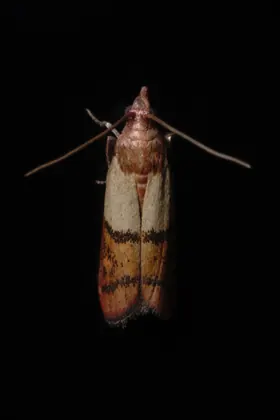
Beetles
Hard wing covers meeting along the back differ from the usual roach form.
Compare pantry pests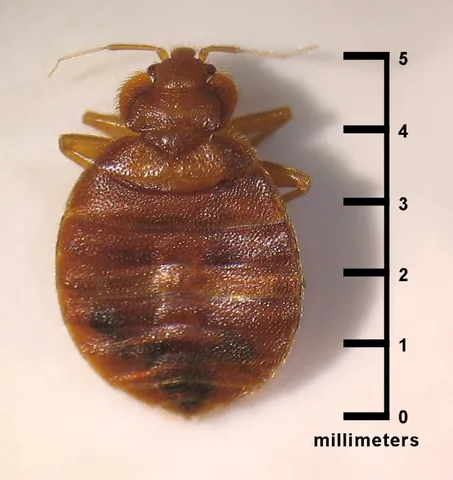
Bed bugs
A roach nymph has longer antennae and a different shape; spotting or bites alone cannot separate them.
Compare bed bugsSources for this section
University of California Statewide IPM Program · NC State Extension
Inspect the right places
Create a baseline
Number sticky monitors and place them along protected wall edges near suspected harbourages. Keep them out of reach of pets and children. UC IPM recommends daily checks for several days to locate activity.
Search by species
Use a flashlight around accessible appliance edges, sinks, cupboards and service gaps; include upper furniture for brown-banded roaches. Do not dismantle powered appliances.
Check movement between rooms
In apartments, report findings to the responsible manager and ask about adjoining-unit inspection. Also inspect incoming cartons, secondhand appliances and deliveries.
Sources for this section
University of California Statewide IPM Program · University of Kentucky Extension · University of Florida IFAS Extension
Choose a proportionate response
For pesticides, the local product label determines the allowed pest, site, precautions and timing. Check safety and regional guidance.
Remove food, water and shelter
Clean grease and crumbs, seal food and rubbish, repair leaks and reduce cardboard clutter. These measures improve treatment but should not delay help for established indoor activity.
Use targeted control
Locally authorised baits can be placed according to their label near confirmed harbourages. Roaches are not drawn from every room to one station. Protect placements from children, pets, cleaning and incompatible sprays.
Remove contaminated debris
Use appropriate cleaning and a well-filtered vacuum for accessible roaches, skins and droppings. Heavy contamination or household asthma merits professional advice on containment and cleanup.
Close recurring access
Repair suitable gaps, door sweeps and screens and have plumbing defects addressed. Coordinate service-penetration work in shared buildings.
Sources for this section
University of Kentucky Extension · University of Florida IFAS Extension · University of Florida IFAS Extension
Avoid these mistakes
- Do not fog or repeatedly spray exposed surfaces as the whole plan.
- Do not put loose powders on food surfaces or inject pesticide into electronics.
- Do not treat bait stations as pet-proof unless the actual product and placement meet the label.
- Do not interpret a pale newly moulted roach as a separate white species.
Sources for this section
Check whether it is working
Check monitors daily during the initial baseline, then use a consistent editable follow-up schedule agreed with the provider. Bait effects may take seven days or longer; that is not a clearance date.
Compare catches by location and life stage with the baseline. Persistent nymphs, new rooms or ignored bait require reassessment of harbourages, placement, species and reinvasion.
Get help when…
- Arrange professional help for indoor breeding, widespread activity, persistent catches or inaccessible harbourages.
- Coordinate sooner in shared housing, food premises or homes where allergens are a particular concern.
Sources for this section
University of California Statewide IPM Program · University of Florida IFAS Extension
Prevent a return
- Inspect deliveries and used appliances.
- Keep accessible food, water and harbourage reduced.
- Maintain exclusion and investigate repeat exterior entry rather than spraying every arrival.
Sources for this section
Common questions
Can a clean home have roaches?
Yes. Insects can arrive in belongings or migrate from connected areas. Cleaning helps control resources but is not proof of absence.
Does one large roach need a full indoor treatment?
Not necessarily. Identify it, inspect likely access and monitor for repeated activity or young stages.
Sources for this section
University of Kentucky Extension · University of Florida IFAS Extension
Sources & scope
References retain their geography and dates. A source-check date is not a claim of independent specialist review.
- Cockroaches
University of California Statewide IPM Program. California, United States; 2019 regional outdoor groups and monitoring; product table not current advice. Checked 2026-10-15.
- Cockroach Elimination in Homes and Apartments
University of Kentucky Extension. Kentucky, United States; 2026 indoor species, harbourages and targeted control. Checked 2026-10-15.
- Cockroaches and Their Management
University of Florida IFAS Extension. Florida, United States; outdoor species and integrated management. Checked 2026-10-15.
- Asian Cockroach, Blattella asahinai
Texas A&M University. Southeastern United States biology and German-cockroach comparison; historical range, efficacy and product claims excluded. Checked 2026-10-15.
- Assessment-Based Pest Management of German Cockroaches
University of Florida IFAS Extension. United States; assessment, bait, HEPA vacuum and growth-regulator approach; product-specific use remains local. Checked 2026-10-15.
- Tips for Preventing the Spread of Bed Bugs
NC State Extension. German cockroach nymphs and other bed-bug lookalikes; bites alone cannot diagnose. Checked 2026-10-15.
Individual medical or veterinary diagnosis, structural assessment, uncertain species identification and local treatment permissions require the appropriate professional. About our editorial process.
Keep investigating
Bed Bugs
Start with a specimen or physical evidence near a sleeping place.
Pantry Pests
Moths or tiny beetles in a kitchen are a reason to inspect stored products, not proof that every packet is infested.