
If stings are occurring
Move away from the nest and briskly remove attached ants. Seek immediate medical help for breathing difficulty, serious swelling or other severe symptoms after a sting. This guide cannot assess an allergic reaction. For a stung animal, contact a veterinarian, especially if the animal is distressed.
Sources for this section
USDA APHIS · Texas A&M AgriLife · Texas A&M AgriLife · CDC NIOSH · National Fire Ant Eradication Program · University of Georgia Cooperative Extension
Recognize the signs
- Mixed worker sizes
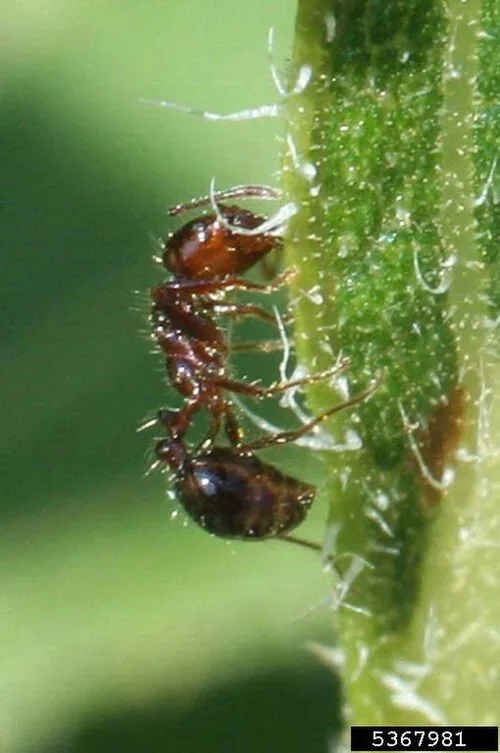
- Imported fire-ant workers vary in size within the same colony and are reddish brown to dark or black. Identification uses features such as the two waist nodes and antennal structure; these are difficult to resolve in an ordinary garden photograph.
- Mounds can be inconspicuous
- A nest may form a dome or a flat patch of loose soil, often without an obvious central entrance. Mowing, soil conditions and concealed nesting sites can hide the familiar mound shape. Absence of a high mound does not exclude fire ants.
- Do not provoke the identification clue
- Fire ants can respond rapidly to disturbance and sting repeatedly. Aggression is a reason to keep clear, not a test to perform. A safe distant photograph, location and description are enough to start a report.
- The colony extends beyond visible workers
- Workers gather food for the colony; eggs, larvae, pupae and queens occupy the nest system. Removing the visible mound top or killing exposed workers does not establish that the reproductive colony is gone.
Sources for this section
University of California IPM · CDC NIOSH · National Fire Ant Eradication Program · University of Georgia Cooperative Extension
Differences that change the decision
A similar-looking organism can need a different response. Compare the evidence and what it changes.
Compare every column. On a narrow screen, scroll the table sideways.
| Type | What to check | What changes |
|---|---|---|
| Red imported fire ant | Solenopsis invicta has variable-sized workers and resembles some native fire ants. Definitive separation may require microscopic examination. | Check the current local reporting route before moving infested plants, turf or soil. In an established area, use a species-confirmed management plan; in an eradication area, follow the programme's instructions. |
| Black imported fire ant | Solenopsis richteri is also an imported fire ant regulated in the United States. Dark colour by itself cannot distinguish it from other ants. | Use the same safe identification and local regulatory check rather than assuming a dark ant is harmless. A local diagnostic service can determine the relevant species and programme. |
| Native southern fire ant | Solenopsis xyloni can closely resemble the red imported fire ant in California; both can have differently sized workers. | A native ant may still sting, but the regulatory and management decision differs. Obtain identification before treating it as a new imported-fire-ant detection. |
Sources for this section
What else could it be?
Harvester ants
Many are larger, seed-collecting ants with a central nest opening and a cleared surrounding area. They can sting too. Their ecological role and treatment need differ from imported fire ants.
Compare antsArgentine or other trailing household ants
Small trails and reddish or dark colour do not establish fire ants. Worker sizes, body features and a specimen are more useful than a common nickname.
Compare antsGopher or other soil disturbance
Loose soil alone is not an ant diagnosis. Do not dig or insert a hand into an unknown mound; observe from a safe position.
Sources for this section
Inspect the right places
Create distance first
Keep children, pets and people who cannot move away readily out of the affected patch. Avoid mowing, digging or lifting objects over the suspected nest. Record its position so another person does not discover it by stepping into it.
Record a safe report
Note the address or location, number of suspected sites, ant colour and size variation, any stings, and whether soil, sod or plants recently arrived. Take photos only if safe. Do not require a close-up photograph before contacting the authority.
Check the regional route
In the United States, the current USDA APHIS imported-fire-ant page links state reporting and quarantine information. Queensland's National Fire Ant Eradication Program accepts reports and directs New South Wales sightings to that government. Elsewhere, use the local biosecurity or plant-health authority.
Assess the use of the area
A nest beside a play area, accessible pet enclosure, doorway or utility needs prompt professional assessment. Explain who uses the area and any access constraints. Do not open a live utility cabinet to inspect ants.
Sources for this section
University of California IPM · USDA APHIS · CDC NIOSH · National Fire Ant Eradication Program · University of Georgia Cooperative Extension
Choose a proportionate response
For pesticides, the local product label determines the allowed pest, site, precautions and timing. Check safety and regional guidance.
If stings are occurring
Move away from the nest and briskly remove attached ants. Seek immediate medical help for breathing difficulty, serious swelling or other severe symptoms after a sting. This guide cannot assess an allergic reaction. For a stung animal, contact a veterinarian, especially if the animal is distressed.
Report suspected new or regulated infestations
Use the local programme before transporting potentially infested material. Provide the recorded location and observations. Do not transfer a pot or soil pile to another property merely to remove it from the garden.
Use a plan matched to the site
Where household treatment is permitted, local extension or a qualified pest manager can distinguish a few problem mounds from a broadly infested area. Texas guidance describes a two-part approach for appropriate established infestations: colony-directed bait followed by treatment of remaining problem mounds. It is not a universal whole-lawn prescription.
Separate bait from contact treatment
A labelled fire-ant bait relies on foraging workers carrying it back. Freshness, active foraging and weather affect uptake; follow the actual product's directions. A contact mound treatment has a different purpose and exposure profile. Do not improvise a mixture or assume all ant granules are baits.
Agree on follow-up and access
Before treatment, ask who inspects remaining activity, which areas people and animals must avoid, the label-based re-entry conditions, and what triggers reassessment. In an eradication programme, follow its inspection and aftercare requirements rather than an internet schedule.
Sources for this section
USDA APHIS · Texas A&M AgriLife · Texas A&M AgriLife · CDC NIOSH · National Fire Ant Eradication Program · University of Georgia Cooperative Extension
Avoid these mistakes
- Disturbing a mound to demonstrate aggression or handling ants to prove the identification.
- Using petrol, bleach, home mixtures or boiling water; these can injure people, damage the site and fail to control the colony.
- Assuming a collapsed mound or fewer surface workers means the whole property is clear.
- Broadcast treatment of every outdoor ant when the species and extent have not been established.
- Moving soil, turf, pots or soil-carrying equipment out of a regulated area without checking the applicable restrictions.
Sources for this section
University of California IPM · USDA APHIS · Texas A&M AgriLife · CDC NIOSH · University of Georgia Cooperative Extension
Check whether it is working
Use an editable observation reminder to review activity from a safe distance. Treatment labels and local eradication programmes determine servicing, re-entry and formal follow-up intervals; the reminder does not establish a clearance date.
Fewer occupied sites and no renewed activity in comparable safe observations indicate progress. The local programme or pest manager must interpret treatment response, concealed nests and reinvasion risk; an apparently inactive mound alone is not clearance.
Get help when…
- Any severe reaction after stings: obtain immediate medical assistance; an animal in distress needs veterinary help.
- Ants close to vulnerable people, pets or electrical infrastructure: keep clear and arrange professional assessment.
- A suspected imported fire ant outside a known established area or within a reporting programme: contact the responsible biosecurity or plant-health authority promptly.
- Persistent or newly appearing nests after a correctly followed plan: ask the provider to reassess species, bait uptake, site coverage and reinvasion.
Sources for this section
Texas A&M AgriLife · Texas A&M AgriLife · University of Georgia Cooperative Extension
Prevent a return
- Check regional movement restrictions before receiving or relocating soil, nursery plants, sod or used soil-moving equipment.
- Inspect outdoor areas before gardening or lifting ground-level objects; use suitable footwear and protective clothing.
- Keep a location record of suspected and treated sites so subsequent checks include concealed edges and new activity.
- Coordinate management of shared grounds through the responsible owner or association.
Sources for this section
USDA APHIS · CDC NIOSH · University of Georgia Cooperative Extension
Common questions
Are all red ants fire ants?
No. Harvester ants, field ants and other species may look reddish. Even native and imported fire ants can be difficult to separate. Use a local identification service instead of testing whether they sting.
Can I just knock the mound down?
Flattening the visible soil does not reliably remove the colony and creates a sting risk. Preserve the location for identification and use the appropriate reporting or management route.
Do I have to treat the whole lawn?
Not automatically. Extent, species, local regulation and the need to preserve other ants matter. Texas's broadcast-bait approach is intended for suitable established infestations, while isolated hazards or eradication programmes can require a different plan.
Can I report them without a photograph?
Yes. Queensland's programme explicitly accepts reports without images when obtaining them would be unsafe. Elsewhere, describe the location and observations to the local authority and follow its instructions.
Sources for this section
University of California IPM · Texas A&M AgriLife · Texas A&M AgriLife · National Fire Ant Eradication Program · University of Georgia Cooperative Extension
Sources & scope
References retain their geography and dates. A source-check date is not a claim of independent specialist review.
- Red Imported Fire Ant
University of California IPM. 2013 California biology and native lookalikes; old distribution and pesticide details are not used as current authority. Checked 2026-10-15.
- Imported Fire Ants
USDA APHIS. United States; updated September 17, 2026. Current reporting links and regulated-movement overview. Checked 2026-10-15.
- Two-Step Method
Texas A&M AgriLife. Texas established infestations; method distinction only, not historic brands, rates, timing or efficacy percentages. Checked 2026-10-15.
- Frequently Asked Questions
Texas A&M AgriLife. Texas fire-ant management context; site-dependent suppression and reinvasion. Checked 2026-10-15.
- Protecting Yourself from Stinging Insects
CDC NIOSH. United States worker safety; 2010 publication used for sting avoidance and emergency warning signs. Checked 2026-10-15.
- How to Report Fire Ants
National Fire Ant Eradication Program. Australian reporting programme; Queensland route and New South Wales referral, not a global reporting rule. Checked 2026-10-15.
- Managing Imported Fire Ants in Urban Areas
University of Georgia Cooperative Extension. Site-specific integrated management and electrical-equipment risks; historic pesticide products, rates and schedules excluded. Checked 2026-10-15.
Individual medical or veterinary diagnosis, structural assessment, uncertain species identification and local treatment permissions require the appropriate professional. About our editorial process.
Keep investigating
Carpenter Ants
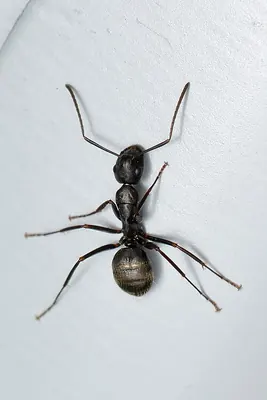
Carpenter ants excavate wood for shelter; they do not eat it.
Wasps
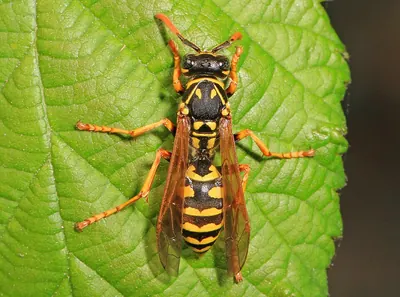
A foraging wasp, a solitary mud nest and a busy social colony need different responses.