
Remove and contain waste
Bag waste appropriately, use tight-fitting bin lids and clean residues from the container. Remove pet waste and prevent wet organic piles accumulating. Keep waste and odour-baited fly traps away from entrances and food areas.
Recognize the signs
- One pair of functional wings
- True flies have one functional wing pair. Body colour, thorax markings, wing pattern and mouthparts help separate groups. Save a specimen or a clear photograph rather than identifying solely from the number at a window.
- Maggots are not small adults
- Flies develop through egg, legless larva, pupa and adult. Some mature larvae crawl away from their food to pupate, so maggots crossing a floor can have originated in a bin or concealed source elsewhere.
- Biting is a meaningful distinction
- House and blow flies have sponging mouthparts and do not bite. Stable flies and female horse or deer flies can bite. A skin mark alone cannot establish the insect; look for a captured specimen or an observed biting event.
- Season and entry route
- A sudden indoor concentration of metallic flies, recurring winter flies at upper windows and flies hovering on a patio suggest different investigations. Record date, room and whether windows were open.
Look more closely
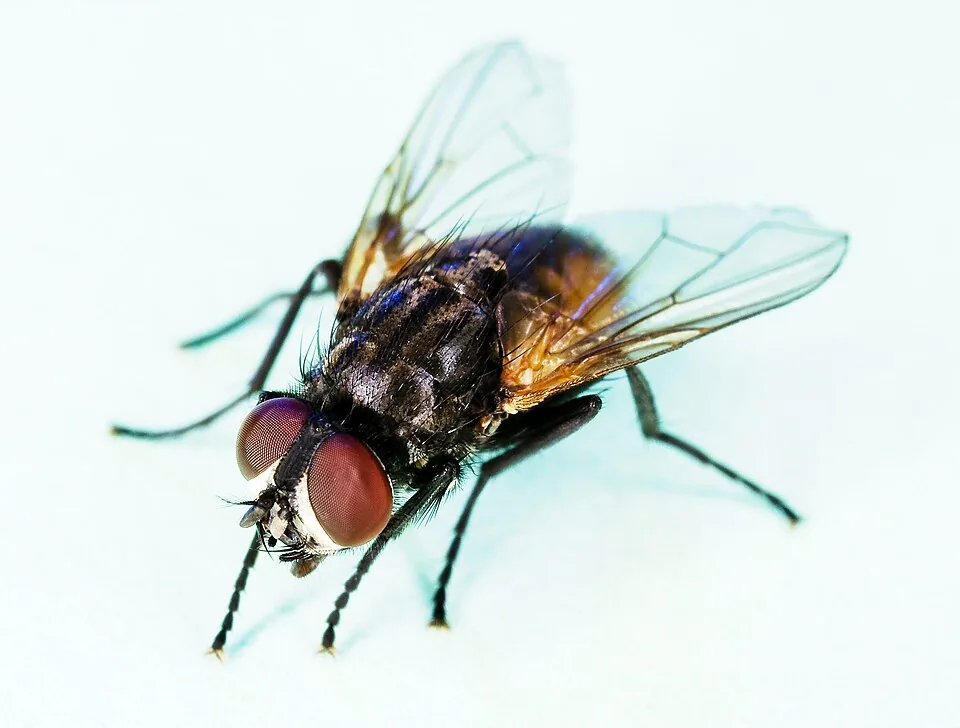
Compare the labeled examples and their limits. Images are independently enlarged, not shown at a common scale.
Identification limits & photo credit
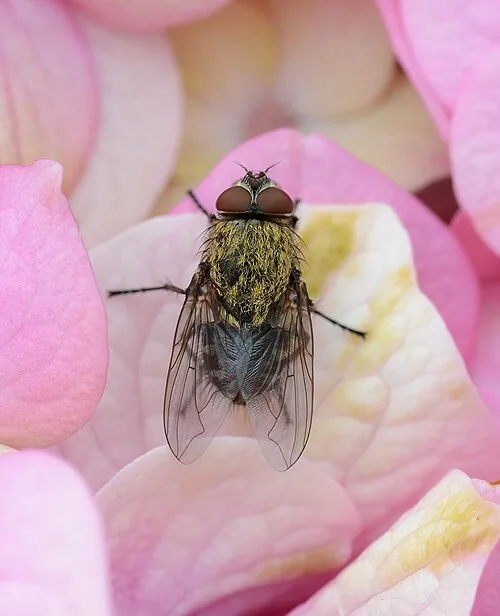
An adult photographed outside. Golden hairs can be worn or hard to see on a household specimen; an indoor fly is not automatically a cluster fly or evidence of indoor breeding.
Cluster fly on a flower. Photo: Alvesgaspar. CC BY-SA 3.0. Original source · CC BY-SA 3.0 & details
Sources for this section
University of California IPM · University of Minnesota Extension · Penn State Extension · University of Florida IFAS
Differences that change the decision
A similar-looking organism can need a different response. Compare the evidence and what it changes.
Compare every column. On a narrow screen, scroll the table sideways.
| Type | What to check | What changes |
|---|---|---|
| House fly | A dull grey fly with four dark lengthwise stripes on the thorax. It feeds on liquid or softened material and does not bite. | Inspect waste, food residues and entry gaps. Cover food, remove developmental material and repair screens; an indoor aerosol gives no lasting benefit if adults continue arriving. |
| Blow or bottle flies | Many common species are metallic blue, green or copper. Larvae may develop in meat waste, animal remains or contaminated animal material. | Check bins and recent animal activity. A sudden indoor emergence can justify investigation of a hidden carcass. Maggots on a living animal require veterinary attention rather than household fly treatment. |
| Cluster fly | Dull grey adults, slightly larger than house flies, have golden hairs and can gather around windows on warm winter days. | Their larvae develop with earthworm hosts outdoors; overwintering adults are not breeding in your pantry. Remove accessible flies and improve exterior exclusion before the next seasonal entry period. |
| Face fly | Resembles a house fly and is associated with cattle. Adults may shelter in upper building voids during the colder season. | Distinguish winter sheltering from indoor waste breeding. Exclude and remove indoor adults; persistent livestock-associated problems need coordination with the animal keeper. |
| Little house fly | A smaller, slender fly often hovering repeatedly in sheltered air. Wings are held together over the back at rest. | Check manure and moist decaying material. Air movement may reduce patio hovering; a trap designed for house flies may not attract this group well. |
| Stable fly | Looks house-fly-like but has a forward-pointing piercing mouthpart. Bites often affect lower legs; outdoor dogs can suffer around their ears. | Inspect wet bedding, manure-mixed plant material and poorly managed compost. Protect animals with veterinary guidance and address the developmental source rather than spraying a pet with a household product. |
| Horse, deer and yellow flies | Robust flies with prominent eyes; deer flies commonly have patterned wings. Females inflict painful daytime bites. Species and season vary by region. | These are often landscape-source visitors. Use protective clothing and suitable barriers, and ask local vector-control services about persistent problems. Drain cleaning is unrelated to their usual habitat. |
| Black flies or buffalo gnats | Small humpbacked flies associated with running-water development; some species bite people or animals, often around the head. | They can travel away from streams. Protect exposed skin and seek local advice; do not apply pesticides to running water as a household response. |
| Biting midges or no-see-ums | Minute biting flies may pass through ordinary screen mesh. Larval habitats vary, including wet organic soil and waterside mud. | A fine-mesh barrier and avoiding the observed peak exposure period may help. Confirm local species and conditions before altering habitat or buying a broad yard treatment. |
| Canyon flies | A western North American Fannia group can persistently visit the face without piercing the skin. California guidance describes species associated with particular damp plant litter. | Obtain local identification before removing planting. Do not presume manure, household waste or a standard house-fly trap is the relevant solution. |
What else could it be?
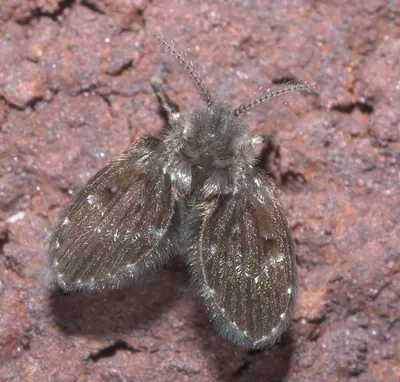
Fruit, drain and fungus-gnat groups
These smaller flies have distinct fermentation, drain-film and potting-media routes. Their presence at a sink does not establish a large-fly breeding source.
Compare small flies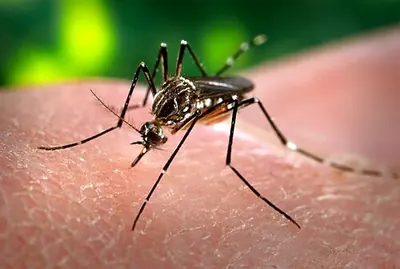
Mosquitoes
A slender body, long legs and proboscis may suggest a mosquito, but non-biting gnats can look similar. Use the specimen and developmental evidence.
Compare mosquitoes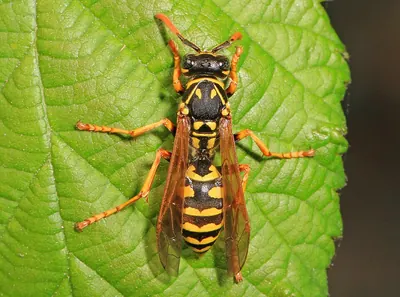
Wasps or bees
Some flies resemble stinging insects. Wing number, antennae and body structure help separate them; do not handle an uncertain insect to test whether it stings.
Compare waspsSources for this section
Inspect the right places
Classify the pattern before searching
Separate a few flies entering open doors from a sudden emergence despite closed screens, winter clustering or outdoor biting. Preserve a sample. These observations decide whether to search household waste, building voids or an outside habitat.
Inspect accessible developmental material
Check bin liners and rims, pet waste, spilled feed, wet grass clippings, compost and animal bedding. Inspect behind the bin as well as inside it: mature larvae can move away from the food. Use gloves and safe waste-handling practices.
Investigate hidden decay without opening unsafe spaces
New metallic flies following rodent or bird activity can indicate a carcass. Note the affected room, odour and possible entry points. Ask an appropriate pest or building professional to inspect inaccessible voids; do not cut open wiring or contaminated structures based on fly numbers alone.
Check the building envelope
Inspect door closers, screens and gaps around frames and services. For seasonal cluster flies, pay attention to upper walls and sunny exterior sides. Make repairs that preserve ventilation and safe appliance clearances.
Record biting exposure
Note where and when bites occur, whether an insect was seen and whether animals are affected. A nearby stream, wetland, livestock area or wet bedding changes the source hypothesis. Obtain local identification if protection and ordinary source correction do not help.
Choose a proportionate response
For pesticides, the local product label determines the allowed pest, site, precautions and timing. Check safety and regional guidance.
Remove and contain waste
Bag waste appropriately, use tight-fitting bin lids and clean residues from the container. Remove pet waste and prevent wet organic piles accumulating. Keep waste and odour-baited fly traps away from entrances and food areas.
Exclude arriving adults
Repair screens and close avoidable gaps. Protect exposed food and clean food-contact surfaces. For a few indoor adults, physical removal is usually sufficient; position sticky traps so children, pets and food cannot contact them.
Treat seasonal sheltering as an exclusion task
Vacuum accessible cluster flies and locate the gaps used to enter living rooms. Avoid fogging occupied wall or attic voids as a substitute for exclusion: it does not stop later emergence, and accumulated dead insects can become food for other pests.
Reduce outdoor bite exposure
Wear clothing that covers exposed skin and use an insect repellent only for its labelled use. Repellents vary in effectiveness across fly groups. Suitable fine-mesh screening and increased air movement can help some settings, but they do not guarantee protection.
Get the correct specialist for the source
For a livestock or kennel problem, involve the animal keeper and veterinarian. For persistent stream or wetland-associated flies, contact local public-health, extension or vector-control services. Household spraying should not replace investigation of an off-site source.
Avoid these mistakes
- Calling a biting fly a biting house fly and then treating it as a non-biting house fly.
- Using a bug zapper beside food preparation: insect fragments can contaminate nearby surfaces.
- Using an adult spray as the only response while waste, wet bedding or entry gaps remain.
- Applying household fly spray, livestock products or dog products to another animal without the correct label and veterinary advice.
- Draining wetlands, treating streams or removing large areas of vegetation without local ecological and regulatory advice.
- Promising a fixed disappearance date from the assumed size of a hidden carcass.
Sources for this section
University of California IPM · Penn State Extension · Colorado State University Extension · University of Florida IFAS
Check whether it is working
Use an editable observation reminder to compare the same locations and exposure periods after source removal or exclusion. Keep waste collection frequent enough to prevent renewed development. No single reminder interval proves clearance across these different fly life cycles.
Activity declines with the identified source corrected and entry routes closed. Distinguish incoming adults from new emergence. Seasonal sheltering or a distant outdoor source may require a longer exclusion and monitoring plan.
Get help when…
- Sudden repeated indoor emergence with no accessible source: obtain identification and a building inspection.
- Maggots or wounds on an animal, or significant distress from flies: contact a veterinarian promptly.
- Persistent biting or concerning symptoms: obtain appropriate medical advice and local insect identification.
- Heavy activity linked to communal waste, livestock or off-site habitat: involve the responsible manager and local service.
- A treatment that only briefly reduces adults: ask for evidence of the larval source and how it will be corrected.
Sources for this section
University of California IPM · Colorado State University Extension · University of Florida IFAS
Prevent a return
- Clean bins and keep lids intact; do not wait for an overflowing container to remove attractive waste.
- Manage compost and animal bedding so wet decaying material does not remain neglected.
- Repair screens and external gaps before the local seasonal entry period.
- Keep traps positioned for the target fly and away from food and open entrances.
- Address animal entry to buildings after confirming no dependent animals remain; inaccessible wildlife problems need a suitable professional.
Sources for this section
University of Minnesota Extension · Penn State Extension · Penn State Extension
Common questions
Why did dozens of blue or green flies appear at once?
An emergence from a concentrated developmental source is one possibility, including meat waste or an animal carcass. Check accessible waste first and retain a specimen. Numbers alone cannot locate the source or prove it is inside a wall.
Are winter flies breeding in my house?
Confirmed cluster and overwintering face flies commonly shelter in buildings and become active on warm days. Their presence is different from flies developing in household waste. Identification determines which investigation is useful.
Will any fly trap work for every species?
No. Behaviour and attraction differ. Little house flies and blow flies do not respond to all house-fly traps in the same way. Use traps to support identification and monitoring while addressing the source.
Why do the flies bite when house flies supposedly cannot?
A similar-looking stable fly can bite, as can several outdoor fly groups. Identify the insect instead of inferring the species from appearance at a glance or from the bite mark.
Sources for this section
University of California IPM · University of Minnesota Extension · Penn State Extension · University of Florida IFAS
Sources & scope
References retain their geography and dates. A source-check date is not a claim of independent specialist review.
- Flies
University of California IPM. 2015 California biology; regional canyon-fly information and trap differences, not old product advice. Checked 2026-10-15.
- Flies
University of Minnesota Extension. Reviewed 2024; northern United States indoor and overwintering fly patterns. Checked 2026-10-15.
- Cluster Flies
Penn State Extension. Page updated June 2026, article revision January 2014; source read through indexed text because direct fetch returned access denial. Checked 2026-10-15.
- Common Urban Pests: Identification, Prevention, and Control
Penn State Extension. House-fly identification, waste containment and exclusion. Checked 2026-10-15.
- Biting Flies
Colorado State University Extension. Reviewed August 2025; Colorado ecology and personal protection, with local season and disease claims not generalised. Checked 2026-10-15.
- Deer Flies, Yellow Flies and Horse Flies
University of Florida IFAS. Florida tabanid identification and biology; no universal repellent guarantee or habitat-alteration instruction. Checked 2026-10-15.
- Biting Flies
University of Florida IFAS. Florida biting-fly groups, protective clothing, air movement and local management referral. Checked 2026-10-15.
Individual medical or veterinary diagnosis, structural assessment, uncertain species identification and local treatment permissions require the appropriate professional. About our editorial process.
Keep investigating
Small Flies
A small fly in the kitchen is a candidate, not an identification.
Mosquitoes
Start with water-holding containers and protection from bites.
Mice
Confirm fresh mouse activity, protect food and plan exclusion with trapping.