
Use a guard designed for a confirmed vole problem
For vole exclusion, UC IPM describes wire mesh of 1/4 inch (about 6 mm) or smaller, at least 12 inches above ground and buried 6–10 inches. A trunk guard must leave room for growth, be braced away from bark and extend above expected snow; check that animals have not entered beneath it. These source examples address voles, not moles or every burrowing species. Obtain a site-specific design where roots, utilities or erosion make excavation consequential.
Find the local decision-maker
In the United States, use the Association of Fish & Wildlife Agencies’ state directory to reach your wildlife agency. Ask about the species, occupied nests, dependent young, allowed methods and the operator’s authorization. Elsewhere, use the regional authority routes. Do not assume another region’s rules apply.
Recognize the signs
- Surface pattern
- Photograph mounds, openings, runways and affected plants with a scale from a safe distance. A hole may be reused by another species.
- What is damaged
- Root chewing and girdled bark suggest plant-feeding mammals; a mole's tunnelling can disturb turf while it hunts invertebrates.
Look more closely
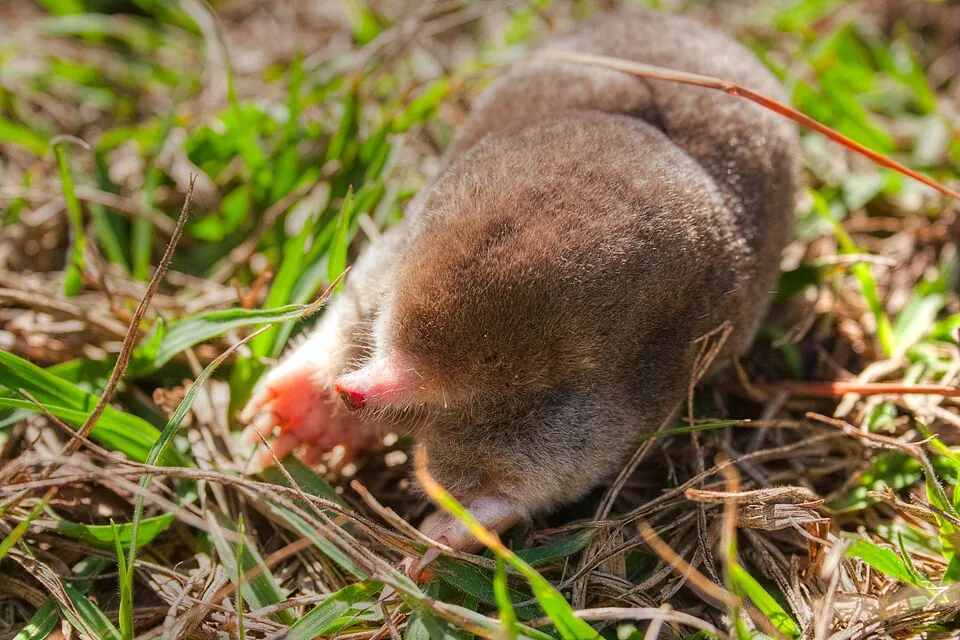
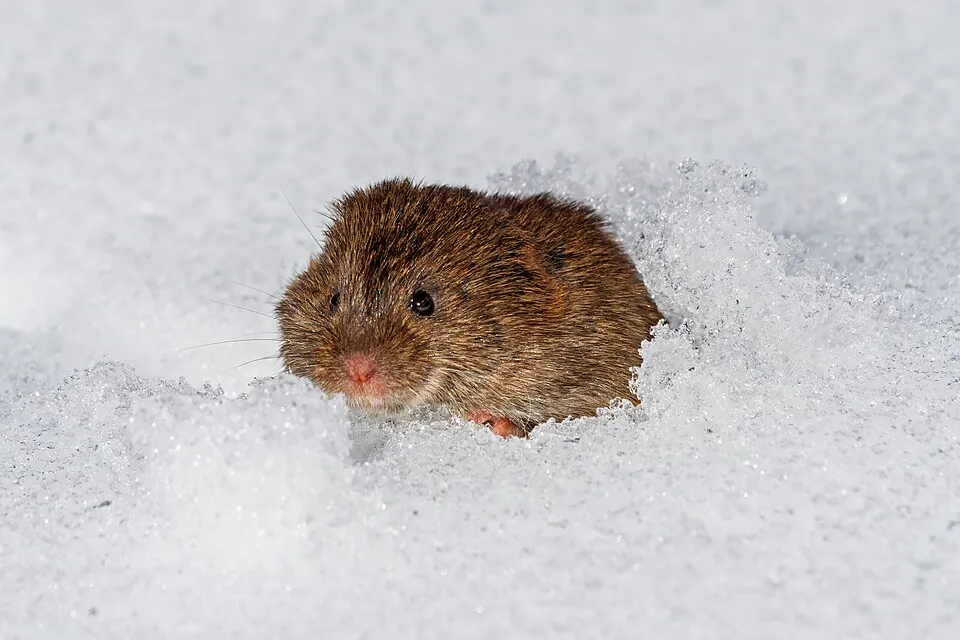
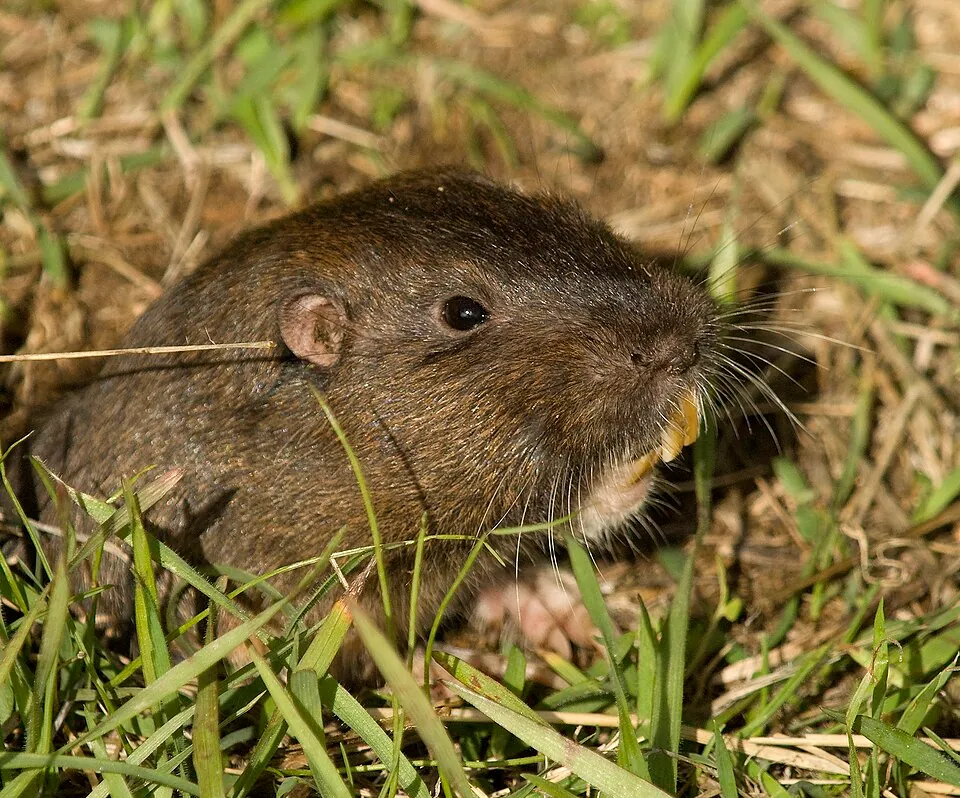
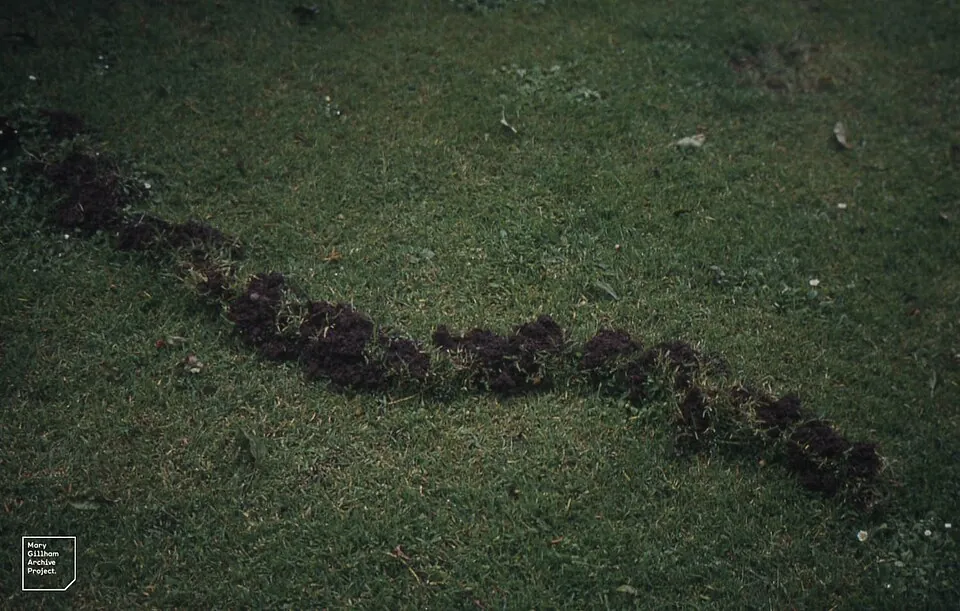
Compare the labeled examples and their limits. Images are independently enlarged, not shown at a common scale.
Identification limits & photo credit
A living vole with a blunt face and small ears partly concealed by fur. The tail and most of the body are hidden, so this is not a tail-length comparison or a plate for all vole species.
Eastern meadow vole emerging through snow. Photo: Chuck Homler d/b/a Focus On Wildlife. CC BY-SA 4.0. Original source · CC BY-SA 4.0 & details
Identification limits & photo credit
Shows a source-identified pocket gopher with small ears, prominent incisors and forefeet. One pocket-gopher species only; the image does not establish what made a nearby mound or burrow.
Botta’s pocket gopher in grass. Photo: Chuck Abbe. CC BY 2.0. Original source · CC BY 2.0 & details
Identification limits & photo credit
The archive labels this as a European mole tunnel at Abbey Dore Gardens, Hereford, England. A source-labelled sign example, not an independent identification of an unknown hole or evidence for a specific North American mole species. Other animals can disturb turf.
Earth along a European mole tunnel in a Hereford garden. Photo: Dr Mary Gillham Archive Project. CC BY 2.0. Original source · CC BY 2.0 & details
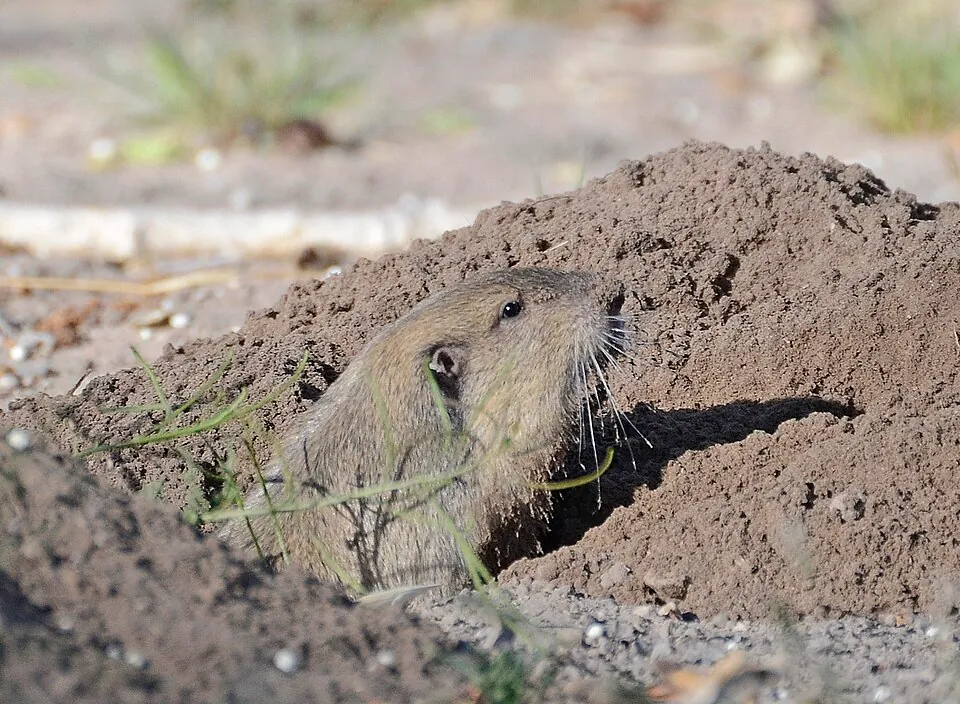
Identification limits & photo credit
The source identifies the visible animal as Botta’s pocket gopher. Loose soil and an opening are visible beside it, providing context that an unidentified hole cannot. The low angle and frame edges hide the full mound outline; this does not show a complete crescent-shaped mound from above or its usual plugged state after the animal withdraws.
Botta’s pocket gopher at a soil opening in southern Nevada. Photo: VJAnderson. CC BY-SA 4.0. Original source · CC BY-SA 4.0 & details
Sources for this section
Differences that change the decision
A similar-looking organism can need a different response. Compare the evidence and what it changes.
Compare every column. On a narrow screen, scroll the table sideways.
| Type | What to check | What changes |
|---|---|---|
| Moles | Raised shallow runs and rounded soil mounds; insect-eating mammals. | Do not infer a grub outbreak or use plant-feeder bait. |
| Voles | Clipped surface runways, small open holes and gnawed lower stems. | Reduce dense cover near vulnerable plants and protect trunks. |
| Pocket gophers | Often crescent-shaped mounds with an off-centre plug; underground plant feeding. | Consider root barriers and expert confirmation of active tunnels. |
| Groundhogs or woodchucks | Much larger open entrances, often near a shed or field edge; vegetables may be eaten. | Garden barriers need to address digging and climbing; young may occupy the den. |
| Prairie dogs | Visible colonial burrowing squirrels and many maintained entrances. | Their colonies support other wildlife; local species status and nontarget occupants require a site-specific plan. |
What else could it be?
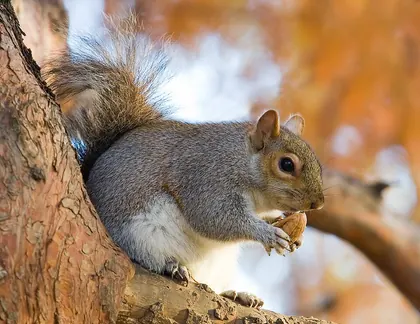
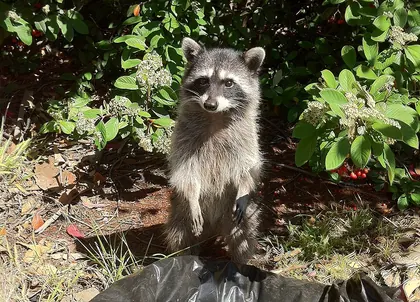
Birds, skunks or raccoons
Surface turf disturbance while foraging is different from a resident tunnel system.
Compare raccoons, skunks & opossumsSources for this section
Inspect the right places
Separate old and fresh signs
Mark newly disturbed areas and compare photographs without reaching into holes. Note crop injury, slope, irrigation and proximity to foundations.
Identify the animal locally
Submit photographs and location to extension or a wildlife specialist; expected species differ greatly between regions.
Record the sign that changes the route
Photograph raised ridges, clipped-vegetation runways or a fresh mound from above and beside a scale without reaching into an opening. Note whether gnawing is above or below ground and compare the same marked places after new activity. Old mounds alone cannot establish that protection has failed.
Choose a proportionate response
For pesticides, the local product label determines the allowed pest, site, precautions and timing. Check safety and regional guidance.
Use a guard designed for a confirmed vole problem
For vole exclusion, UC IPM describes wire mesh of 1/4 inch (about 6 mm) or smaller, at least 12 inches above ground and buried 6–10 inches. A trunk guard must leave room for growth, be braced away from bark and extend above expected snow; check that animals have not entered beneath it. These source examples address voles, not moles or every burrowing species. Obtain a site-specific design where roots, utilities or erosion make excavation consequential.
Modify the right habitat
Reduce thick cover for voles; do not assume the same vegetation change discourages every burrower.
Seek help for consequential burrows
Keep people away from unstable ground and obtain qualified advice near buildings, embankments or utilities.
Avoid these mistakes
- Do not put fumigants, exhaust, fuel or improvised poison into an unidentified burrow.
- Do not apply grub insecticide solely because moles are present.
- Do not fill an occupied den without checking wildlife, young and local requirements.
Sources for this section
University of California Statewide IPM Program · University of Maryland Extension
Check whether it is working
Suggested practice: compare fresh signs after protective measures and after weather changes; species-specific professional plans may need longer observation.
Less new plant injury or tunnelling in the protected area matters more than whether old mounds remain.
Get help when…
- Structural or erosion concern: qualified site professional.
- Colonies, protected species or uncertain burrow occupants: local wildlife authority or specialist.
Sources for this section
University of California Statewide IPM Program · University of Maryland Extension · Colorado State University Extension
Prevent a return
- Maintain plant guards without constricting growth.
- Keep vulnerable beds free of unnecessary dense cover.
- Repair and monitor barriers instead of assuming one removal prevents recolonisation.
Sources for this section
Common questions
Will killing lawn grubs remove moles?
Not reliably. Moles also eat earthworms and other prey; identify an actual turf pest before considering its treatment.
Is every mound a gopher?
No. Shape, plugged entrances, tunnels and the locally occurring animals all matter.
Sources for this section
Sources & scope
References retain their geography and dates. A source-check date is not a claim of independent specialist review.
- Moles
University of California Statewide IPM Program. California, United States; local wildlife law and species vary; source date 2024-11; source check, not expert review Checked 2026-10-15.
- Voles (Meadow Mice)
University of California Statewide IPM Program. California, United States; local wildlife law and species vary; source date 2023-04 page; 2025-04 linked PDF; source check, not expert review Checked 2026-10-18.
- Pocket Gophers
University of California Statewide IPM Program. California, United States; local wildlife law and species vary; source date 2025-06; source check, not expert review Checked 2026-10-15.
- Animals Digging in Lawns
University of Maryland Extension. Maryland, US; source check, not expert review Checked 2026-10-15.
- Groundhogs
University of Maryland Extension. Maryland, US; local trapping statements not applied elsewhere; source check, not expert review Checked 2026-10-15.
- Prairie Dogs and Their Control
Nebraska Extension. Nebraska, US; identification and ecological context only; source date 2011-07-18; source check, not expert review Checked 2026-10-15.
- Boulder County Rural Living Resource Guide: Wildlife
Colorado State University Extension. Boulder County, Colorado, US; local methods not universal; source check, not expert review Checked 2026-10-15.
Individual medical or veterinary diagnosis, structural assessment, uncertain species identification and local treatment permissions require the appropriate professional. About our editorial process.
Keep investigating
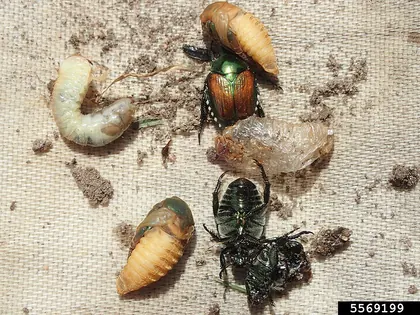
Squirrels
Observe whether the animal uses trees, roof openings or ground burrows.
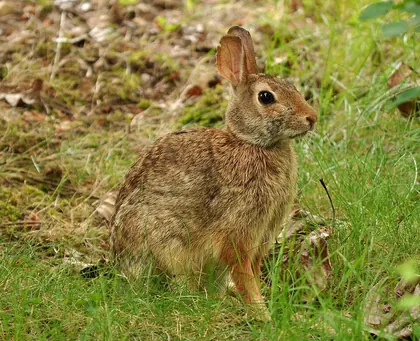
Deer & rabbits
Use tracks, bite pattern and feeding height together.