
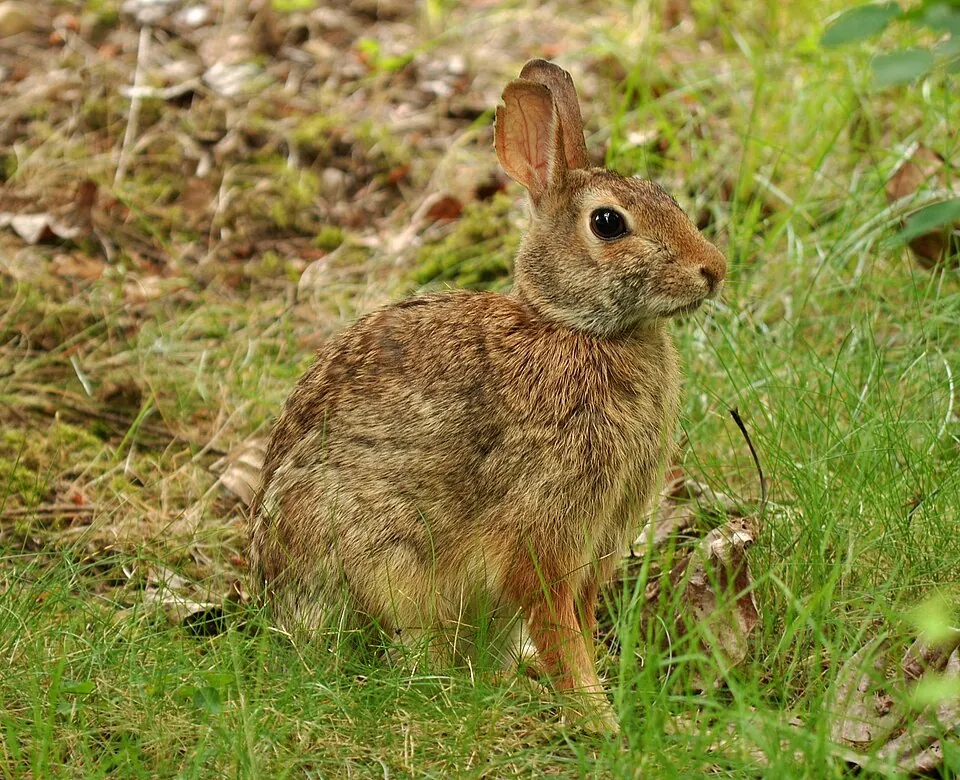
Fit a guard to confirmed rabbit damage
For a young trunk, UC IPM describes a cylinder of 1-inch (about 25 mm) mesh, 18–24 inches high, with its bottom buried 2–3 inches. Brace it away from bark so rabbits cannot press through to feed. Check growth, debris and snow level; a rabbit guard does not exclude deer.
Sources for this section
Find the local decision-maker
In the United States, use the Association of Fish & Wildlife Agencies’ state directory to reach your wildlife agency. Ask about the species, occupied nests, dependent young, allowed methods and the operator’s authorization. Elsewhere, use the regional authority routes. Do not assume another region’s rules apply.
Recognize the signs
- Browsing pattern
- Deer commonly leave torn or ragged growth and hoofprints. Rabbits often make clean angled cuts near ground level. Snow, height and overlapping visitors can confuse these clues.
- Bark injury
- Lower gnawing, antler rubbing and missing bark have different causes. Photograph the whole plant and surrounding tracks.
Look more closely
Compare the labeled examples and their limits. Images are independently enlarged, not shown at a common scale.
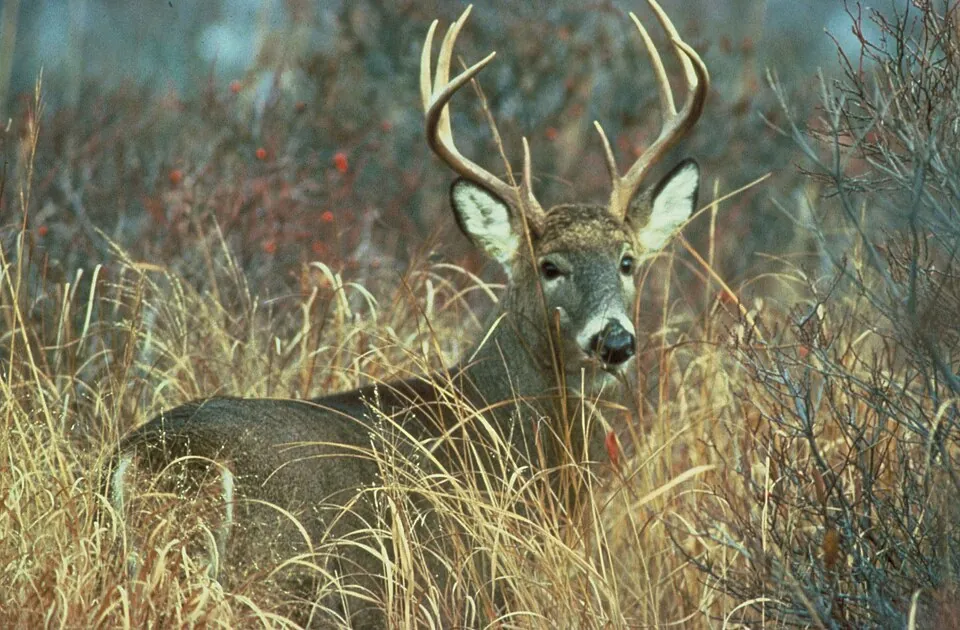
Identification limits & photo credit
An adult male deer; females and juveniles lack the same antlers, and the tail is hidden. No browsing injury is shown, so identify plant damage independently.
Adult white-tailed deer buck in vegetation. Photo: U.S. Fish and Wildlife Service. Public domain (U.S. government work). Use does not imply government agency endorsement. Original source · Public domain (U.S. government work) & details
Sources for this section
Differences that change the decision
A similar-looking organism can need a different response. Compare the evidence and what it changes.
Compare every column. On a narrow screen, scroll the table sideways.
| Type | What to check | What changes |
|---|---|---|
| Deer | Large browsers; feeding and rubbing can injure saplings. | Fence design must suit deer size, terrain and the area protected. |
| Cottontails and brush rabbits | Small rabbits often stay close to shelter and clip low vegetation. | Use small-mesh protection that prevents access at the bottom, and inspect for nests before work. |
| Jackrabbits and other hares | Larger, long-eared animals may forage across open areas. | A small-rabbit barrier or assumed local breeding date may be inappropriate. |
Sources for this section
What else could it be?
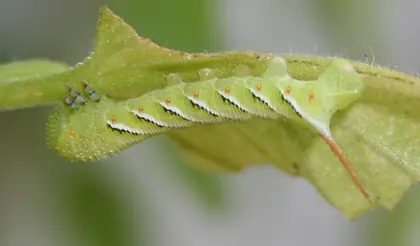
Caterpillars and slugs
Leaf chewing without mammal tracks or clipping needs an insect/mollusc inspection.
Compare caterpillarsSources for this section
Inspect the right places
Check the plant and perimeter
Record fresh cut height, hoofprints, pellets and fence gaps; avoid handling waste.
Check occupied habitat
Before mowing or clearing cover, look for rabbit nests or resting young from a distance. A lone fawn is not automatically abandoned.
Sources for this section
UC Statewide IPM Program · UC Statewide IPM Program · University of Maryland Extension · US Fish and Wildlife Service
Choose a proportionate response
For pesticides, the local product label determines the allowed pest, site, precautions and timing. Check safety and regional guidance.
Fit a guard to confirmed rabbit damage
For a young trunk, UC IPM describes a cylinder of 1-inch (about 25 mm) mesh, 18–24 inches high, with its bottom buried 2–3 inches. Brace it away from bark so rabbits cannot press through to feed. Check growth, debris and snow level; a rabbit guard does not exclude deer.
Choose a fence for the animal and site
UC IPM’s California guidance uses 48-inch wire for rabbits, mesh no larger than 1 inch and a bottom buried 6–10 inches or securely staked against entry; gates need tight bottom gaps. Its deer guidance describes a maintained 7–8-foot fence, with slopes sometimes requiring more. These are source examples, not a universal design: check local requirements, utilities, target species and site conditions with an appropriate installer before building.
Use repellents cautiously
Only use a locally permitted product on a labelled plant or crop; rain and new growth can affect performance. Do not substitute a repellent for a failing barrier.
Sources for this section
Avoid these mistakes
- Do not assume a 'deer-resistant' plant is never eaten.
- Do not relocate young animals or disturb an active rabbit nest.
- Do not poison or trap wildlife without current species-specific authority.
Sources for this section
UC Statewide IPM Program · UC Statewide IPM Program · US Fish and Wildlife Service
Check whether it is working
Suggested practice: compare new browse and check barriers after weather, snow or plant growth; follow any repellent label rather than a generic reapplication schedule.
New shoots remain intact and guards remain safely fitted, even if wildlife is still seen outside.
Get help when…
- Severe repeated loss or large-scale fencing: local extension or qualified wildlife/fencing specialist.
- Injured or apparently abandoned young: licensed rehabilitator before handling.
Sources for this section
UC Statewide IPM Program · UC Statewide IPM Program · University of Maryland Extension · US Fish and Wildlife Service
Prevent a return
- Keep gates shut and repair lower fence gaps.
- Choose locally suitable less-preferred plants while allowing for hungry wildlife.
- Inspect guards regularly for growth and trapped debris.
Sources for this section
Common questions
Will noise makers solve deer browsing?
Deer often become accustomed to harmless signals. Physical protection is generally more dependable.
Does a clean angled cut prove a rabbit?
It is a useful clue, but combine it with tracks, height and local animals before choosing control.
Sources for this section
Sources & scope
References retain their geography and dates. A source-check date is not a claim of independent specialist review.
- Deer
UC Statewide IPM Program. California, US; mule and black-tailed deer emphasis; source date 2019-11; source check, not expert review Checked 2026-10-18.
- Rabbits
UC Statewide IPM Program. California, US; cottontail, brush rabbit and jackrabbit context; source check, not expert review Checked 2026-10-18.
- Animals Digging in Lawns
University of Maryland Extension. Maryland, US; source check, not expert review Checked 2026-10-15.
- Should you help it? Learn what to do with baby or injured wildlife
US Fish and Wildlife Service. United States; contact local licensed wildlife rehabilitation services before intervention; source date 2022-03-10; source check, not expert review Checked 2026-10-15.
- Voles (Meadow Mice)
University of California Statewide IPM Program. California, United States; local wildlife law and species vary; source date 2023-04 page; 2025-04 linked PDF; source check, not expert review Checked 2026-10-15.
Individual medical or veterinary diagnosis, structural assessment, uncertain species identification and local treatment permissions require the appropriate professional. About our editorial process.
Keep investigating
Burrowing Wildlife
Match the animal to fresh signs before choosing control.
Caterpillars
Find the larva, its waste and its feeding site before acting on holes.
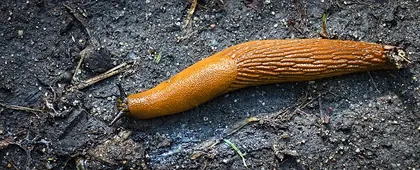
Slugs & snails
Inspect after dark for the animal or fresh slime near chewed plants.