
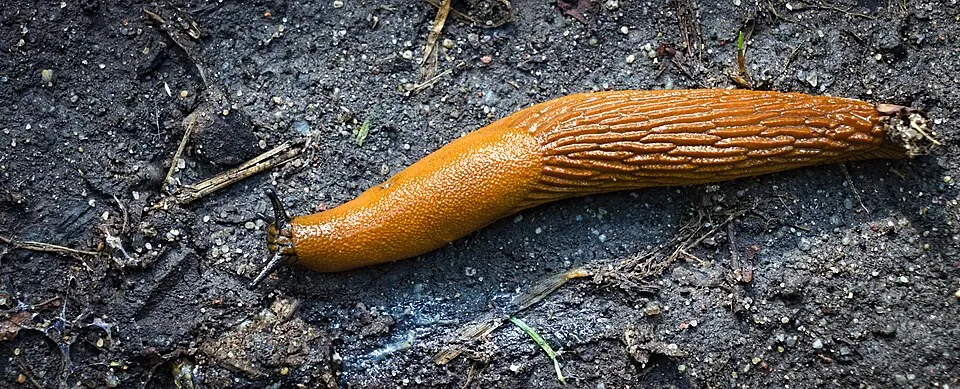
Reduce shelter near the crop
Remove unnecessary boards and debris; use targeted morning watering when appropriate so surface moisture does not persist all night.
Sources for this section
University of California Statewide IPM Program · US Environmental Protection Agency
Recognize the signs
- Evidence
- Irregular feeding holes, scraped tissue and slime trails support the diagnosis; daytime absence is common because animals shelter from drying.
- Animal
- Snails have an external shell; slugs lack a conspicuous one. Not every local species is a plant pest.
Look more closely
Compare the labeled examples and their limits. Images are independently enlarged, not shown at a common scale.
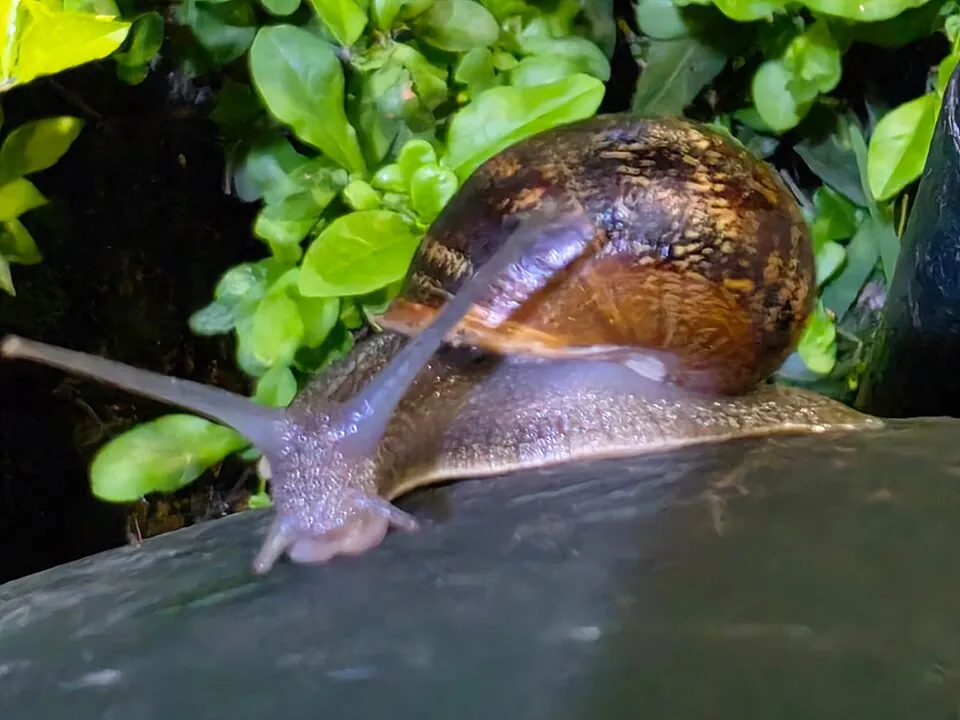
Identification limits & photo credit
A single source-labelled Cornu aspersum, with shell, head and tentacles visible. Other snails have different shells; this is not a native-status, edibility or pest-status identification.
Brown garden snail photographed in Lima, Peru. Photo: Levadura5. CC BY 4.0. Original source · CC BY 4.0 & details
Sources for this section
Differences that change the decision
A similar-looking organism can need a different response. Compare the evidence and what it changes.
Compare every column. On a narrow screen, scroll the table sideways.
| Type | What to check | What changes |
|---|---|---|
| Plant-feeding garden slugs | Often shelter beneath pots, boards and dense vegetation. | Inspect the moist refuges connected to damaged plants and remove identified pests. |
| Plant-feeding garden snails | Shelled animals can shelter on or near plants. | Collect pests and address hiding places; shell presence helps identification but does not establish an invasive species. |
| Unusual or suspected invasive molluscs | Appearance differs from familiar local animals or follows imported plants. | Photograph and ask the local plant-health authority before transporting or disposing of specimens. |
Sources for this section
University of California Statewide IPM Program · Australian Department of Agriculture, Fisheries and Forestry
What else could it be?
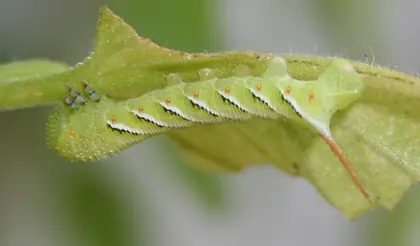
Caterpillars or beetles
These also chew foliage; search for insects, frass and fresh feeding.
Compare caterpillars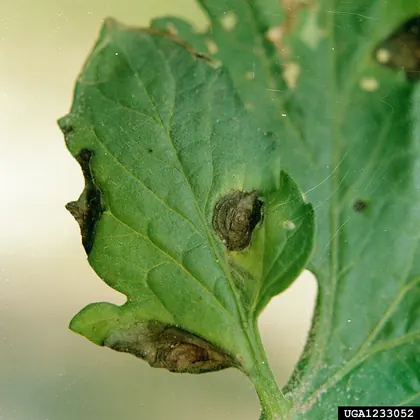
Disease or physical damage
Tissue can fall out of leaf spots or tear; holes alone are inconclusive.
Compare plant disease & stressSources for this section
Inspect the right places
Check the active period
Use a torch after dark or during damp weather. Follow fresh slime and examine the undersides of pots and nearby debris without handling unknown animals barehanded.
Locate avoidable moisture
Check leaking irrigation, persistently wet edges and hiding sites close to seedlings. Preserve useful habitat elsewhere while protecting the vulnerable planting.
Sources for this section
University of California Statewide IPM Program · Virginia Cooperative Extension
Choose a proportionate response
For pesticides, the local product label determines the allowed pest, site, precautions and timing. Check safety and regional guidance.
Reduce shelter near the crop
Remove unnecessary boards and debris; use targeted morning watering when appropriate so surface moisture does not persist all night.
Hand-remove confirmed pests
Inspect repeatedly and collect identified plant-feeding slugs or snails. If using a shelter trap, check it daily and remove the animals rather than creating a permanent refuge.
Use bait only within the label
A locally permitted molluscicide may complement habitat changes. Follow the exact crop/site, placement and pet/child instructions; keep the package for any exposure consultation.
Sources for this section
University of California Statewide IPM Program · US Environmental Protection Agency
Avoid these mistakes
- Do not use salt on garden soil or plants.
- Do not heap bait or assume a product is harmless because it is marketed as natural or contains iron.
- Do not expect bait to compensate for permanent wet shelter.
Sources for this section
University of California Statewide IPM Program · US Environmental Protection Agency
Check whether it is working
UC IPM advises checking shelter traps daily. Suggested practice: repeat evening inspections during wet periods and after a physical-control change.
Fewer animals or fresh trails and no continuing loss of vulnerable new growth; old holes remain.
Get help when…
- Uncertain or potentially invasive species: local plant-health authority.
- Possible bait ingestion by a person or animal: contact the appropriate poison service or veterinarian promptly, with the package.
Prevent a return
- Inspect pots and plant deliveries for hidden animals and eggs.
- Repair irrigation leaks and protect seedlings with locally recommended barriers maintained free of bypasses.
Sources for this section
Common questions
Do holes without slime rule out slugs?
No. Trails can be missed or dry out; a night inspection is more useful than absence of a daytime trail.
Can I rely on one trap?
No. Check the whole affected area and address moisture and shelter. A trap is one observation and control point, not proof of clearance.
Sources for this section
Sources & scope
References retain their geography and dates. A source-check date is not a claim of independent specialist review.
- Snails and Slugs
University of California Statewide IPM Program. California, United States; host, climate and local species matter; source date 2018-03; source check, not expert review Checked 2026-10-15.
- Diagnosing Plant Problems
Virginia Cooperative Extension. Virginia, United States; general diagnostic method; source date 2023-11 review; source check, not expert review Checked 2026-10-15.
- Do's and Don'ts of Pest Control
US Environmental Protection Agency. United States; source check, not expert review Checked 2026-10-15.
- Report a pest or disease concern
Australian Department of Agriculture, Fisheries and Forestry. Australia; state or territory biosecurity reporting routes; source check, not expert review Checked 2026-10-15.
Individual medical or veterinary diagnosis, structural assessment, uncertain species identification and local treatment permissions require the appropriate professional. About our editorial process.
Keep investigating
Caterpillars
Find the larva, its waste and its feeding site before acting on holes.
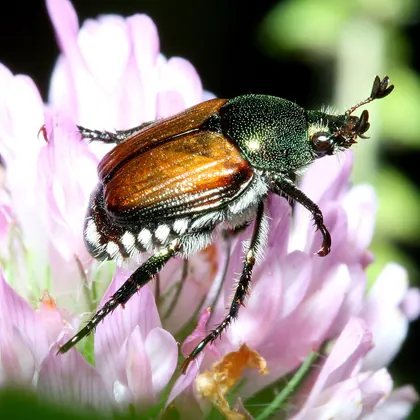
Garden Beetles
Identify the beetle and its host before removing it.
Plant disease & stress
Start with the plant, the pattern and its growing conditions.