
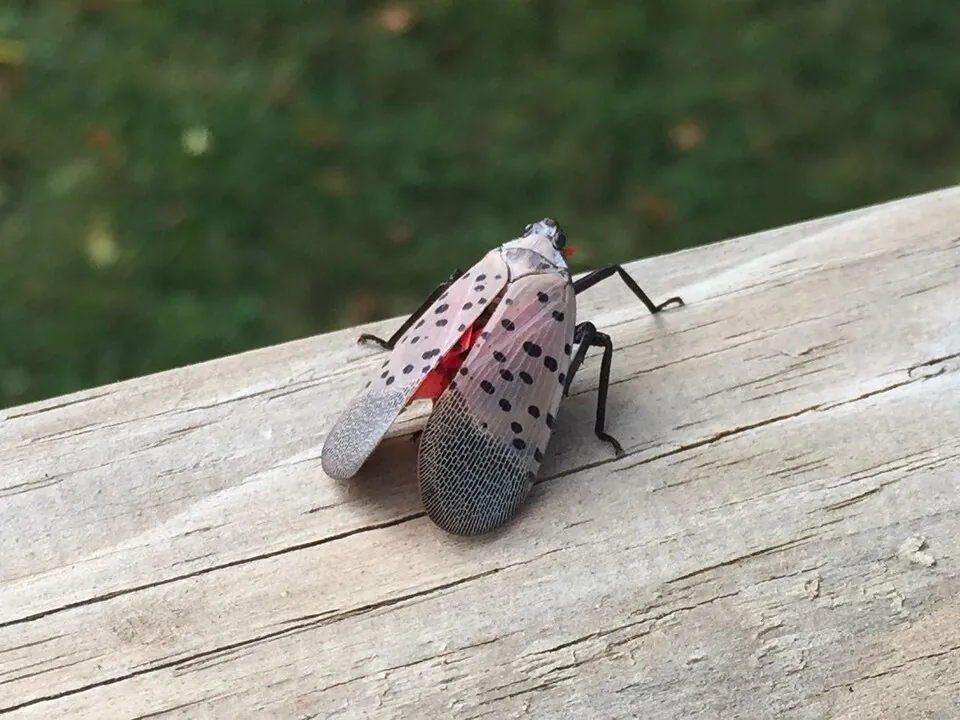
Report a credible concern
Send the requested evidence through the official route and keep its reference number. Reporting does not mean the identification has been confirmed.
Recognize the signs
- Suspicion is not confirmation
- An unfamiliar insect, sudden tree decline or unusual eggs can justify checking, but native species and ordinary injury may look similar.
- Useful record
- Take clear photos of the organism or signs, the host and the wider setting. Note the date, precise location and whether material was recently purchased or moved.
Look more closely
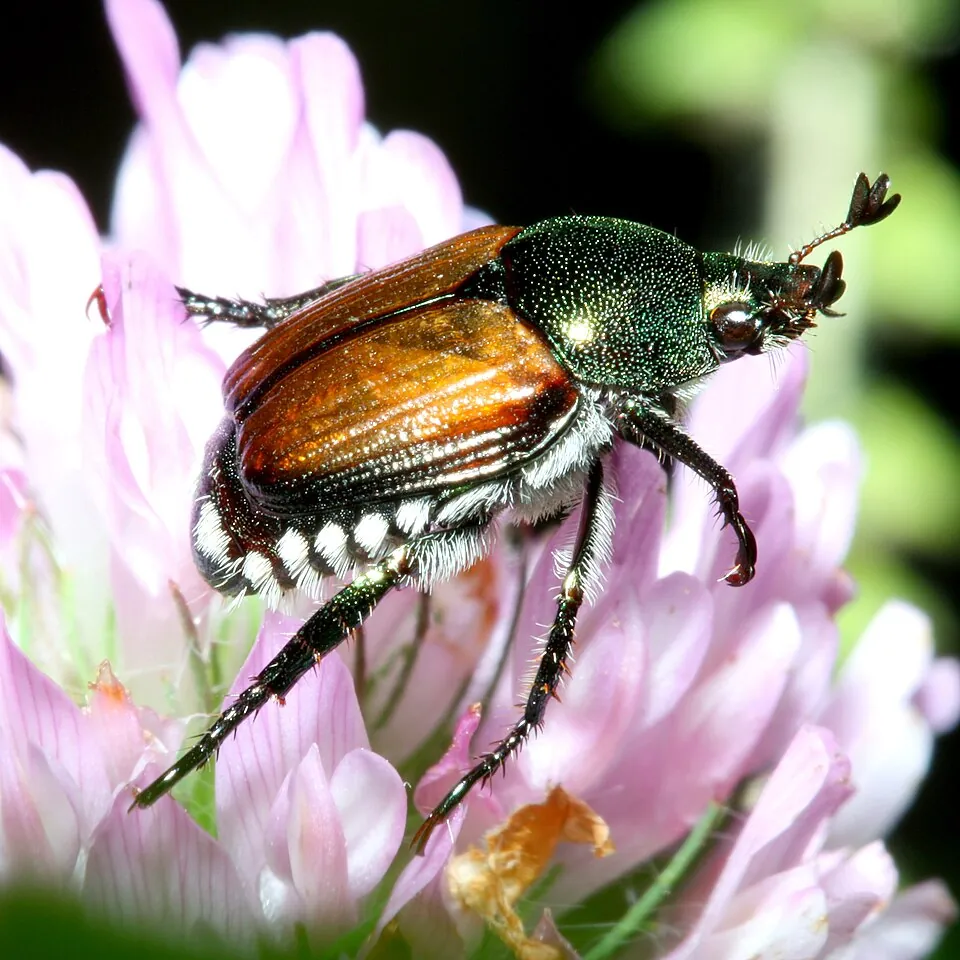
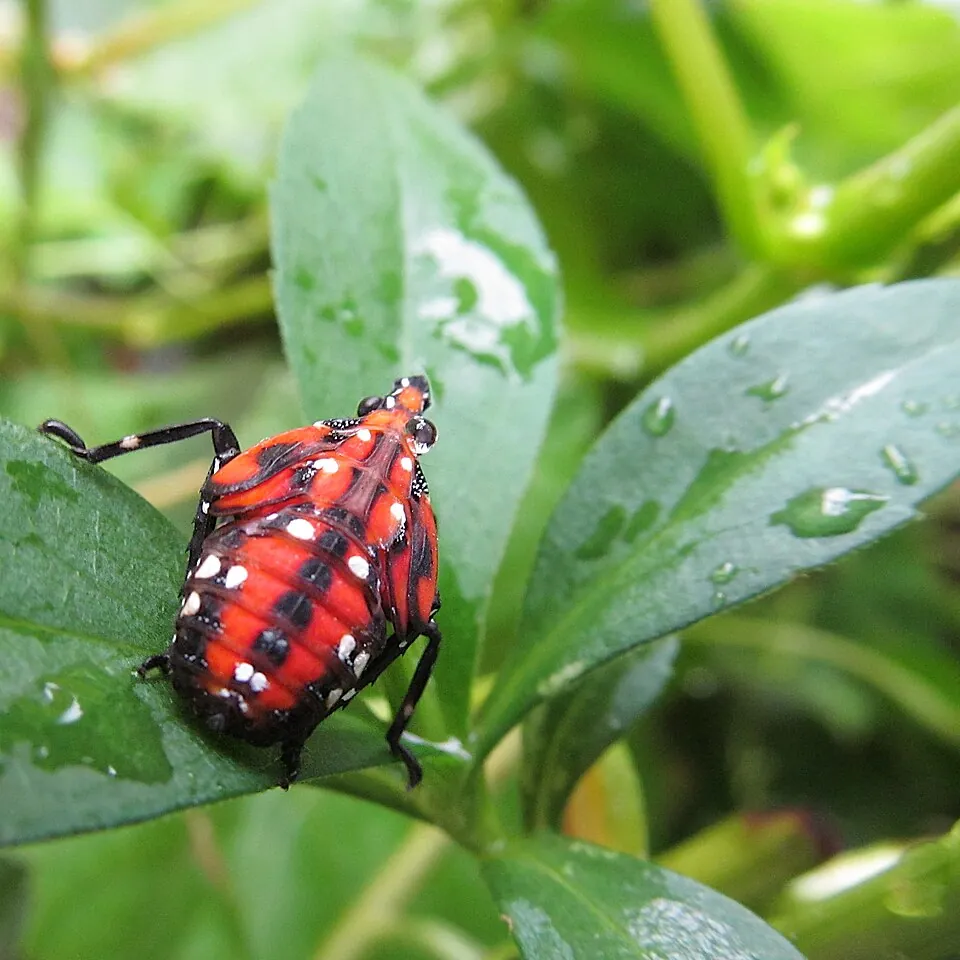
Compare the labeled examples and their limits. Images are independently enlarged, not shown at a common scale.
Identification limits & photo credit
One adult with metallic green and copper colours and white hair tufts along the abdomen. Not a plate for all leaf beetles or weevils, and no local invasive status can be inferred from the image.
Adult Japanese beetle on a flower. Photo: Bruce Marlin. CC BY 3.0. Original source · CC BY 3.0 & details
Identification limits & photo credit
Shows a red, black and white-spotted late-stage nymph. Earlier nymphs are black with white spots, while adults have wings. Do not infer regional status or management requirements from this photograph.
Late-stage spotted lanternfly nymph in Pittsburgh. Photo: Cbaile19. CC0 1.0. Original source · CC0 1.0 & details
Sources for this section
Differences that change the decision
A similar-looking organism can need a different response. Compare the evidence and what it changes.
Compare every column. On a narrow screen, scroll the table sideways.
| Type | What to check | What changes |
|---|---|---|
| Spotted lanternfly | A planthopper associated with honeydew; egg masses can travel on outdoor objects as well as plants. | Use the current official identification guide and local reporting route. Inspect furniture, vehicles and equipment before movement. |
| Emerald ash borer and other invasive borers | Ash decline, galleries or exit holes are clues, not a complete identification. | Confirm the tree and involve forestry or plant-health authorities; do not transport suspect firewood. |
| Asian citrus psyllid and citrus greening concern | A citrus-feeding insect can transmit a serious plant disease. | Get official host- and region-specific advice before moving citrus stock or attempting a treatment plan. |
| Invasive plants, pathogens or nematodes | Threats are not limited to visible insects and can move in soil, roots, water or plant material. | Keep the material at its present site and seek sampling or disposal instructions. |
Sources for this section
USDA APHIS · USDA APHIS · USDA APHIS · UC Statewide IPM Program · Canadian Food Inspection Agency · Australian Department of Agriculture, Fisheries and Forestry
What else could it be?
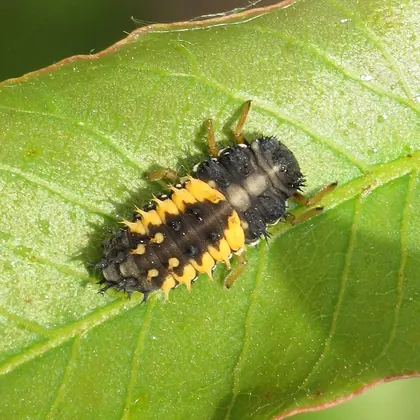
Native or established insects
Similar species can have different ecological roles and legal status. Compare multiple diagnostic features.
Compare beneficial insects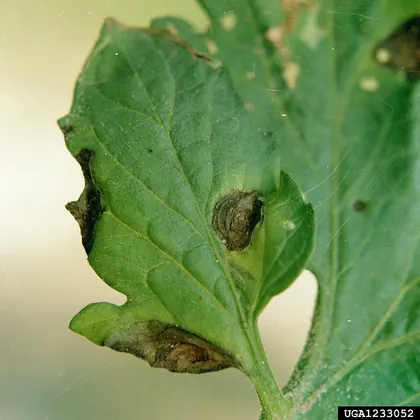
Ordinary plant stress
Drought, root damage and disease can mimic an insect invasion.
Compare plant disease & stressSources for this section
Inspect the right places
Document without spreading
Use photographs first. Do not mail live insects, carry infested branches or move pots and soil to an office without instructions.
Check the current regional route
United States: USDA APHIS or the state plant-health authority. United Kingdom: official tree/plant reporting guidance for the relevant nation. Canada: CFIA plant-pest reporting. Australia: DAFF's plant-pest or biosecurity reporting route. Elsewhere: the national plant-protection organisation or local agriculture authority.
Sources for this section
USDA APHIS · Forestry Commission and APHA · Canadian Food Inspection Agency · Australian Department of Agriculture, Fisheries and Forestry
Choose a proportionate response
For pesticides, the local product label determines the allowed pest, site, precautions and timing. Check safety and regional guidance.
Report a credible concern
Send the requested evidence through the official route and keep its reference number. Reporting does not mean the identification has been confirmed.
Pause risky movement
Hold suspect plant material, firewood and soil in place. Check current quarantine and movement instructions before clearing or transporting it.
Follow the species-specific response
Authorities may ask for a sample, inspection or a particular disposal method. Do not release, breed or relocate the organism; ordinary garden control can conflict with an eradication programme.
Avoid these mistakes
- Do not use an old distribution map as proof that a pest cannot be present.
- Do not assume the same pest is invasive or regulated everywhere.
- Do not move firewood or nursery stock because it looks clean; concealed stages may remain.
Sources for this section
Check whether it is working
Report promptly when official guidance identifies the suspicion as relevant. Follow the authority's instructions for revisits; update the report if new signs appear or material is moved accidentally.
A documented identification and appropriate local response. A submitted report or a single removed insect does not demonstrate eradication.
Get help when…
- Suspected regulated pest or unusual organism associated with imported goods: official plant-health/biosecurity authority.
- Unsafe tree or major decline: arborist alongside any plant-health reporting.
Sources for this section
USDA APHIS · USDA APHIS · Canadian Food Inspection Agency · Australian Department of Agriculture, Fisheries and Forestry
Prevent a return
- Buy firewood locally for use at the destination and leave leftovers there where instructed.
- Inspect and clean outdoor equipment; source plants responsibly and obey import and domestic movement rules.
Sources for this section
Common questions
Should I kill the insect before reporting?
Follow the current local instructions for that species. A photo and precise location may be the most useful first evidence; avoid transporting it.
Can a US pesticide or quarantine instruction be used elsewhere?
No. Products, permissions and regulated areas are jurisdiction-specific. Use the relevant local authority and current label.
Sources for this section
Sources & scope
References retain their geography and dates. A source-check date is not a claim of independent specialist review.
- Spotted Lanternfly
USDA APHIS. United States; distribution and quarantine boundaries change; source date 2025-08-26; source check, not expert review Checked 2026-10-15.
- Emerald Ash Borer
USDA APHIS. United States; consult current state restrictions and local treatment advice; source check, not expert review Checked 2026-10-15.
- Clean Outdoor Items Before You Move
USDA APHIS. United States; movement prevention; source date 2026-04-15; source check, not expert review Checked 2026-10-15.
- Help Protect America’s Trees: Buy Firewood Where You Burn It
USDA APHIS. United States; check current local firewood movement requirements; source check, not expert review Checked 2026-10-15.
- Psyllids
UC Statewide IPM Program. California, United States; biology may transfer, management timing and permitted products require local verification; source date 2014-04; source check, not expert review Checked 2026-10-15.
- Tree pests and diseases
Forestry Commission and APHA. United Kingdom overview; reporting route depends on nation and plant type; source date 2025-01-17; linked guidance updated 2026; source check, not expert review Checked 2026-10-15.
- Plant pest surveillance
Canadian Food Inspection Agency. Canada; current regulated areas and reporting requirements need local verification; source check, not expert review Checked 2026-10-15.
- Report a pest or disease concern
Australian Department of Agriculture, Fisheries and Forestry. Australia; state or territory biosecurity reporting routes; source check, not expert review Checked 2026-10-15.
- Weeds exotic to Australia
Australian Department of Agriculture, Fisheries and Forestry. Australia; unusual or exotic plants, import risk and reporting; source check, not expert review Checked 2026-10-15.
- Do's and Don'ts of Pest Control
US Environmental Protection Agency. United States; source check, not expert review Checked 2026-10-15.
- Diagnosing Plant Problems
Virginia Cooperative Extension. Virginia, United States; general diagnostic method; source date 2023-11 review; source check, not expert review Checked 2026-10-15.
- Biological Control and Natural Enemies of Invertebrates
UC Statewide IPM Program. California, United States; biology may transfer, management timing and permitted products require local verification; source check, not expert review Checked 2026-10-15.
Individual medical or veterinary diagnosis, structural assessment, uncertain species identification and local treatment permissions require the appropriate professional. About our editorial process.
Keep investigating
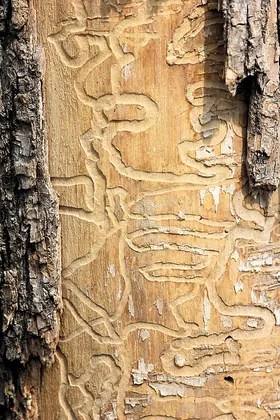
Tree Borers
Identify the tree and document fresh boring evidence.
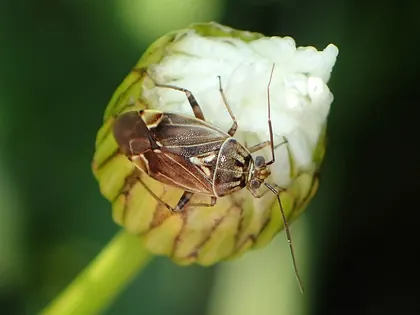
Plant bugs & leafhoppers
Start with the host and the insect, not a pale spot or wilted leaf.
Plant disease & stress
Start with the plant, the pattern and its growing conditions.