
Give natural control a chance
Where plants tolerate the injury, monitor while retaining predators and parasitised pests. Remove only the badly affected part when necessary.
Recognize the signs
- Look for relationships
- A predator among aphids, a swollen aphid mummy or parasitoid cocoons on a caterpillar can indicate natural control. Presence alone does not guarantee enough control.
- Life stages differ
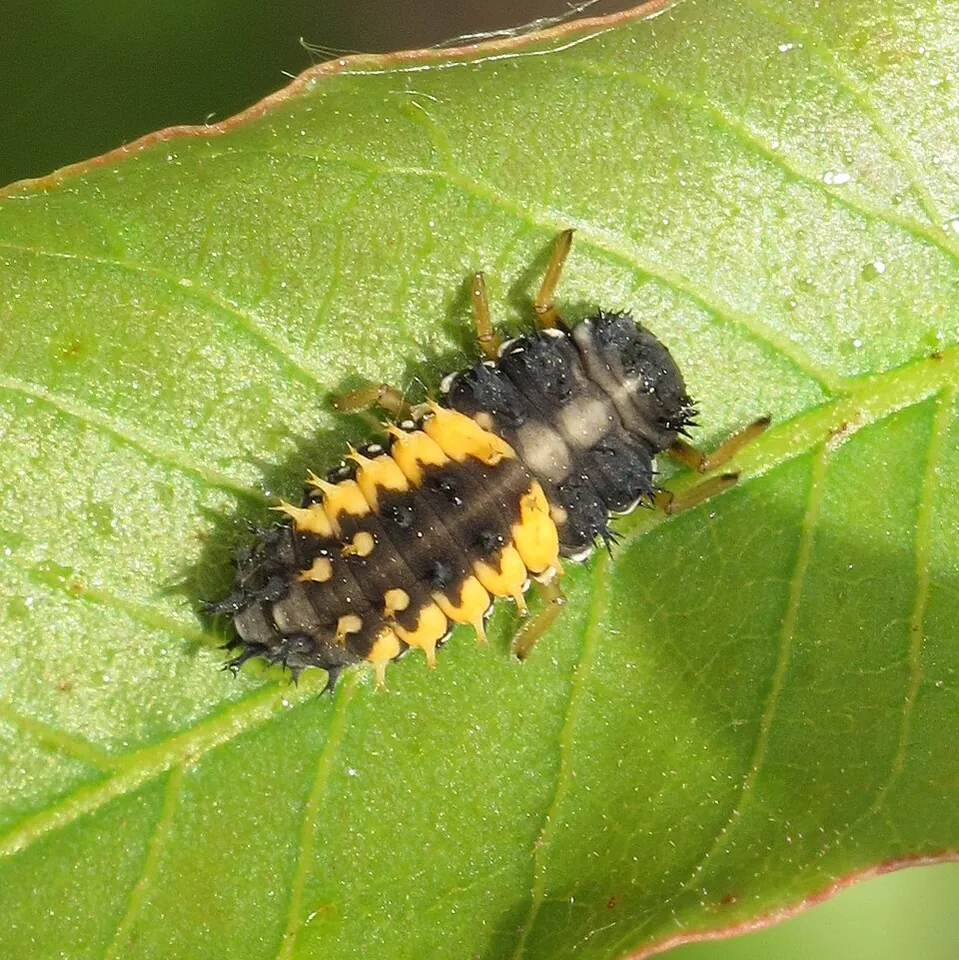
- Ladybird larvae are elongated rather than dome-shaped adults. Lacewing and hoverfly larvae can be mistaken for pests; use a reliable identification reference.
Look more closely
Compare the labeled examples and their limits. Images are independently enlarged, not shown at a common scale.
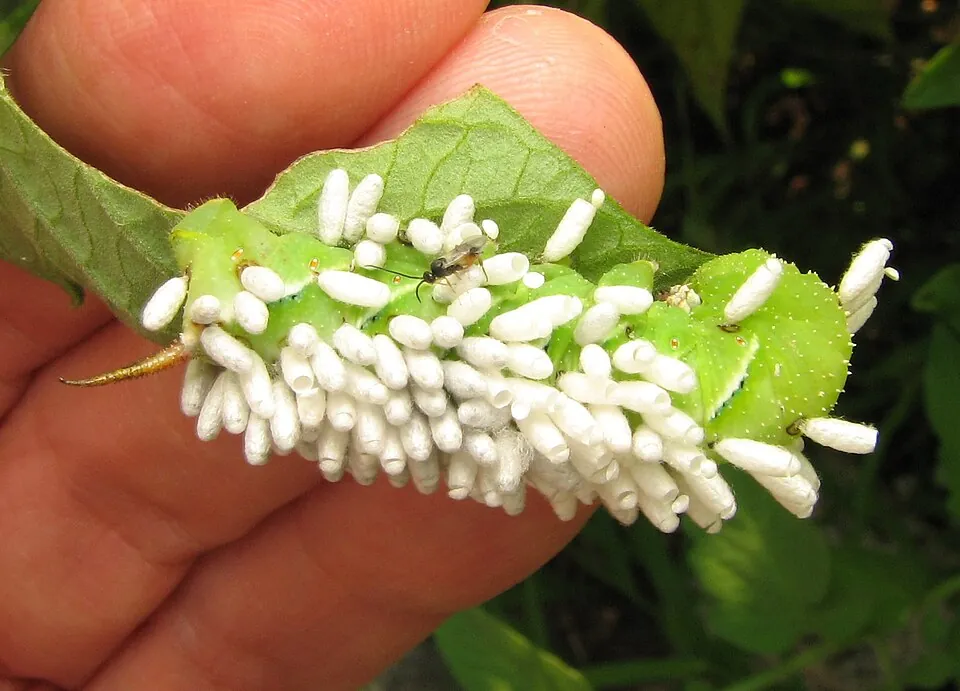
White parasitoid cocoons change the response: retain this larva for parasitoid emergence rather than removing every caterpillar.
Identification limits & photo credit
White structures are wasp cocoons, not caterpillar eggs. The source identifies Cotesia congregata on Manduca sexta. This example is not a plate for every parasitoid; do not handle an unknown caterpillar to reproduce the view.
Parasitoid-wasp cocoons on a tobacco hornworm. Photo: Beatriz Moisset. CC BY-SA 4.0. Original source · CC BY-SA 4.0 & details
Sources for this section
Differences that change the decision
A similar-looking organism can need a different response. Compare the evidence and what it changes.
Compare every column. On a narrow screen, scroll the table sideways.
| Type | What to check | What changes |
|---|---|---|
| Ladybird adults and larvae | Many species eat aphids and other small prey; larvae may be dark with orange or pale markings. | Preserve them when associated with prey. Not every ladybird species has the same diet. |
| Lacewings, hoverflies and predatory bugs | Several groups have larvae or adults that prey on sap feeders or other insects. | Observe or photograph before removing unfamiliar larvae. Avoid barehanded handling of unknown predatory bugs. |
| Parasitoid wasps | Aphid mummies, exit holes or white cocoons on hornworms show another insect developing at a host's expense. | Leave these signs where practical; the beneficial adult may not have emerged yet. |
| Predatory mites | Small mites among pest mites can suppress populations. | Use magnification and expert help if necessary; a broad insecticide may kill allies and worsen spider mites. |
| Mealybug destroyer larvae | Waxy white ladybird larvae can resemble large mealybugs. | Check body form and feeding behaviour before treating a white colony. |
| Ground beetles and other ground predators | Many hunt other invertebrates in soil and litter. | Do not assume every beetle found under a pot or in turf is the cause of plant injury. |
What else could it be?
Plant-feeding larvae
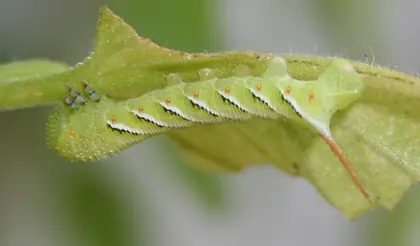
Caterpillars and beetle larvae may also be beneficial as wildlife while damaging a particular crop; identify and balance the actual injury.
Compare caterpillarsPest eggs versus parasitoid structures
A cocoon is not necessarily a new pest egg. Compare close photographs and the associated host.
Sources for this section
Inspect the right places
Inspect prey and helpers together
Count live damaging pests, predators and fresh plant injury at the same place. A predator finding is most informative alongside a trend in the pest.
Photograph before acting
Take a close view with a size reference and record the plant and behaviour. Avoid killing an unknown larva simply to complete an ID.
Sources for this section
Choose a proportionate response
For pesticides, the local product label determines the allowed pest, site, precautions and timing. Check safety and regional guidance.
Give natural control a chance
Where plants tolerate the injury, monitor while retaining predators and parasitised pests. Remove only the badly affected part when necessary.
Provide suitable habitat
Use locally appropriate flowering plants for nectar and pollen, reduce dust and manage ants protecting honeydew producers. Keep plant care and habitat compatible with the crop.
Use selective intervention when needed
If damage is unacceptable, target the confirmed pest and life stage with the least disruptive effective option. Even soaps and oils can kill helpers directly; observe the label and timing.
Check before purchasing organisms
Commercial predators or parasitoids need the right target, climate and setting. Releases may disperse or fail outdoors; do not release non-native organisms without local authorisation.
Avoid these mistakes
- Do not spray all insects to make a plant visually clean.
- Do not remove every aphid mummy or cocoon-covered hornworm.
- Do not promise that bought ladybirds will stay or eliminate an infestation.
Sources for this section
UC Statewide IPM Program · University of Minnesota Extension
Check whether it is working
Suggested practice: revisit the same affected shoots or plant group within several days while damage remains tolerable; increase inspection if seedlings or crop growth are threatened.
Pest numbers or new injury stabilise or decline while plant growth remains acceptable. The aim is practical suppression, not absence of all insects.
Get help when…
- Uncertain beneficial-versus-pest identification: local extension or entomology service.
- Serious damage despite natural enemies: crop-specific IPM advice; choose a targeted intervention.
Sources for this section
Prevent a return
- Retain suitable flowering habitat and avoid unnecessary persistent insecticides.
- Learn the immature stages of common local predators, not only the adult ladybird.
Sources for this section
Common questions
Should I leave a hornworm covered in white cocoons?
If the structures are parasitoid cocoons, leaving it lets beneficial wasps emerge. Verify the appearance and tolerate the limited remaining injury where practical.
Are all insects on an infested plant pests?
No. Predators, parasitoids, pollinators and incidental visitors may occur with the pest. Check each role before acting.
Sources for this section
UC Statewide IPM Program · University of Minnesota Extension
Sources & scope
References retain their geography and dates. A source-check date is not a claim of independent specialist review.
- Biological Control and Natural Enemies of Invertebrates
UC Statewide IPM Program. California, United States; biology may transfer, management timing and permitted products require local verification; source check, not expert review Checked 2026-10-15.
- Twospotted Lady Beetle
UC Statewide IPM Program. California, United States; biology may transfer, management timing and permitted products require local verification; source check, not expert review Checked 2026-10-15.
- Tomato hornworms
University of Minnesota Extension. Minnesota, United States; season dates and field thresholds are not universal; source date reviewed 2020; source check, not expert review Checked 2026-10-15.
- Mealybugs
UC Statewide IPM Program. California, United States; biology may transfer, management timing and permitted products require local verification; source date 2016-03; source check, not expert review Checked 2026-10-15.
- Spider Mites
University of California Statewide IPM Program. California, United States; host, climate and local species matter; source date 2011-12; source check, not expert review Checked 2026-10-15.
- Lawn Insects
UC Statewide IPM Program. California, United States; biology may transfer, management timing and permitted products require local verification; source check, not expert review Checked 2026-10-15.
- Whiteflies
University of California Statewide IPM Program. California, United States; host, climate and local species matter; source date 2015-09; source check, not expert review Checked 2026-10-15.
Individual medical or veterinary diagnosis, structural assessment, uncertain species identification and local treatment permissions require the appropriate professional. About our editorial process.
Keep investigating
Aphids
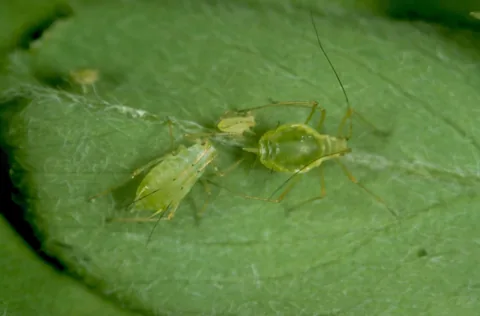
Look for live colonies on tender growth before treating curled leaves.
Caterpillars
Find the larva, its waste and its feeding site before acting on holes.
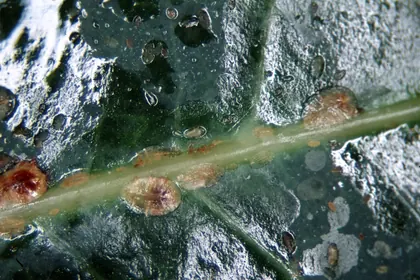
Scale & mealybugs
Separate armoured scale, soft scale and mealybugs before choosing an action.