
Choose tolerance where growth is sound
A few colonies do not demand treatment. Leave parasitoids and predators; avoid spraying the whole plant for cosmetic damage.
Sources for this section
University of California Statewide IPM Program · UC Statewide IPM Program · US Environmental Protection Agency
Recognize the signs
- Body
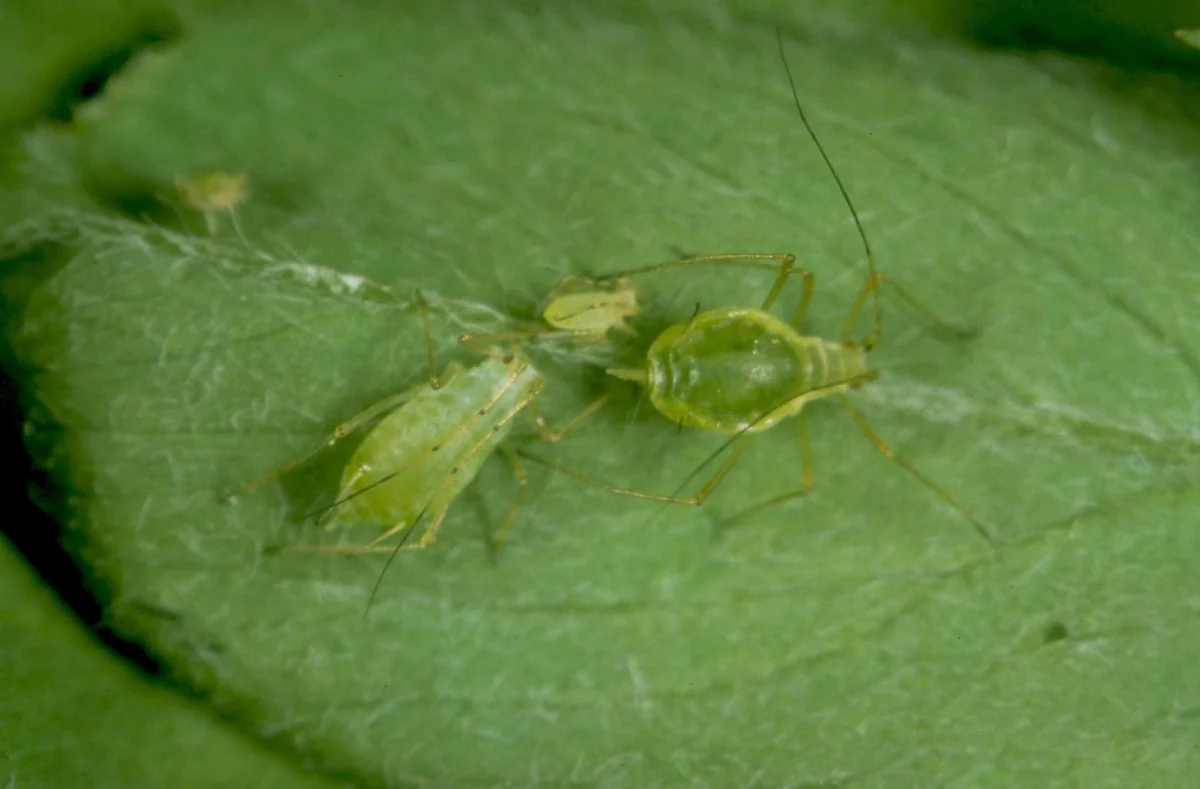
- Soft, often pear-shaped insects with paired rear tubes called cornicles. Colour varies; some adults have wings.
- Plant evidence
- Colonies, shed skins and sticky honeydew support an aphid finding. Curling alone does not.
- Natural control
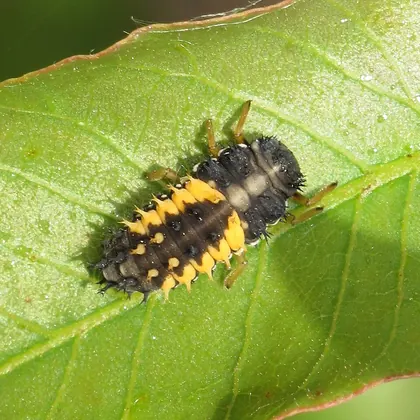
- Swollen tan or brown aphid mummies can contain parasitoids. Ladybird larvae among a colony may be eating it.
Sources for this section
University of California Statewide IPM Program · UC Statewide IPM Program
Differences that change the decision
A similar-looking organism can need a different response. Compare the evidence and what it changes.
Compare every column. On a narrow screen, scroll the table sideways.
| Type | What to check | What changes |
|---|---|---|
| Exposed shoot-feeding aphids | Colonies on soft shoots or leaf undersides. | A water stream can reach them on sturdy plants; check tender seedlings for damage. |
| Woolly and concealed aphids | Wax, tightly curled leaves or protected feeding sites can hide insects. | Confirm the insect and host; surface washing may miss the colony. Obtain host-specific advice for persistent injury. |
| Aphid mummies | Puffed, immobile shells rather than growing soft colonies. | Retain them where possible and reassess live aphids before intervening. |
Sources for this section
University of California Statewide IPM Program · UC Statewide IPM Program
What else could it be?
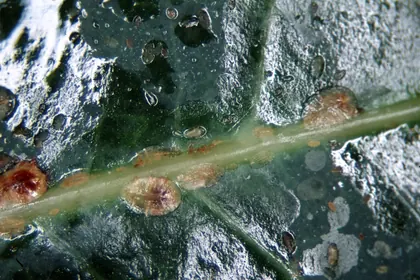
Mealybugs
Segmented, wax-covered insects commonly shelter in leaf joints; wax alone cannot distinguish them.
Compare scale & mealybugs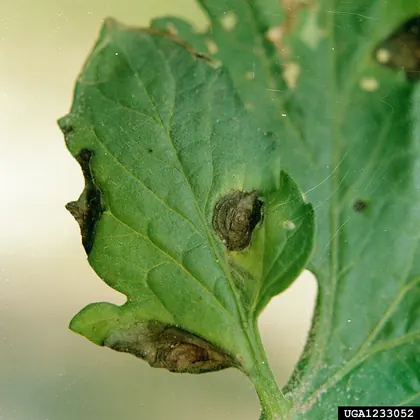
Water, root or herbicide stress
Distortion without aphids needs a plant-health investigation.
Compare plant disease & stressSources for this section
Inspect the right places
Compare new growth
Turn over several affected and unaffected leaves. Record live colonies, ants, predators and whether new leaves are continuing to distort.
Inspect the plant's context
Identify the host, recent fertiliser use and water conditions. A crowded seedling and a vigorous mature shrub need different thresholds.
Sources for this section
Choose a proportionate response
For pesticides, the local product label determines the allowed pest, site, precautions and timing. Check safety and regional guidance.
Choose tolerance where growth is sound
A few colonies do not demand treatment. Leave parasitoids and predators; avoid spraying the whole plant for cosmetic damage.
Reduce a reachable colony
Dislodge aphids with water on a plant sturdy enough to tolerate it, or remove a small, heavily infested shoot without stripping the plant.
Address ant protection
If ants tend the colony, identify their route and use local ant-management guidance. If pesticide treatment is warranted, use a locally permitted product labelled for this plant and site, including edible-crop restrictions.
Sources for this section
University of California Statewide IPM Program · UC Statewide IPM Program · US Environmental Protection Agency
Avoid these mistakes
- Do not treat old leaf curls as proof that live aphids remain.
- Do not assume a broad insecticide prevents aphid-transmitted viruses; transmission can occur before aphids die.
- Avoid excess nitrogen that promotes susceptible soft growth.
Sources for this section
Check whether it is working
Suggested practice: revisit the marked shoots within several days after physical removal and during subsequent new growth; this is an inspection schedule, not an eradication deadline.
Fewer live colonies and healthy new growth, with predators retained. Old curled leaves may remain.
Get help when…
- Seedlings losing growth or colonies repeatedly returning: local horticultural or extension advice.
- Mosaic, stunting or unexplained distortion despite few insects: plant diagnostic service.
Sources for this section
University of California Statewide IPM Program · Virginia Cooperative Extension
Prevent a return
- Inspect new plants and especially their growing tips.
- Use plant-appropriate irrigation and fertilisation; retain flowers that support beneficial insects.
Sources for this section
University of California Statewide IPM Program · UC Statewide IPM Program
Common questions
Must I remove every aphid?
Usually no. Base the decision on plant injury, growth stage and natural enemies; a garden need not be insect-free.
Are ants eating the aphids?
Ants often collect honeydew and protect aphids from predators. Watching their behaviour is more useful than assuming they are helping.
Sources for this section
Sources & scope
References retain their geography and dates. A source-check date is not a claim of independent specialist review.
- Aphids
University of California Statewide IPM Program. California, United States; host, climate and local species matter; source date 2013-07; source check, not expert review Checked 2026-10-15.
- Biological Control and Natural Enemies of Invertebrates
UC Statewide IPM Program. California, United States; biology may transfer, management timing and permitted products require local verification; source check, not expert review Checked 2026-10-15.
- Diagnosing Plant Problems
Virginia Cooperative Extension. Virginia, United States; general diagnostic method; source date 2023-11 review; source check, not expert review Checked 2026-10-15.
- Do's and Don'ts of Pest Control
US Environmental Protection Agency. United States; source check, not expert review Checked 2026-10-15.
Individual medical or veterinary diagnosis, structural assessment, uncertain species identification and local treatment permissions require the appropriate professional. About our editorial process.
Keep investigating
Beneficial Insects
Before removing an insect, check what it is eating and which life stage you are seeing.
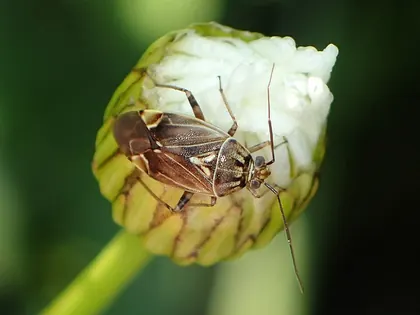
Plant bugs & leafhoppers
Start with the host and the insect, not a pale spot or wilted leaf.
Scale & mealybugs
Separate armoured scale, soft scale and mealybugs before choosing an action.