
Limit a small infestation
Isolate affected houseplants. Physically remove reachable insects or prune a limited infested part; disposal may be more practical for a severely infested replaceable plant.
Sources for this section
University of California Statewide IPM Program · UC Statewide IPM Program · UC Statewide IPM Program · US Environmental Protection Agency
Recognize the signs
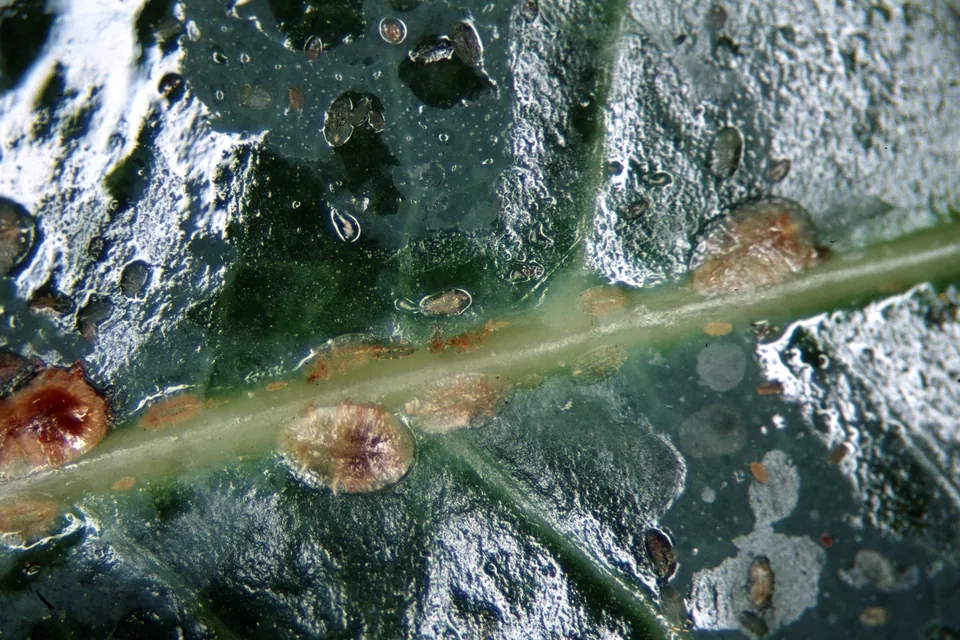
- Scales
- Small attached bumps on stems or leaves may cover insects. Shape and colour vary with the species and life stage.
- Mealybugs
- Oval segmented insects with white wax gather in leaf joints, stem crevices or roots. Cottony material alone is not a complete ID.
- Honeydew
- Soft scales and mealybugs can produce sticky honeydew; armoured scales do not. Check for another sap feeder if an armoured-scale diagnosis does not explain stickiness.
Look more closely
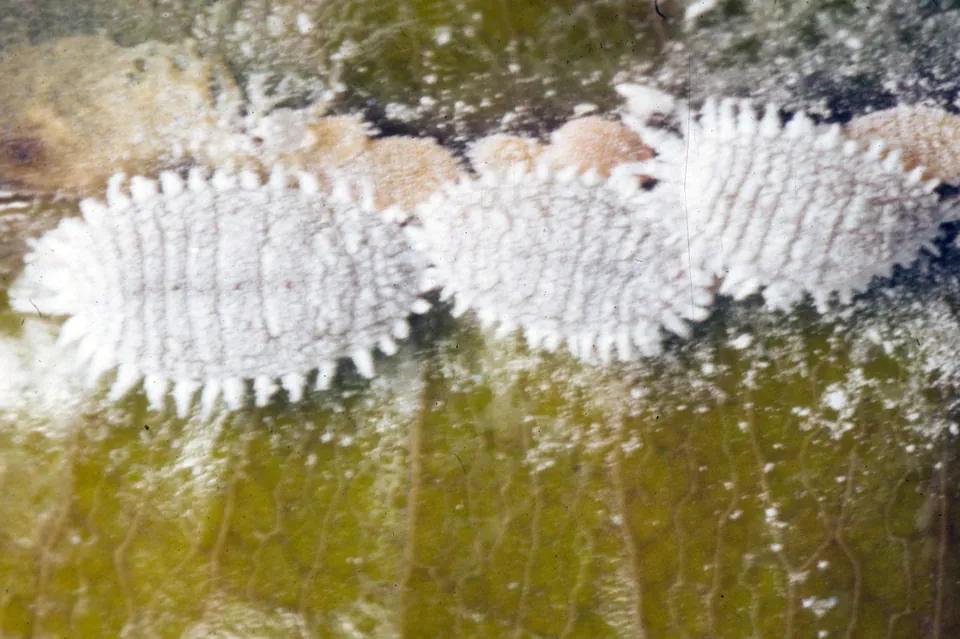
Compare the labeled examples and their limits. Images are independently enlarged, not shown at a common scale.
Identification limits & photo credit
A laboratory sample of one species. Wax and body outlines overlap, and the host plant is unspecified. Do not infer the species of a live houseplant colony from white wax alone.
Citrus mealybugs, magnified laboratory sample. Photo: Jeffrey W. Lotz, Florida Department of Agriculture and Consumer Services, Bugwood.org. CC BY 3.0 US. Original source · CC BY 3.0 US & details
Sources for this section
University of California Statewide IPM Program · UC Statewide IPM Program
Differences that change the decision
A similar-looking organism can need a different response. Compare the evidence and what it changes.
Compare every column. On a narrow screen, scroll the table sideways.
| Type | What to check | What changes |
|---|---|---|
| Armoured scales | Insect beneath a separable protective cover; no honeydew. | Check whether insects beneath covers are alive. Management targets and crawler timing differ by species. |
| Soft scales and cottony cushion scale | Soft scales have bodies integrated with the covering; cottony cushion scale has a conspicuous fluted egg sac. | Identify the species and assess natural enemies before using pesticide. |
| Longtailed and citrus mealybugs | Longtailed mealybugs have conspicuous rear filaments; citrus mealybugs have shorter wax projections. | Use close photographs for identification; inspect protected sites on the whole plant. |
| Root mealybugs | White wax and insects on roots or pot surfaces, sometimes with poor growth. | Inspect the root ball of a declining potted plant; treating only leaves misses the source. |
Sources for this section
University of California Statewide IPM Program · UC Statewide IPM Program
What else could it be?
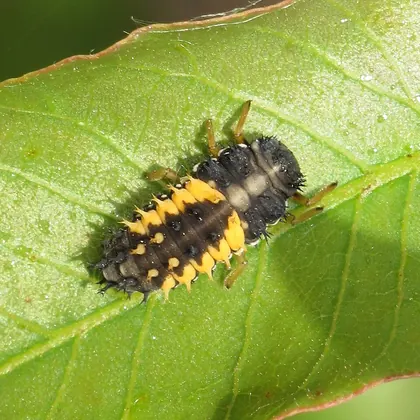
Beneficial mealybug-destroyer larvae
These ladybird larvae can also look waxy and white and occur among their prey. Do not remove every white crawler without checking.
Compare beneficial insects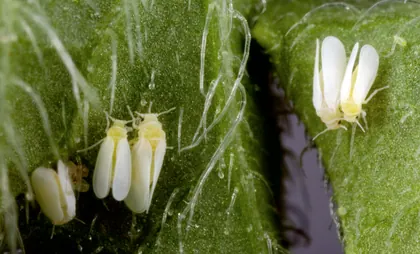
Whiteflies, woolly aphids and plant deposits
Several sap feeders make wax; mineral deposits or plant tissue do not move or reveal insect bodies.
Compare whitefliesSources for this section
Inspect the right places
Find a living sample
Use magnification on several bumps, leaf joints and stems; note the host and whether covers contain live insects. Photograph intact specimens before removal.
Inspect hidden reservoirs
Check pot rims, supports and neighbouring plants. Root symptoms require a careful root inspection, not an automatic foliar diagnosis.
Sources for this section
University of California Statewide IPM Program · UC Statewide IPM Program
Choose a proportionate response
For pesticides, the local product label determines the allowed pest, site, precautions and timing. Check safety and regional guidance.
Limit a small infestation
Isolate affected houseplants. Physically remove reachable insects or prune a limited infested part; disposal may be more practical for a severely infested replaceable plant.
Let enemies work outdoors
Look for predators or parasitism and reduce ants protecting honeydew producers. Avoid disrupting established biological control.
Match treatment to the stage
Where damage justifies treatment, have the scale identified and obtain local crawler-timing advice. Only use products labelled for that plant and setting; wax and covers can limit contact.
Sources for this section
University of California Statewide IPM Program · UC Statewide IPM Program · UC Statewide IPM Program · US Environmental Protection Agency
Avoid these mistakes
- Do not reapply pesticide just because dead scale covers remain.
- Do not substitute homemade alcohol, detergent or oil mixtures for a labelled product.
- Do not generalise one systemic treatment to every scale species, edible crop or jurisdiction.
Sources for this section
University of California Statewide IPM Program · US Environmental Protection Agency
Check whether it is working
Suggested practice: recheck the same marked stems and nearby plants regularly after removal. For pesticide timing, follow local species-specific crawler monitoring and the product label.
Fewer live insects and crawlers, less fresh honeydew and healthy new growth; persistent shells alone are not failure.
Get help when…
- Root infestation, valuable tree decline or uncertain live/dead scale: plant clinic or qualified horticultural professional.
- Repeated failure after correct identification: ask for a revised diagnosis and treatment-stage assessment.
Sources for this section
Prevent a return
- Inspect purchases, cuttings, pots and supports before mixing plants.
- Avoid crowding that makes inspection difficult; manage ants and plant stress.
Sources for this section
Common questions
Why are white insects still there after treatment?
They may be live survivors in protected sites, dead wax residue or beneficial larvae. Examine them before deciding that another treatment is needed.
Does stickiness prove scale?
No. Aphids, whiteflies and mealybugs also produce honeydew; armoured scales do not.
Sources for this section
University of California Statewide IPM Program · UC Statewide IPM Program
Sources & scope
References retain their geography and dates. A source-check date is not a claim of independent specialist review.
- Scales
University of California Statewide IPM Program. California, United States; host, climate and local species matter; source date 2014-09; source check, not expert review Checked 2026-10-15.
- Mealybugs
UC Statewide IPM Program. California, United States; biology may transfer, management timing and permitted products require local verification; source date 2016-03; source check, not expert review Checked 2026-10-15.
- Biological Control and Natural Enemies of Invertebrates
UC Statewide IPM Program. California, United States; biology may transfer, management timing and permitted products require local verification; source check, not expert review Checked 2026-10-15.
- Do's and Don'ts of Pest Control
US Environmental Protection Agency. United States; source check, not expert review Checked 2026-10-15.
Individual medical or veterinary diagnosis, structural assessment, uncertain species identification and local treatment permissions require the appropriate professional. About our editorial process.
Keep investigating
Whiteflies
A cloud of tiny white adults is a clue; inspect leaf undersides for their immature stages.
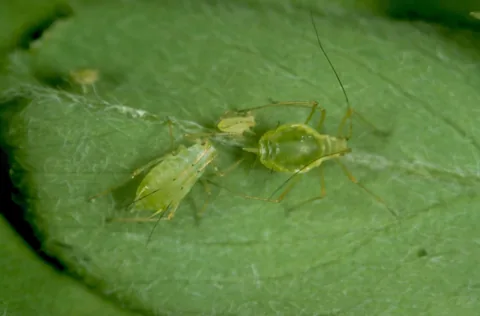
Aphids
Look for live colonies on tender growth before treating curled leaves.
Beneficial Insects
Before removing an insect, check what it is eating and which life stage you are seeing.