
Correct a verified care problem
Repair drainage or uneven irrigation and match light, planting depth and nutrition to the plant. Do not add water or fertiliser simply because leaves look weak.
Sources for this section
Virginia Cooperative Extension · UC Statewide IPM Program · UC Statewide IPM Program · UC Statewide IPM Program
Recognize the signs
- Pattern
- Record whether symptoms affect one plant, a species, an irrigation zone or many unrelated plants. Distribution helps frame questions but does not prove a cause.
- Signs versus symptoms
- Wilt or discolouration is a symptom. Fungal growth, an insect, an entry hole or a root lesion offers more specific evidence; photographs may still be insufficient.
Look more closely
Compare the labeled examples and their limits. Images are independently enlarged, not shown at a common scale.
Identification limits & photo credit
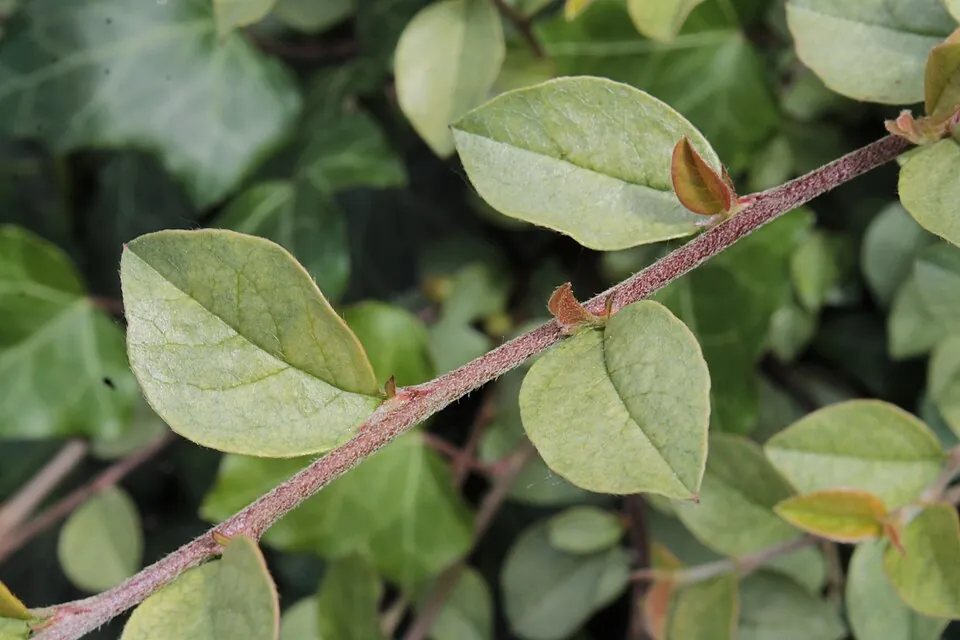
The source identifies Tetranychus urticae on Cotoneaster dammeri. Individual mites are not resolved here; pale leaves alone cannot separate mites from nutrient, water or other plant problems.
Spider-mite example on Cotoneaster foliage. Photo: I.Sáček, senior. CC0 1.0. Original source · CC0 1.0 & details
Identification limits & photo credit
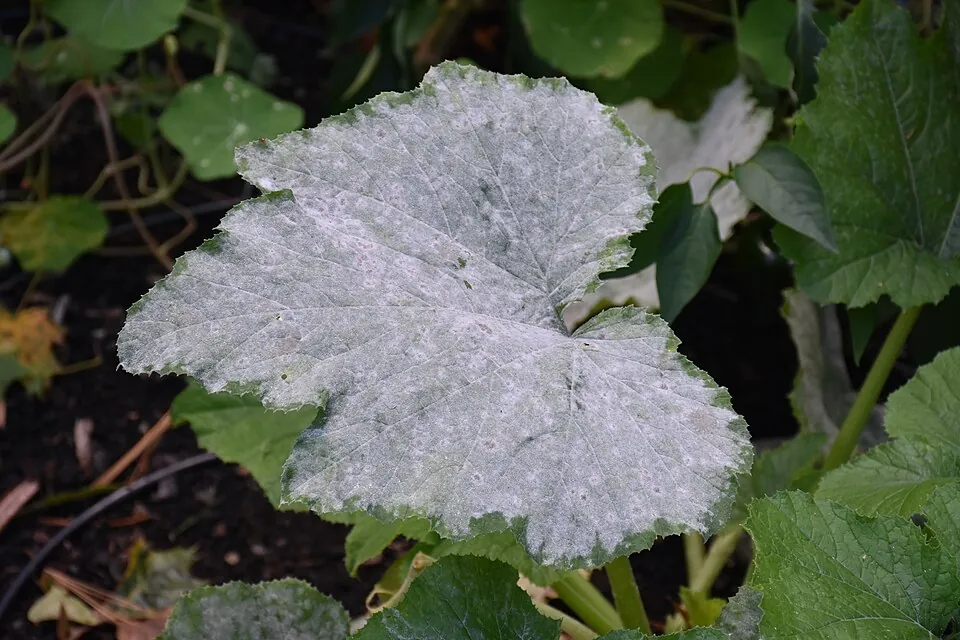
Powdery mildew on squash according to the photographer. The fungus species is not identified. Natural leaf patterns, residues and other leaf diseases need separate consideration.
Powdery mildew on a squash leaf. Photo: Dmitry Brant. CC BY-SA 4.0. Original source · CC BY-SA 4.0 & details
Sources for this section
Differences that change the decision
A similar-looking organism can need a different response. Compare the evidence and what it changes.
Compare every column. On a narrow screen, scroll the table sideways.
| Type | What to check | What changes |
|---|---|---|
| Water and root stress | Both drought and saturated, poorly aerated roots can produce wilt. | Check moisture at root depth and drainage before watering again. Inspect roots rather than assuming a leaf pest. |
| Phytophthora and other root/crown rots | Decline or wilt with damaged roots or crown may occur in persistently wet sites. | Improve water management and obtain diagnosis; fungicides cannot simply restore dead roots. |
| Damping-off | Seeds rot or seedlings collapse with weakened tissue at the soil line. | Distinguish decay from a cleanly chewed stem. Improve clean seed-starting materials, drainage and germination conditions. |
| Powdery and downy mildews | Powdery growth, often on leaf surfaces, differs from downy growth commonly beneath leaves; host and magnification help. | Conditions and treatment differ. Powdery mildew does not require free water; avoid a single watering rule for every disease. |
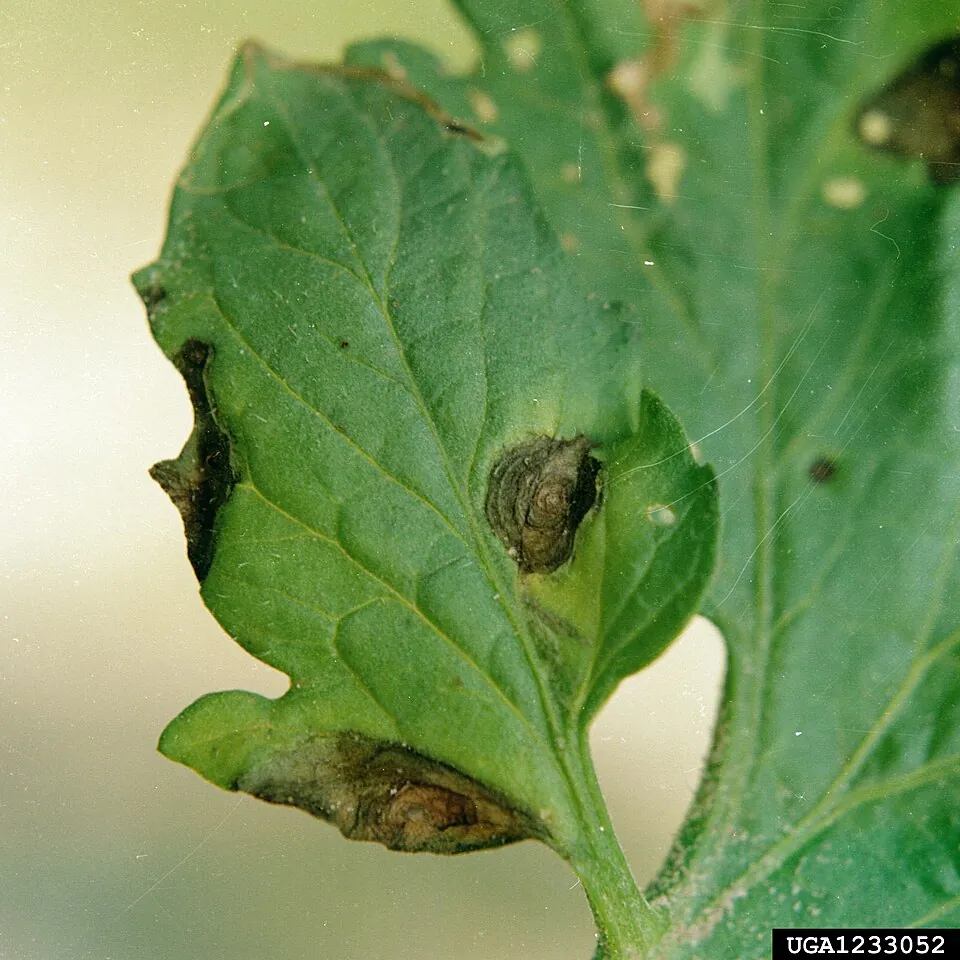
| Leaf spots, blights and viruses | Tomato early blight or Septoria, cucumber disease and virus distortion can overlap with other injury. | Identify the host and symptom progression; laboratory confirmation may be needed before removing plants or choosing products. |
| Abiotic fruit and leaf injury | Tomato blossom-end rot, chemical injury, heat or poor pollination can resemble pests. | Review water fluctuations, applications and weather; insecticide will not correct these causes. |
What else could it be?
Sap feeders and mites
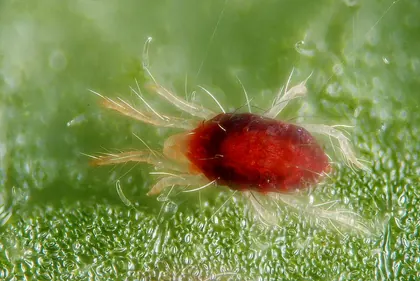
Look beneath leaves for live colonies and corresponding fresh feeding.
Compare spider mites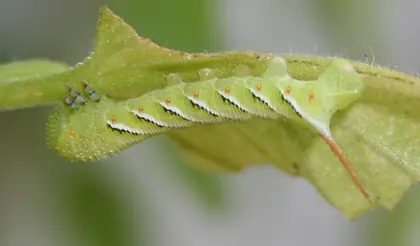
Caterpillars, slugs or beetles
Chewed tissue, frass or slime directs a different investigation.
Compare caterpillars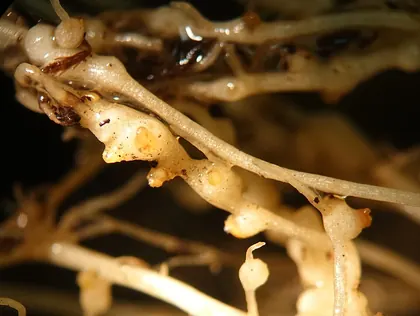
Sources for this section
Virginia Cooperative Extension · University of California Statewide IPM Program
Inspect the right places
Build a diagnostic record
Record plant and cultivar, planting date, affected parts, first symptoms, recent weather, irrigation, fertiliser and pesticide use. Take whole-plant, site and close-up images.
Compare roots and growing conditions
Check the root zone and drainage, not only the leaves. Compare a healthy plant nearby. Ask a clinic how to collect a useful sample before cutting or shipping material.
Keep wilt alternatives open
For squash, inspect the lower stem for borer entry and frass, leaves for squash bugs and the root zone for moisture problems. Cucumber-beetle-associated bacterial wilt is another possibility.
Sources for this section
Virginia Cooperative Extension · UC Statewide IPM Program · University of Minnesota Extension · University of Minnesota Extension
Choose a proportionate response
For pesticides, the local product label determines the allowed pest, site, precautions and timing. Check safety and regional guidance.
Correct a verified care problem
Repair drainage or uneven irrigation and match light, planting depth and nutrition to the plant. Do not add water or fertiliser simply because leaves look weak.
Contain likely disease
Separate affected movable plants, clean tools and use host-specific sanitation advice. Remove clearly decayed seedlings; avoid spreading suspect soil or plants.
Choose prevention or treatment after diagnosis
Resistant cultivars, sound spacing and appropriate irrigation often matter more than rescue sprays. Any fungicide must be permitted for the host and diagnosed disease; protectants do not repair existing tissue.
Sources for this section
Virginia Cooperative Extension · UC Statewide IPM Program · UC Statewide IPM Program · UC Statewide IPM Program
Avoid these mistakes
- Do not label every brown lawn patch as grubs or every wilted squash as vine borer.
- Do not use calendar pesticide mixtures to cover all possible diagnoses.
- Do not assume all white leaf growth is the same mildew or that every fungal disease needs wetter or drier leaves.
Check whether it is working
Suggested practice: photograph the same plant and new growth over the next several days while correcting a clear care problem. Rapid collapse, spreading disease or tree instability warrants prompt professional assessment.
Symptoms stop progressing and healthy new growth appears where recovery is possible. Old spots, scorch and dead tissue will not become healthy again.
Get help when…
- Uncertain recurring wilt, root/crown damage, suspected virus or widespread losses: plant diagnostic clinic.
- Major tree decline or damaged limbs: arborist; suspected regulated disease: plant-health authority.
Sources for this section
Prevent a return
- Choose locally adapted, resistant plants and healthy stock.
- Use clean propagation materials, suitable spacing and irrigation that avoids prolonged saturation or unnecessary leaf wetness.
Sources for this section
UC Statewide IPM Program · UC Statewide IPM Program · UC Statewide IPM Program · University of Minnesota Extension · University of Minnesota Extension
Common questions
Should a wilting plant get more water?
Check root-zone moisture first. Waterlogged or diseased roots can leave a plant wilted even when soil is wet.
Can a photo confirm the disease?
Sometimes it narrows possibilities, but several causes share the same symptoms. Host history, root examination or laboratory testing may be necessary.
Sources for this section
Sources & scope
References retain their geography and dates. A source-check date is not a claim of independent specialist review.
- Diagnosing Plant Problems
Virginia Cooperative Extension. Virginia, United States; general diagnostic method; source date 2023-11 review; source check, not expert review Checked 2026-10-15.
- Phytophthora Root and Crown Rot
UC Statewide IPM Program. California, United States; biology may transfer, management timing and permitted products require local verification; source date 2025-01; source check, not expert review Checked 2026-10-15.
- Damping-off Diseases in the Garden
UC Statewide IPM Program. California, United States; host and local product restrictions require verification; source date 2024-01; source check, not expert review Checked 2026-10-15.
- Powdery Mildew on Ornamentals
UC Statewide IPM Program. California, United States; host and local product restrictions require verification; source date 2026-02; source check, not expert review Checked 2026-10-15.
- Growing tomatoes in home gardens
University of Minnesota Extension. Minnesota, United States; crop symptoms and cultural prevention; source check, not expert review Checked 2026-10-15.
- Growing cucumbers in home gardens
University of Minnesota Extension. Minnesota, United States; crop symptoms and cultural prevention; source check, not expert review Checked 2026-10-15.
- Squash vine borers
University of Minnesota Extension. Minnesota, United States; June/July activity dates and generation count are regional, not universal; no injection or pesticide-rate advice reproduced; source date reviewed 2026; source check, not expert review Checked 2026-10-15.
- Cucumber beetles
University of Minnesota Extension. Minnesota, United States; season dates and field thresholds are not universal; source date reviewed 2026; source check, not expert review Checked 2026-10-15.
- Healthy Lawns: Abiotic disorders
University of California Statewide IPM Program. California, United States; host, climate and local species matter; source check, not expert review Checked 2026-10-15.
Individual medical or veterinary diagnosis, structural assessment, uncertain species identification and local treatment permissions require the appropriate professional. About our editorial process.
Keep investigating
Nematodes
Stunted or wilting plants do not establish nematodes.
Caterpillars
Find the larva, its waste and its feeding site before acting on holes.
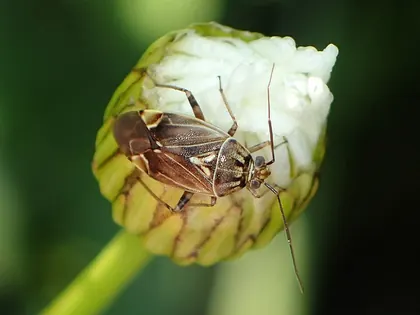
Plant bugs & leafhoppers
Start with the host and the insect, not a pale spot or wilted leaf.