
Restore appropriate water conditions
Check root-zone moisture and irrigation delivery instead of simply watering more. Prevent dusty traffic beside vulnerable plants.
Recognize the signs
- Plant signs
- Fine pale stippling can become bronzing or leaf loss. Fine silk with tiny moving mites is useful evidence, but early infestations may have little webbing.
- Mites
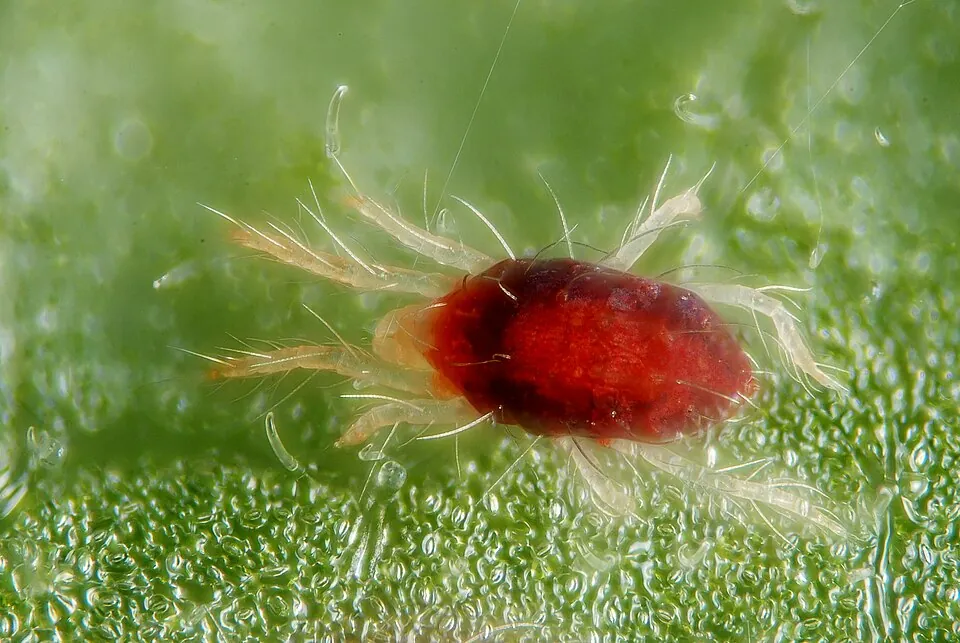
- Adult mites have eight legs and are much smaller than most garden insects; use magnification. Colour alone is unreliable.
Look more closely
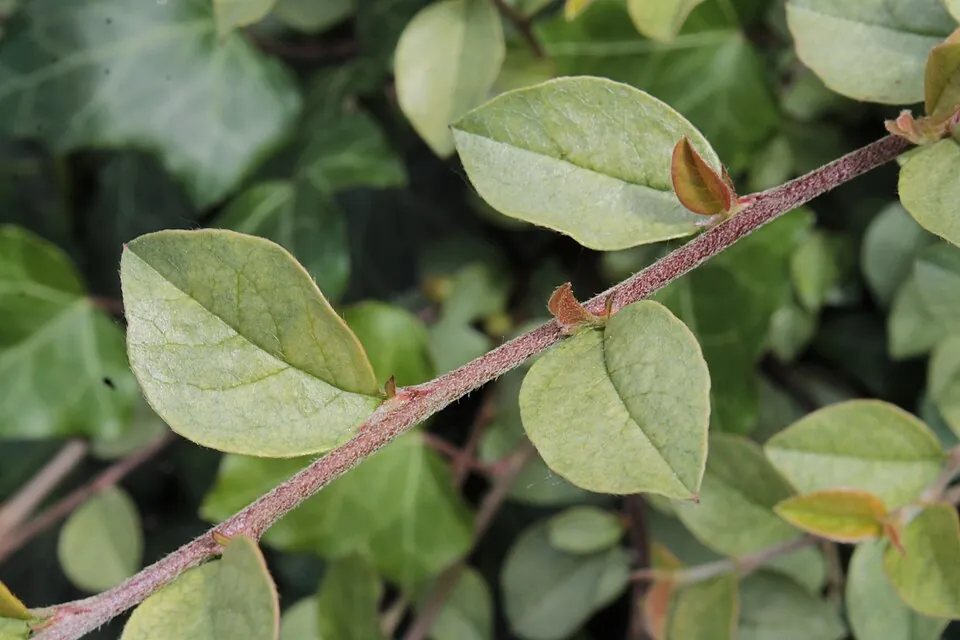
Compare the labeled examples and their limits. Images are independently enlarged, not shown at a common scale.
Identification limits & photo credit
The source identifies Tetranychus urticae on Cotoneaster dammeri. Individual mites are not resolved here; pale leaves alone cannot separate mites from nutrient, water or other plant problems.
Spider-mite example on Cotoneaster foliage. Photo: I.Sáček, senior. CC0 1.0. Original source · CC0 1.0 & details
Sources for this section
Differences that change the decision
A similar-looking organism can need a different response. Compare the evidence and what it changes.
Compare every column. On a narrow screen, scroll the table sideways.
| Type | What to check | What changes |
|---|---|---|
| Webspinning spider mites | Colonies, eggs and fine webbing commonly occur on leaf undersides; warm, dry, dusty conditions favour many species. | Inspect the oldest affected leaves and nearby plants; reduce stress and remove reachable mites. |
| Other plant-feeding mites | Some mites cause damage without conspicuous webbing and differ in seasonal activity. | A missing web does not rule out mites. Obtain identification where damage persists or the host is valuable. |
| Predatory mites | Often more active among colonies and feed on pest mites. | Preserve them; appearance can be difficult to interpret without magnification and experience. |
| Tomato russet mite | On tomatoes, greasy-looking foliage or stems may bronze from the lower plant upward. These conical mites require strong magnification and differ from larger rounder webspinning mites. | Ask a plant clinic to inspect affected tissue and still-green leaves just above it. Do not exclude mites because there is no web or treat every bronzed tomato with a general insecticide. |
| Cyclamen mites | Tiny mites hidden in tender buds and young leaves can cause brittle, stunted or distorted growth on cyclamen and African violets; high magnification is needed. | Isolate the affected plant and obtain confirmation before treatment. UMN considers disposal of a confirmed infested houseplant more practical than home pesticide treatment; do not assume a spider-mite wash reaches protected buds. |
What else could it be?
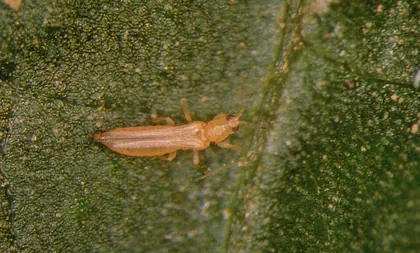
Thrips or leafhopper feeding
These can also cause pale specks or silvering; look for the insects themselves.
Compare thrips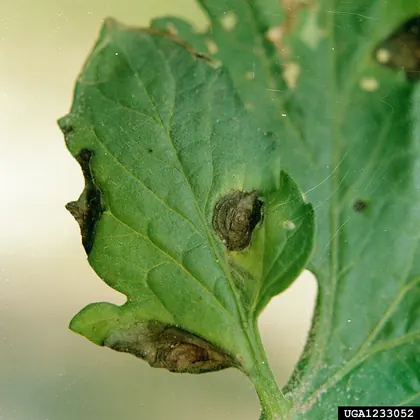
Drought, nutrient or root stress
Discolouration can occur without mites, and stressed plants may have both problems.
Compare plant disease & stress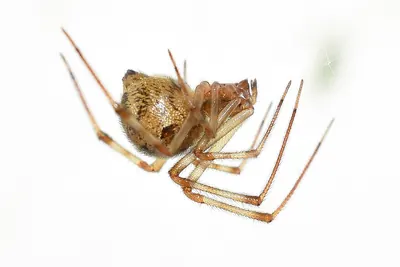
Ordinary spider silk
A web alone, without mite colonies and feeding injury, does not establish spider mites.
Compare spidersSources for this section
Virginia Cooperative Extension · University of California Statewide IPM Program
Inspect the right places
Check the leaf underside
Hold white paper beneath a symptomatic leaf and tap gently; examine moving specks with a lens, then inspect the leaf for eggs and silk.
Map the pattern
Compare dusty edges, hot walls and dry containers with less exposed plants. Record irrigation problems as well as pest presence.
Sources for this section
University of California Statewide IPM Program · Virginia Cooperative Extension
Choose a proportionate response
For pesticides, the local product label determines the allowed pest, site, precautions and timing. Check safety and regional guidance.
Restore appropriate water conditions
Check root-zone moisture and irrigation delivery instead of simply watering more. Prevent dusty traffic beside vulnerable plants.
Wash sturdy plants
A directed water stream can reduce reachable mites on suitable plants, including undersides. Reinspect rather than assuming one wash reaches all stages.
Preserve predators and choose products carefully
Avoid broad insecticides that can trigger mite outbreaks. If continuing damage warrants treatment, select a locally permitted plant-labelled option and obey heat, drought, plant-sensitivity and repeat-use restrictions.
Avoid these mistakes
- Do not assume any insecticide will control mites.
- Do not apply oils or soaps to stressed plants or in prohibited heat conditions.
- Do not spray all plants because one leaf has webbing.
Sources for this section
University of California Statewide IPM Program · US Environmental Protection Agency
Check whether it is working
Suggested practice: check marked leaves and fresh growth every few days during hot weather or active damage, and at label-directed reassessment intervals.
Fewer live plant-feeding mites and no expanding injury on new growth; older bronzed leaves may remain damaged.
Get help when…
- Uncertain mite identity, distortion without webbing or decline despite correcting moisture: plant clinic.
- Large valuable trees or extensive greenhouse infestations: qualified plant-health professional.
Sources for this section
University of California Statewide IPM Program · Virginia Cooperative Extension
Prevent a return
- Inspect incoming plants and water according to the species and root zone.
- Limit dust and conserve predators by avoiding routine broad insecticide applications.
Sources for this section
University of California Statewide IPM Program · UC Statewide IPM Program
Common questions
Does red colour prove spider mites?
No. Mite colour varies, and other mites occur on plants. Use location, feeding damage, webbing and magnified identification together.
Should I mist every day?
Misting is not a reliable substitute for correcting root-zone water stress and inspecting live mites. Use plant-appropriate care and targeted physical removal.
Sources for this section
Sources & scope
References retain their geography and dates. A source-check date is not a claim of independent specialist review.
- Spider Mites
University of California Statewide IPM Program. California, United States; host, climate and local species matter; source date 2011-12; source check, not expert review Checked 2026-10-15.
- Biological Control and Natural Enemies of Invertebrates
UC Statewide IPM Program. California, United States; biology may transfer, management timing and permitted products require local verification; source check, not expert review Checked 2026-10-15.
- Diagnosing Plant Problems
Virginia Cooperative Extension. Virginia, United States; general diagnostic method; source date 2023-11 review; source check, not expert review Checked 2026-10-15.
- Thrips
University of California Statewide IPM Program. California, United States; host, climate and local species matter; source date 2014-05; source check, not expert review Checked 2026-10-15.
- Do's and Don'ts of Pest Control
US Environmental Protection Agency. United States; source check, not expert review Checked 2026-10-15.
- Tomato Russet Mite
University of California Statewide IPM Program. UC IPM California home tomatoes; no unsupported product authorization Checked 2026-10-18.
- Managing insects on indoor plants
University of Minnesota Extension. Minnesota extension; indoor consumer guidance; local product labels still govern Checked 2026-10-18.
Individual medical or veterinary diagnosis, structural assessment, uncertain species identification and local treatment permissions require the appropriate professional. About our editorial process.
Keep investigating
Thrips
Confirm slender insects alongside fresh scarring before treating.
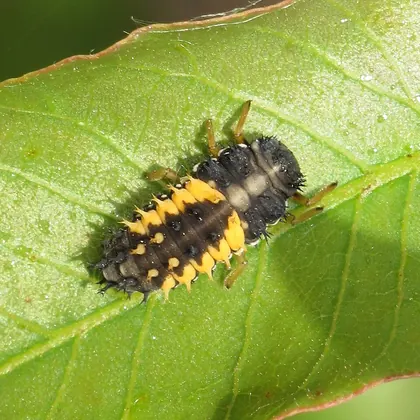
Beneficial Insects
Before removing an insect, check what it is eating and which life stage you are seeing.
Plant disease & stress
Start with the plant, the pattern and its growing conditions.