
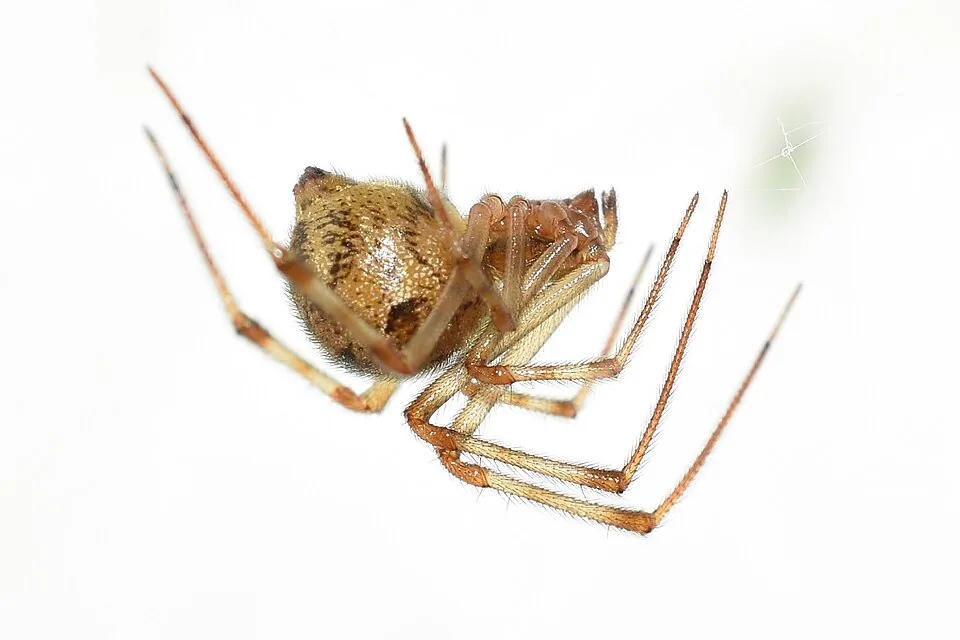
Resolve ordinary nuisance
Vacuum unwanted indoor webs and egg sacs, reduce clutter and repair screens and entry gaps. If an ordinary spider can be contained safely without contact, use a container and card; leave uncertain or potentially hazardous specimens to a professional.
Sources for this section
University of California IPM · University of California IPM · University of California IPM · Penn State Extension · UK NHS
Recognize the signs
- Body plan
- Spiders normally have eight legs, two main body regions and no antennae or wings. Eye pattern, body markings and web form can help a specialist; color alone rarely establishes a species.
- Web and movement
- Record whether it occupies an irregular cobweb, a circular orb, a sheet with a funnel, or hunts without a capture web. A spider walking indoors can be a temporary visitor.
- Life stages
- Egg sacs protect developing eggs; spiderlings resemble small adults and molt as they grow. Males and juveniles can look quite different from the familiar adult female photograph.
Look more closely
Compare the labeled examples and their limits. Images are independently enlarged, not shown at a common scale.
Identification limits & photo credit
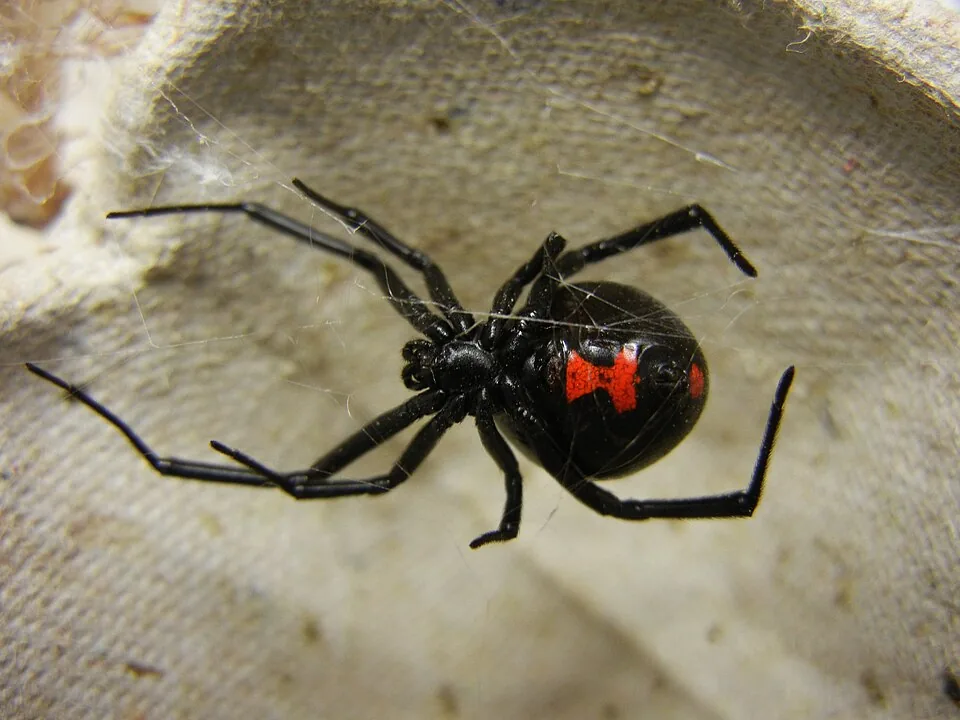
Source labels an adult gravid female. The red hourglass is shown on the underside, which may not be safely visible on a live spider. Other widow species and immature stages differ; do not handle one for identification.
Female southern black widow, underside view. Photo: Shenrich91. CC BY-SA 3.0. Original source · CC BY-SA 3.0 & details
Identification limits & photo credit
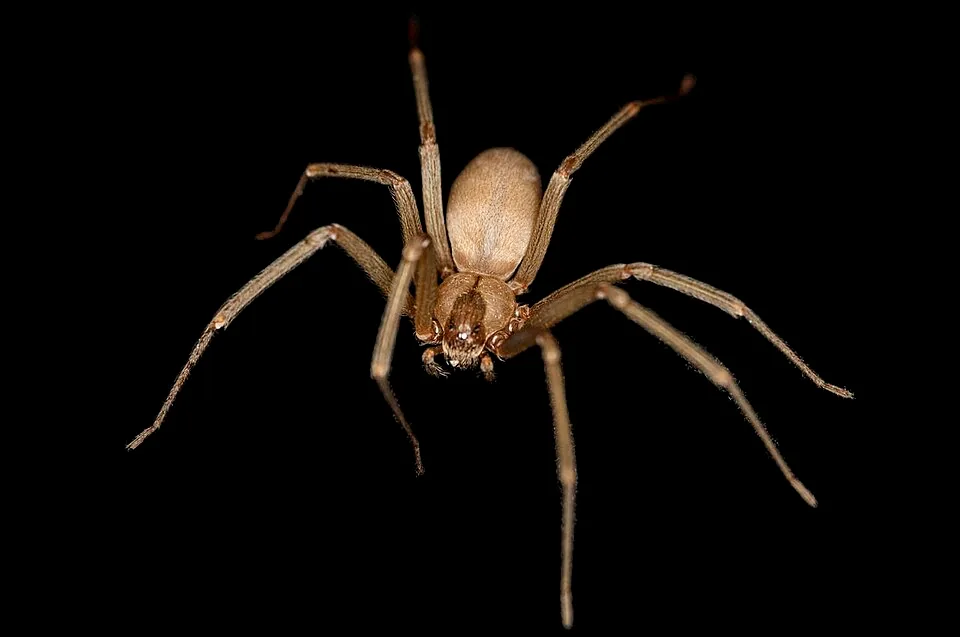
One recluse spider example. A violin-like mark alone is unreliable, and six-eye arrangement is not a practical household photograph test. Range, a specimen and expert identification matter; no spider image diagnoses a wound.
Brown recluse spider. Photo: Rosa Pineda. CC BY-SA 3.0. Original source · CC BY-SA 3.0 & details
Sources for this section
Differences that change the decision
A similar-looking organism can need a different response. Compare the evidence and what it changes.
Compare every column. On a narrow screen, scroll the table sideways.
| Type | What to check | What changes |
|---|---|---|
| Black and brown widows | Adult female black widows are often glossy with a red ventral marking; juveniles, males and brown widows vary. Brown-widow egg sacs can look spiky. | Do not turn a live spider over by hand. Sheltered, confirmed widow activity near work or play warrants targeted professional advice; a suspected bite needs clinical advice. |
| Brown recluse and related recluses | A violin-like mark is not reliable alone. Specialists assess six eyes in three pairs, other anatomy and plausible geography. | Confirm before treating. Many brown spiders and skin conditions are misidentified; persistent indoor recluse findings need a local qualified assessment. |
| House spiders | Common cobweb-building house spiders have variable brown patterns and irregular webs in corners. | Remove webs where they obstruct use, reduce prey and entry gaps, and tolerate low-conflict individuals. |
| Cellar spiders | Very thin, long legs and small bodies occur on loose indoor webs; they may vibrate when disturbed. | Web removal usually handles the nuisance. Long legs do not make them a medically important spider. |
| Wolf spiders | Ground-running hunters are often hairy and brown; some females carry an egg sac or young. | An isolated wanderer can be safely contained without contact or left outside. Look at ground-level entry, not ceiling-web spraying. |
| Jumping spiders | Compact, alert hunters have conspicuous forward-facing eyes and make short jumps. | They often patrol windows or plants for prey. Ordinary sightings usually need observation rather than control. |
| Orb and garden spiders | Many build a circular wheel-like capture web; adult size and color vary widely. | Leave useful webs away from paths. Repeated obstruction at a doorway can be managed by carefully clearing that location. |
| Grass spiders | A sheet web leads into a funnel retreat, often visible with dew on low vegetation. | A North American grass-spider web is not evidence of an Australian medically important funnel-web spider. Geography and identification matter. |
| Crab spiders | Front legs project sideways; these ambush hunters may wait on flowers rather than build capture webs. | Their presence on a plant is predator activity, not evidence that they caused chewed leaves. |
| Fishing spiders | Large, often banded Dolomedes can resemble wolf spiders. Some live in wooded places well away from water. | Size alone is not a danger test. An occasional house visitor can be addressed through safe removal and exclusion. |
| Woodlouse hunters | Dysdera crocata has reddish foreparts, a pale abdomen and prominent jaws; its six eyes are arranged differently from a recluse's. | Inspect damp cover and pillbug or sowbug prey. Do not handle it or identify a recluse by six eyes alone. |
| Joro spiders | Large adult females have yellow and gray-blue abdominal patterning and banded legs; males and young are different. | Confirm an unfamiliar orb weaver with local extension. The introduced species is not considered medically important; follow local reporting guidance rather than broad preventive spraying. |
What else could it be?
Harvestmen
A compact, apparently single body region and lack of a capture web distinguish these long-legged arachnids from cellar spiders.
Ticks
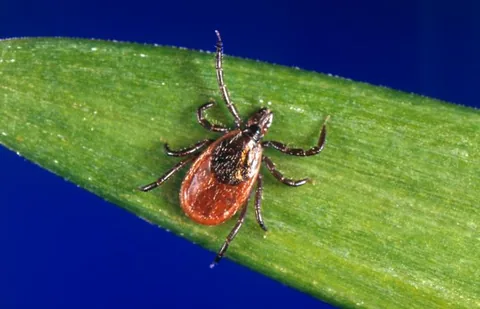
Compact, wingless arachnids lack the spider's conspicuous division between two main body regions; an attached specimen needs the tick pathway.
Compare ticksOther causes of skin lesions
A clinician should assess unexplained or worsening lesions. Finding a spider elsewhere in the room does not establish that it caused them.
Sources for this section
Inspect the right places
Photograph useful evidence
From a safe distance photograph the body from above and the web or hiding place. Include a scale only if it can be positioned without approaching the animal. Note the country or region, date and indoor or outdoor setting.
Check undisturbed storage
Use a light rather than reaching blindly into boxes, gloves, shoes or stacked materials. Wear suitable gloves for moving clutter. Do not deliberately handle a suspected widow or recluse to inspect its underside or eyes.
Look for a source of prey
Repeated webs around a lit window may reflect flying insects. Damp ground cover can support woodlice and their predators. Address the demonstrated condition rather than treating every room alike.
Sources for this section
University of California IPM · University of California IPM · Penn State Extension
Choose a proportionate response
For pesticides, the local product label determines the allowed pest, site, precautions and timing. Check safety and regional guidance.
Resolve ordinary nuisance
Vacuum unwanted indoor webs and egg sacs, reduce clutter and repair screens and entry gaps. If an ordinary spider can be contained safely without contact, use a container and card; leave uncertain or potentially hazardous specimens to a professional.
Keep beneficial spiders where practical
Tolerate garden predators away from frequently used paths. Move the activity or remove a repeatedly obstructive web rather than spraying the whole landscape.
Get confirmed hazardous activity assessed
Ask a local diagnostic service or pest professional to identify the specimen and map the relevant hiding places before treatment. Record findings so follow-up measures actual activity.
Seek medical care for concerning symptoms
A suspected widow or recluse bite, severe pain, spreading illness or a worsening lesion merits prompt medical advice. Breathing difficulty or collapse is an emergency. Do not delay care to catch the spider.
Sources for this section
University of California IPM · University of California IPM · University of California IPM · Penn State Extension · UK NHS
Avoid these mistakes
- Do not diagnose a spider bite from a rash, two marks or a necrotic-looking lesion alone.
- Do not use the violin marking as a stand-alone recluse test.
- Do not assume every large spider, long-legged spider or funnel-shaped web has the same medical significance worldwide.
- Do not use blanket spraying as the default response to beneficial outdoor predators.
Sources for this section
Check whether it is working
Editorial suggestion: check the same problem locations during routine cleaning and record actual spiders or new webs. A professional should set a specific monitoring plan for a confirmed indoor widow or recluse problem.
Unwanted webs and encounters decrease in the occupied space. The goal is a manageable contact risk, not eliminating every outdoor predator. A removed web alone does not identify the former occupant.
Get help when…
- Concerning symptoms or a suspected medically important bite need clinical care, even if no spider is available.
- Repeated confirmed widows or recluses in occupied indoor areas merit targeted professional management.
- An unfamiliar species outside its known local range can be referred to extension or the relevant biosecurity authority for identification.
Sources for this section
University of California IPM · University of California IPM · University of California IPM · Penn State Extension
Prevent a return
- Store shoes and gloves so they can be checked before use; avoid floor-level clutter in undisturbed rooms.
- Maintain screens and reduce unnecessary lighting that draws insects to entrances.
- Keep stored materials accessible for inspection and avoid bare-handed movement of outdoor debris.
Sources for this section
Common questions
Is a brown spider a brown recluse?
No. Many unrelated spiders are brown, and the expected range matters. Confirmation requires more than color or a suggestive mark.
Does a large Joro spider require emergency control?
No. Its size and introduced status do not make it medically important. Confirm the identification, avoid unnecessary contact and manage any actual obstruction or local reporting requirement.
Sources for this section
Sources & scope
References retain their geography and dates. A source-check date is not a claim of independent specialist review.
- Spiders
University of California IPM. California and North American household spider biology and IPM; medical significance and fauna vary globally. Checked 2026-10-15.
- Common Garden Spiders
University of California IPM. California beneficial garden groups; updated August 2025. Checked 2026-10-15.
- Widow Spiders and Their Relatives
University of California IPM. California widow identification, life-stage variation and management. Checked 2026-10-15.
- Brown Recluse and Other Recluse Spiders
University of California IPM. Recluse anatomy, range and misidentification; does not diagnose a skin lesion. Checked 2026-10-15.
- Fishing Spider
Penn State Extension. Pennsylvania; Dolomedes tenebrosus and related lookalikes, updated January 2026. Checked 2026-10-15.
- Woodlouse Hunter Spider
Penn State Extension. Pennsylvania; Dysdera crocata morphology and prey, updated September 2025. Checked 2026-10-15.
- Joro Spiders
Penn State Extension. North American introduced populations; range can change, so consult current local reporting advice. Checked 2026-10-15.
- Anaphylaxis
UK NHS. Emergency symptom recognition rather than a spider-specific diagnosis. Checked 2026-10-15.
Individual medical or veterinary diagnosis, structural assessment, uncertain species identification and local treatment permissions require the appropriate professional. About our editorial process.
Keep investigating
Ticks
An attached tick needs prompt removal before identification work.
Scorpions
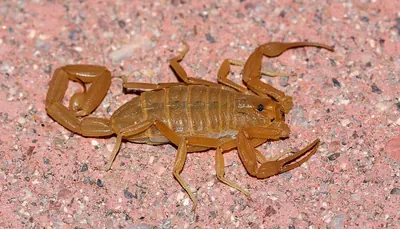
Keep your distance from an unidentified scorpion and check likely contact points such as shoes, bedding and stored materials.