
Remove the visitors
Sweep or vacuum accessible individuals, then dispose of the contents appropriately. Avoid crushing organisms on fabrics or touching large centipedes.
Sources for this section
University of California IPM · University of Minnesota Extension · University of Minnesota Extension · Penn State Extension · Penn State Extension
Recognize the signs
- Jumping specks
- Springtails are tiny wingless arthropods; many jump using an appendage beneath the abdomen. Young resemble smaller adults and develop in moist material.
- Plates and many legs
- Pillbugs and sowbugs have overlapping body plates and seven pairs of legs. Millipedes typically have two leg pairs per apparent body segment; centipedes have one pair per segment.
- Moisture evidence
- Clusters near sinks, damp pots, floor-level storage or a wet foundation justify checking that environment. The organism alone does not locate a plumbing leak or prove mold damage.
Look more closely
Compare the labeled examples and their limits. Images are independently enlarged, not shown at a common scale.
Identification limits & photo credit
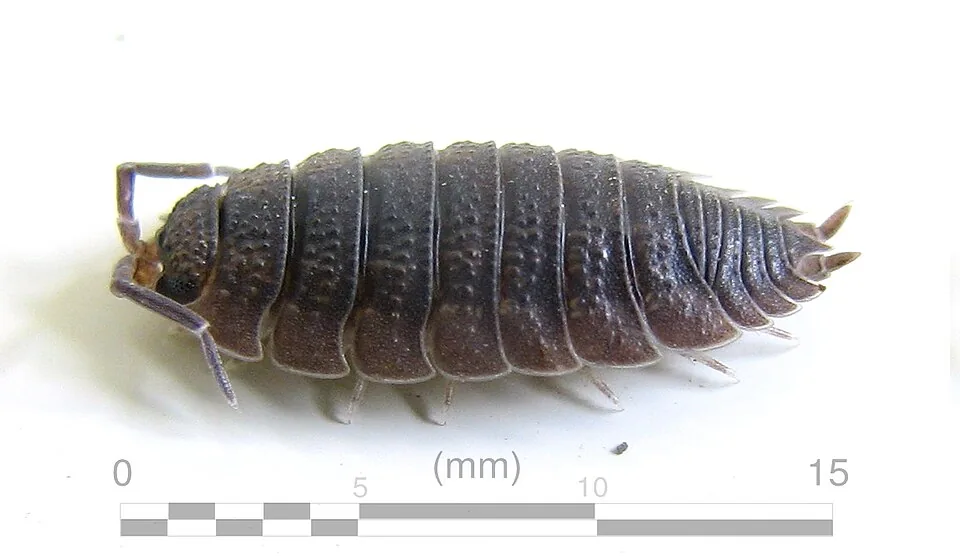
An adult terrestrial crustacean of one species. Pillbugs and sowbugs differ, and this image does not show every species or prove a dampness defect indoors.
Rough woodlouse, side view. Photo: Yug. CC BY-SA 3.0. Original source · CC BY-SA 3.0 & details
Identification limits & photo credit
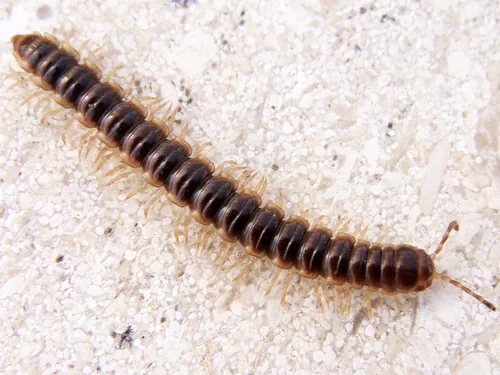
One millipede species photographed in Portugal. The many-legged cylindrical form differs from a centipede; species identification and the source of an indoor influx need separate checks.
Greenhouse millipede. Photo: JCoelho. CC BY 2.0. Original source · CC BY 2.0 & details
Identification limits & photo credit
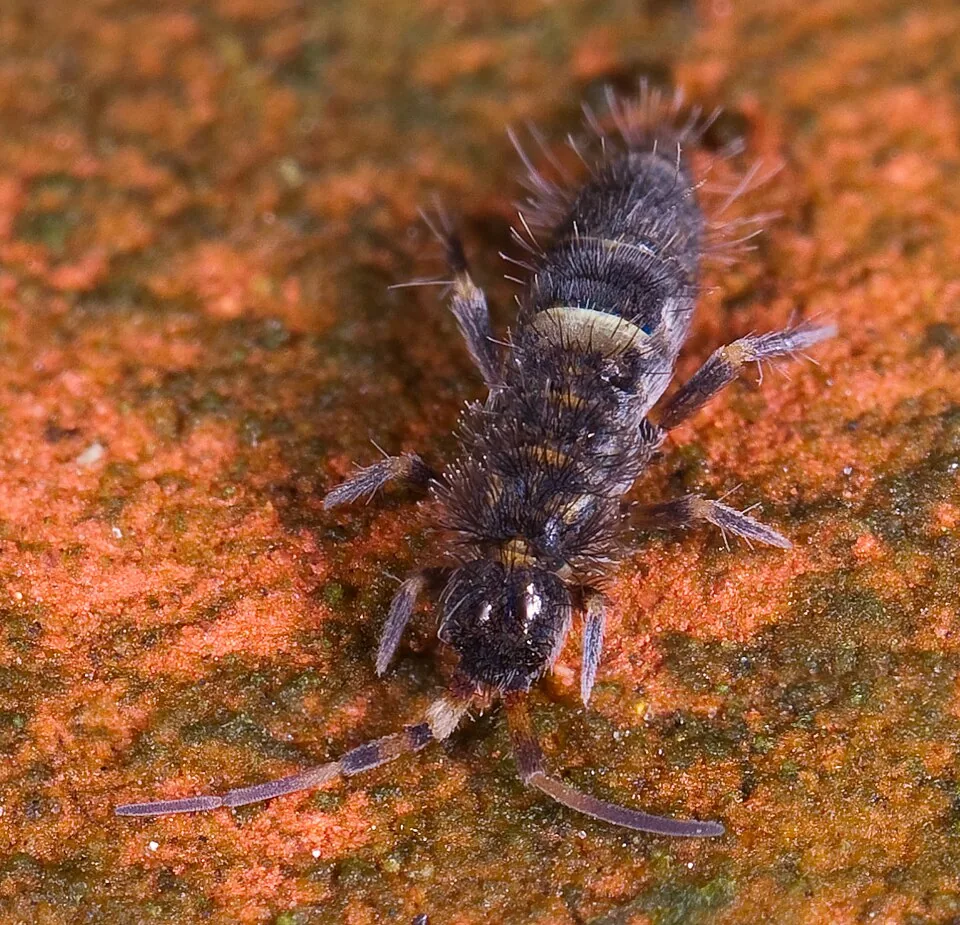
A visibly marked springtail species photographed in Belgium. Many household springtails are paler or rounder. Jumping behavior and magnified structure help; the image alone does not identify a moisture source.
Springtail, Orchesella cincta. Photo: Mvuijlst. CC BY-SA 3.0. Original source · CC BY-SA 3.0 & details
Sources for this section
University of California IPM · University of Minnesota Extension
Differences that change the decision
A similar-looking organism can need a different response. Compare the evidence and what it changes.
Compare every column. On a narrow screen, scroll the table sideways.
| Type | What to check | What changes |
|---|---|---|
| Springtails | Often gather around moisture, soil, algae or decaying material, and can jump when disturbed. | Check overwatered pots, saucers, leaks and damp voids. They do not bite people or pets; drying the habitat is central. |
| Pillbugs and sowbugs | Pillbugs can roll into a compact ball; sowbugs generally cannot. Both are terrestrial crustaceans linked to moist cover. | An indoor visitor usually calls for removal and an exterior moisture/entry check. Check sustained seedling damage separately before blaming all garden woodlice. |
| Millipedes | Usually slow, many-legged decomposers that may curl when disturbed; migrations can follow weather changes. | Remove indoor arrivals and inspect wet mulch, leaf accumulations and entry points. Dry indoor rooms usually do not support them well. |
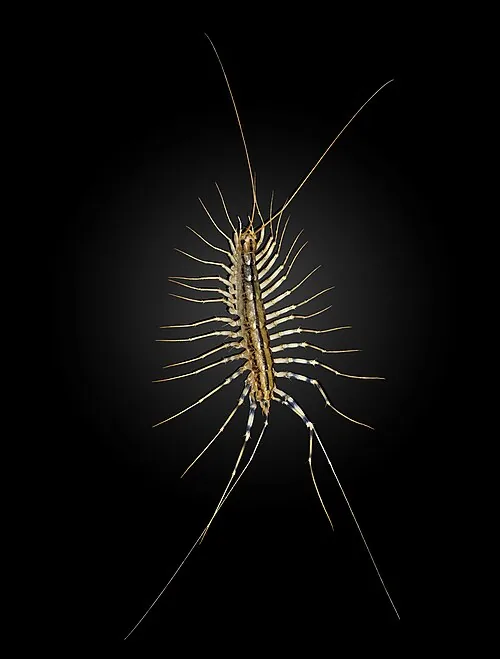
| House centipedes | Fast, long-legged striped predators; juveniles have fewer leg pairs than adults. | Repeated sightings justify a search for prey and damp hiding places. They are not eating the wood or stored food in the room. |
| Other centipedes | Flatter predators with shorter legs than the familiar house centipede; size and species vary greatly by region. | Avoid bare-hand handling, particularly of large unfamiliar specimens. A local identification is useful before applying US house-centipede reassurance elsewhere. |
Sources for this section
University of California IPM · University of Minnesota Extension · Penn State Extension · Penn State Extension
What else could it be?
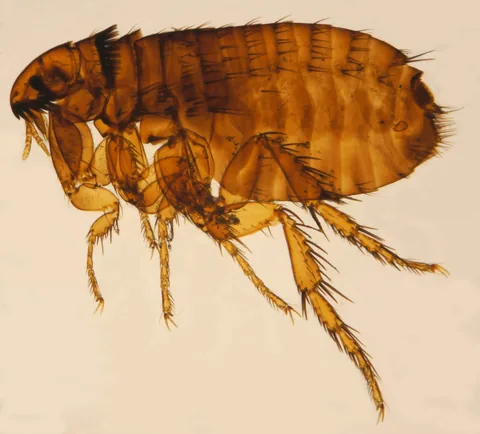
Fleas
Fleas also jump but are laterally flattened blood-feeding insects. A damp-room location alone cannot settle the identification.
Compare fleasBooklice
Small pale insects with antennae often associated with damp materials; they do not have the springtail's jumping mechanism.
Wireworms
Click-beetle larvae have only three pairs of legs near the head, unlike a millipede's many repeated pairs.
Silverfish
Insects with antennae and three tail filaments rather than many leg pairs; damage and habitat need a separate check.
Sources for this section
University of California IPM · University of Minnesota Extension · Penn State Extension
Inspect the right places
Trace the moisture
Check accessible plumbing joints, condensation, pot drainage and floor-level stored cardboard. Photograph water staining and record when sightings increase. A building or plumbing professional should investigate hidden dampness rather than opening a wet wall casually.
Walk the exterior edge
Inspect leaf litter, thick wet mulch, poorly directed irrigation and low drainage spots beside the affected wall. Keep ordinary habitat farther from entry points instead of trying to sterilize the garden.
If centipedes recur
Record other insects seen in the same area. Protected monitors can help a professional identify prey, but place them where children, pets and non-target wildlife cannot contact them.
Sources for this section
University of California IPM · University of Minnesota Extension · Penn State Extension
Choose a proportionate response
For pesticides, the local product label determines the allowed pest, site, precautions and timing. Check safety and regional guidance.
Remove the visitors
Sweep or vacuum accessible individuals, then dispose of the contents appropriately. Avoid crushing organisms on fabrics or touching large centipedes.
Correct the wet conditions
Repair leaks, improve ventilation where appropriate and reduce persistent condensation. Water plants for their actual needs and empty standing saucer water. Do not harm a moisture-loving plant by imposing a universal drying interval.
Improve entry and storage
Repair screens and door gaps, and move susceptible stored materials off damp floors. Preserve required vents, weep holes and drainage routes when arranging building repairs.
Keep treatment proportional
Routine indoor insecticide is generally unnecessary for incidental springtails or millipedes. If animals keep appearing, identify the continuing source or prey rather than repeating surface treatment.
Sources for this section
University of California IPM · University of Minnesota Extension · University of Minnesota Extension · Penn State Extension · Penn State Extension
Avoid these mistakes
- Do not pour insecticides into drains because springtails are trapped in a basin.
- Do not interpret every centipede as a wood-destroying pest.
- Do not assume all moisture visitors are biters or use a skin reaction to identify them.
- Do not remove beneficial outdoor decomposers without demonstrated damage.
Sources for this section
University of California IPM · University of Minnesota Extension
Check whether it is working
Editorial suggestion: compare sightings at the same locations after moisture and entry repairs, including after rain or watering. Record the environmental change as well as the insects.
The area dries appropriately and unwanted indoor arrivals decrease. Old dead specimens do not establish continuing activity, and outdoor decomposers may remain normally present.
Get help when…
- Persistent dampness, suspected concealed leakage or damaged building material needs a qualified building or plumbing assessment.
- Frequent house centipedes with unidentified prey warrant diagnostic or pest-professional help.
- A concerning reaction after contact with an unfamiliar centipede should be assessed medically.
Sources for this section
University of Minnesota Extension · Penn State Extension · Penn State Extension
Prevent a return
- Keep irrigation and runoff from repeatedly wetting the building edge.
- Store cardboard and belongings where air can circulate and dampness is visible.
- Maintain screens, door seals and a cleaning routine in damp utility areas.
Sources for this section
University of Minnesota Extension · University of Minnesota Extension
Common questions
Are springtails coming out of the drain?
They may simply be trapped on the smooth basin after seeking moisture. Inspect the surrounding wet habitat before assigning a drain source.
Should I kill every house centipede?
A few are predators of other arthropods and may be tolerated. If their presence is unwanted, focus on prey, damp shelter and entry routes.
Sources for this section
Sources & scope
References retain their geography and dates. A source-check date is not a claim of independent specialist review.
- Springtails
University of California IPM. California household and garden springtails; moisture management and drain cautions. Checked 2026-10-15.
- Springtails
University of Minnesota Extension. Minnesota; nuisance status and moisture-source inspection. Checked 2026-10-15.
- Sowbugs, Millipedes and Centipedes
University of Minnesota Extension. Minnesota common household visitors; large tropical centipedes are outside its reassurance. Checked 2026-10-15.
- House Centipedes
Penn State Extension. Pennsylvania; updated January 2026; prey and shelter investigation. Checked 2026-10-15.
- Millipedes
Penn State Extension. Pennsylvania; seasonal movement and physical removal; current local labels govern any pesticide use. Checked 2026-10-15.
Individual medical or veterinary diagnosis, structural assessment, uncertain species identification and local treatment permissions require the appropriate professional. About our editorial process.
Keep investigating
Fleas
Confirm a flea on an animal or in the environment, then coordinate veterinary care with cleaning where animals rest.
Earwigs & crickets
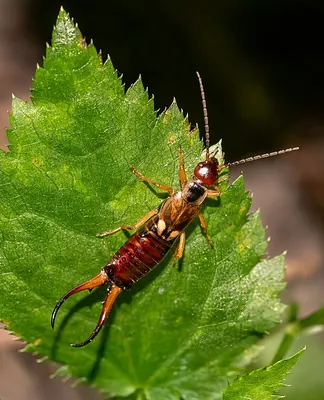
A chirp, a pair of pincers or a jumping basement insect leads to different checks.