
After a sting
Wash the site and contact local poison control or medical care promptly for individual advice. Keep the person's age, location, symptoms and time of sting available. Do not delay care while trying to capture the animal.
Sources for this section
University of California IPM · National Capital Poison Center
Recognize the signs
- Pincers and tail
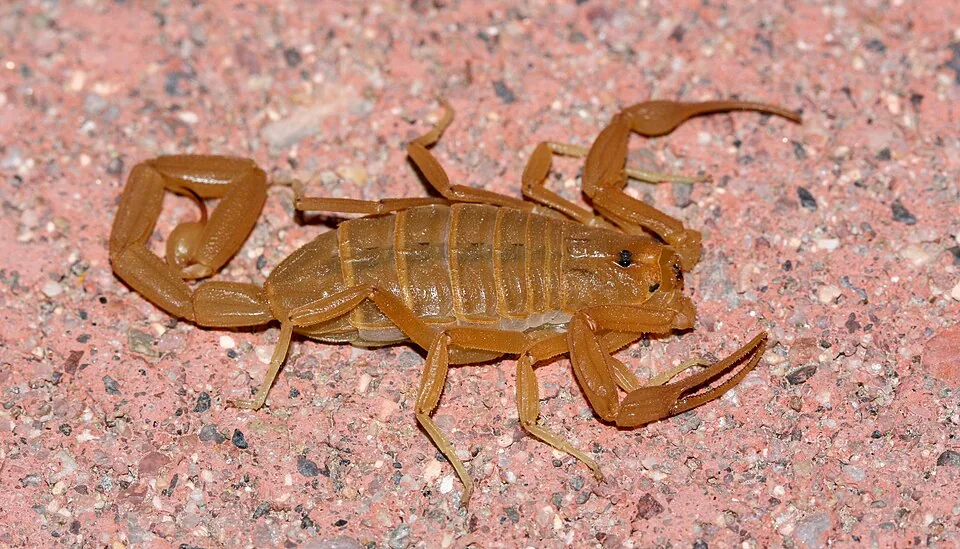
- A true scorpion has eight walking legs, paired grasping pincers and a segmented tail ending in a sting. Size and color alone are poor measures of medical risk.
- Young
- Scorpions give birth to live young that initially ride on the mother's back. Small pale individuals near a female can therefore be young scorpions, not separate insect larvae.
- Shelter
- Many are active at night and shelter in crevices, under objects or in burrows. A specimen indoors shows an entry or shelter problem but does not by itself quantify the population.
Sources for this section
University of Arizona Cooperative Extension · University of California IPM
Differences that change the decision
A similar-looking organism can need a different response. Compare the evidence and what it changes.
Compare every column. On a narrow screen, scroll the table sideways.
| Type | What to check | What changes |
|---|---|---|
| Arizona bark scorpion | A relatively slender scorpion associated with crevices and buildings in parts of the southwestern US and adjacent Mexico; color varies. | It is medically important. A suspected sting needs prompt poison-control or clinical advice, especially for a child; do not wait for identification. |
| Desert hairy scorpion | A large, robust southwestern desert scorpion often associated with burrows and cover. | Its impressive size does not imply more dangerous venom than a bark scorpion's. Avoid handling and get individualized advice after any sting. |
| Stripe-tailed and yellow ground scorpions | These burrowing southwestern species can be confused with bark scorpions; detailed structure distinguishes them. | Do not use an uncertain home identification to dismiss symptoms. Improve ground-level shelter and entry conditions. |
| Other regional scorpions | The world's scorpion fauna and medically important species extend far beyond the US examples here. | Use local clinical and identification services. US reassurance about most stings must not be applied to an unfamiliar region. |
Sources for this section
University of Arizona Cooperative Extension · National Capital Poison Center
What else could it be?
Pseudoscorpions
Tiny arachnids with pincers but no segmented stinging tail. A clear full-body view distinguishes them from true scorpions.
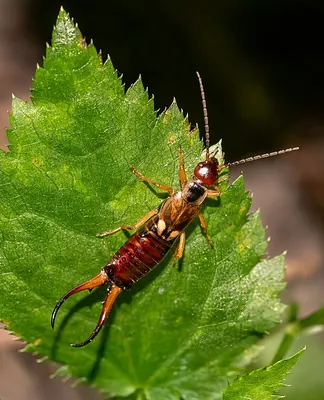
Earwigs
Six-legged insects with antennae and paired pincers at the abdomen tip, rather than a single arched stinging tail.
Compare earwigs & cricketsA tail hidden from view
A partial photograph can conceal the distinguishing tail. Obtain a full-body image from a safe distance rather than assuming a pincered animal is harmless.
Sources for this section
University of California IPM · University of Minnesota Extension
Inspect the right places
Inspect before contact
Wear shoes and check footwear, gloves and clothing before putting them on. Use a light around storage and furniture; do not put a hand into a dark crevice or under a rock.
Map access
Record safe photographs and locations. Inspect door sweeps, screens, service penetrations and stored firewood. A building professional should preserve necessary ventilation and drainage when designing repairs.
Sources for this section
University of Arizona Cooperative Extension · University of California IPM
Choose a proportionate response
For pesticides, the local product label determines the allowed pest, site, precautions and timing. Check safety and regional guidance.
After a sting
Wash the site and contact local poison control or medical care promptly for individual advice. Keep the person's age, location, symptoms and time of sting available. Do not delay care while trying to capture the animal.
Treat serious symptoms as urgent
Breathing or swallowing difficulty, abnormal muscle or eye movements, collapse or other body-wide symptoms require emergency care. Children can be particularly vulnerable.
Reduce contact indoors
Keep people and pets away from the sighting. Arrange safe removal if you cannot contain the animal without approaching it; do not pick it up by hand or tail.
Improve the building and surroundings
Repair screens and weather-stripping, reduce clutter and move firewood away from the house. Investigate recurring prey and moisture conditions. A professional can assess persistent indoor activity and any targeted treatment.
Sources for this section
University of California IPM · National Capital Poison Center
Avoid these mistakes
- Do not cut or suck a sting or use a tourniquet.
- Do not assume a small scorpion is more dangerous, or a large one harmless, from size alone.
- Do not rely on routine preventive spraying to compensate for open entry points and shelter.
- Do not move rocks or reach into debris bare-handed while searching.
Sources for this section
University of California IPM · National Capital Poison Center
Check whether it is working
After a sting, follow the poison service or clinician's observation instructions. Editorial suggestion for the building: log each confirmed sighting and recheck repaired routes during routine maintenance.
Fewer indoor encounters after access and shelter changes supports improvement. A single quiet inspection does not prove no scorpions remain; ongoing outdoor presence may be normal locally.
Get help when…
- Use emergency care for serious symptoms, and obtain prompt individualized advice for any child who may have been stung.
- Recurring indoor sightings, especially in sleeping areas, require a qualified local pest professional and an exclusion review.
- A pet with suspected sting symptoms needs veterinary advice; human medicines are not a pet treatment plan.
Sources for this section
University of California IPM · National Capital Poison Center
Prevent a return
- Maintain shoes-and-gloves checks where scorpions occur.
- Keep firewood and loose materials away from walls and accessible for safe inspection.
- Use suitable screens and door seals, preserving required building drainage and airflow.
Sources for this section
University of Arizona Cooperative Extension · University of California IPM
Common questions
Does a black light identify a dangerous species?
No. Fluorescence can help locate many scorpions, but it does not establish species or sting severity. Avoid approaching one merely to test its glow.
Can a scorpion sting leave little visible mark?
Yes. Symptoms and the exposure history matter. Do not dismiss a suspected sting because the skin looks relatively normal.
Sources for this section
Sources & scope
References retain their geography and dates. A source-check date is not a claim of independent specialist review.
- Scorpions of the Desert Southwest United States
University of Arizona Cooperative Extension. 2018 southwestern US species and biology; regional examples are not a worldwide risk ranking. Checked 2026-10-15.
- Scorpions
University of California IPM. California household exclusion and behavior; older scientific names are not used as current taxonomy. Checked 2026-10-15.
- Are Scorpions Venomous?
National Capital Poison Center. US poison-center clinical advice; local emergency and poison services apply outside the US. Checked 2026-10-15.
- Pseudoscorpions
University of Minnesota Extension. Minnesota; harmless lookalike distinguished by the absence of a stinging tail. Checked 2026-10-15.
Individual medical or veterinary diagnosis, structural assessment, uncertain species identification and local treatment permissions require the appropriate professional. About our editorial process.
Keep investigating
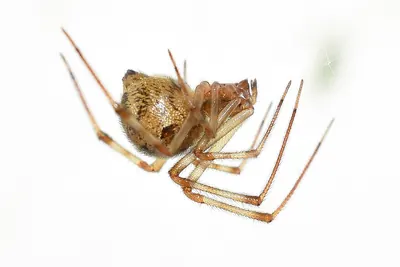
Spiders
Most household and garden spiders are predators that can be left alone or moved out of the immediate activity area.
Earwigs & crickets
A chirp, a pair of pincers or a jumping basement insect leads to different checks.
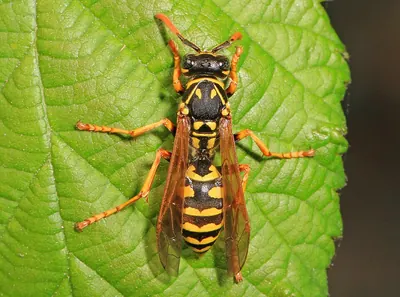
Wasps
A foraging wasp, a solitary mud nest and a busy social colony need different responses.