
Tolerate cosmetic injury where possible
Keep vigorous plants with limited damage under observation. Compare new growth rather than removing all marked foliage.
Sources for this section
University of California Statewide IPM Program · UC Statewide IPM Program · US Environmental Protection Agency
Recognize the signs
- Insects
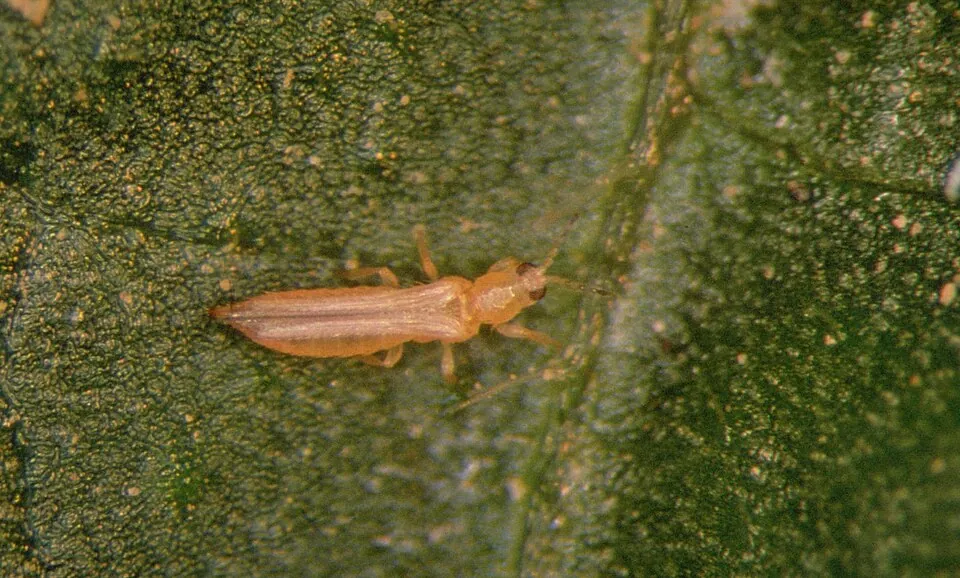
- Very small, slender insects; adults have narrow fringed wings visible with magnification. Tap a flower or leaf over white paper to make movement easier to see.
- Feeding evidence
- Silvering, scarring, distorted new growth and small dark faecal specks can accompany feeding, but none identifies a species alone.
Sources for this section
Differences that change the decision
A similar-looking organism can need a different response. Compare the evidence and what it changes.
Compare every column. On a narrow screen, scroll the table sideways.
| Type | What to check | What changes |
|---|---|---|
| Flower-feeding thrips | Found in blossoms, buds or tender tissue; some species also transmit plant viruses. | Inspect fresh flowers and buds, not just already scarred leaves. Disease symptoms need a plant clinic. |
| Greenhouse thrips | Often associated with leaf surfaces on susceptible ornamental hosts. | Check sheltered foliage and local host guidance; some outdoor populations are suppressed by parasitoids. |
| Predatory thrips | Some thrips feed on mites or other insects rather than damaging plants. | Do not treat every slender insect as a pest. Ask for identification if damage and observed insects do not agree. |
Sources for this section
University of California Statewide IPM Program · UC Statewide IPM Program
What else could it be?
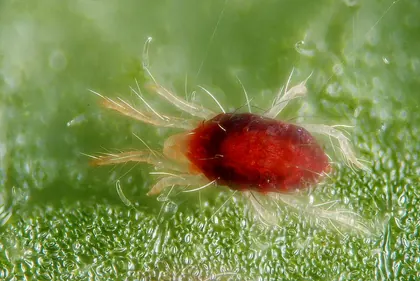
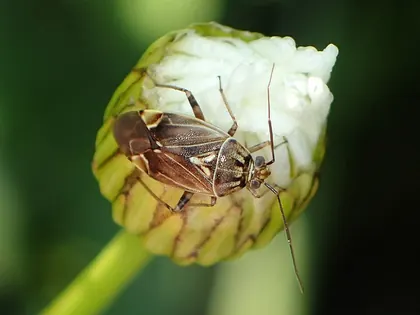
Leafhoppers and other sap feeders
Their bodies and movement differ, but feeding marks can overlap.
Compare plant bugs & leafhoppers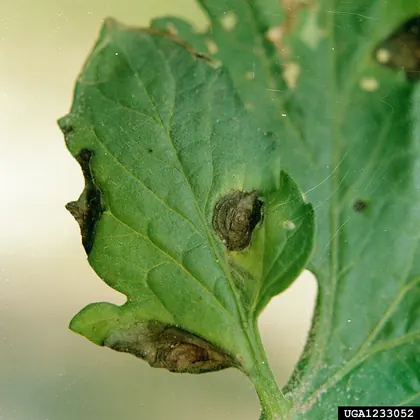
Weather, chemical or disease injury
Damage without feeding insects requires a broader plant-health check.
Compare plant disease & stressSources for this section
University of California Statewide IPM Program · Virginia Cooperative Extension
Inspect the right places
Sample injured and healthy tissue
Use a hand lens and white paper. Record insect shape, affected plant part, host and whether new damage is developing.
Check protected growth
Unfold a sample bud or examine leaf undersides without stripping the plant. A few adults on a sticky card do not locate larvae or establish the cause.
Sources for this section
University of California Statewide IPM Program · Virginia Cooperative Extension
Choose a proportionate response
For pesticides, the local product label determines the allowed pest, site, precautions and timing. Check safety and regional guidance.
Tolerate cosmetic injury where possible
Keep vigorous plants with limited damage under observation. Compare new growth rather than removing all marked foliage.
Reduce local sources
Prune a small number of badly affected shoots where appropriate; manage dusty conditions and plant stress. Protect predators and parasitoids.
Seek a targeted option for continuing injury
Thrips hidden inside buds may escape contact products. Local advice should consider species, host, flowering, beneficial insects and a label that permits the use.
Sources for this section
University of California Statewide IPM Program · UC Statewide IPM Program · US Environmental Protection Agency
Avoid these mistakes
- Do not repeat broad sprays because old scars remain.
- Do not assume yellow sticky catches prove a damaging species or a virus.
- Do not use insecticide as a cure for an established plant virus.
Sources for this section
Check whether it is working
Suggested practice: inspect the same fresh growth and flowers every few days during active damage; follow labelled intervals if a product is used.
Less fresh scarring or distortion and lower counts of plant-feeding thrips. Existing scars remain.
Get help when…
- Persistent bud loss, stunting or suspected virus: local plant diagnostic service.
- Greenhouse or valuable plant collection with repeated failure: horticultural pest specialist for species and resistance advice.
Sources for this section
University of California Statewide IPM Program · Virginia Cooperative Extension
Prevent a return
- Inspect new plants, especially flowers and tightly folded growth.
- Support beneficial insects and avoid unnecessary persistent sprays.
Sources for this section
Common questions
Can I identify thrips from a silver leaf?
No. The leaf directs inspection; a specimen, host and fresh damage are needed to narrow the diagnosis.
Why does treatment seem to have failed?
Old marks persist, hidden stages may remain, or the cause may be different. Recheck fresh tissue before changing products.
Sources for this section
Sources & scope
References retain their geography and dates. A source-check date is not a claim of independent specialist review.
- Thrips
University of California Statewide IPM Program. California, United States; host, climate and local species matter; source date 2014-05; source check, not expert review Checked 2026-10-15.
- Biological Control and Natural Enemies of Invertebrates
UC Statewide IPM Program. California, United States; biology may transfer, management timing and permitted products require local verification; source check, not expert review Checked 2026-10-15.
- Spider Mites
University of California Statewide IPM Program. California, United States; host, climate and local species matter; source date 2011-12; source check, not expert review Checked 2026-10-15.
- Diagnosing Plant Problems
Virginia Cooperative Extension. Virginia, United States; general diagnostic method; source date 2023-11 review; source check, not expert review Checked 2026-10-15.
- Do's and Don'ts of Pest Control
US Environmental Protection Agency. United States; source check, not expert review Checked 2026-10-15.
Individual medical or veterinary diagnosis, structural assessment, uncertain species identification and local treatment permissions require the appropriate professional. About our editorial process.
Keep investigating
Spider Mites
Use a lens to connect leaf stippling with live mites.
Plant bugs & leafhoppers
Start with the host and the insect, not a pale spot or wilted leaf.
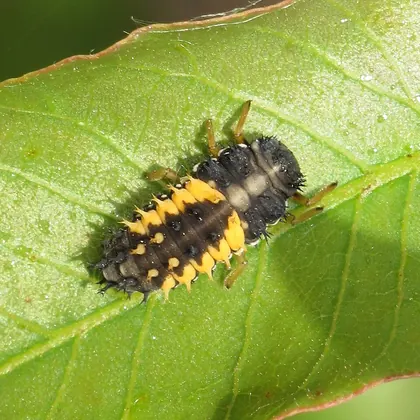
Beneficial Insects
Before removing an insect, check what it is eating and which life stage you are seeing.