
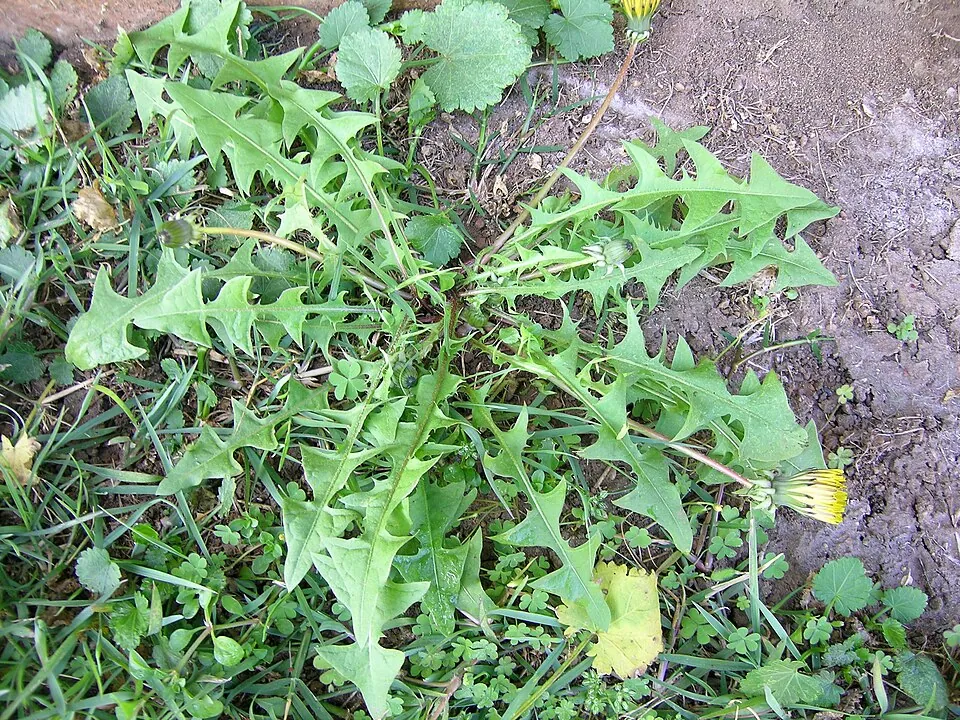
Remove at the useful stage
Hand-pull or shallow-hoe young annuals before seeding where it will not damage roots of desired plants. For established perennials, use a species-specific plan and expect regrowth.
Sources for this section
UC Statewide IPM Program · UC Statewide IPM Program · UC Statewide IPM Program · UC Statewide IPM Program · US Environmental Protection Agency
Recognize the signs
- Plant identity
- Photograph leaves, stems, flowers or seed heads and, where safe, the root system. A seedling may need more growth or expert identification.
- Life cycle
- Annuals principally renew from seed; established perennials can survive removal of the top through roots, rhizomes or tubers.
Look more closely
Compare the labeled examples and their limits. Images are independently enlarged, not shown at a common scale.
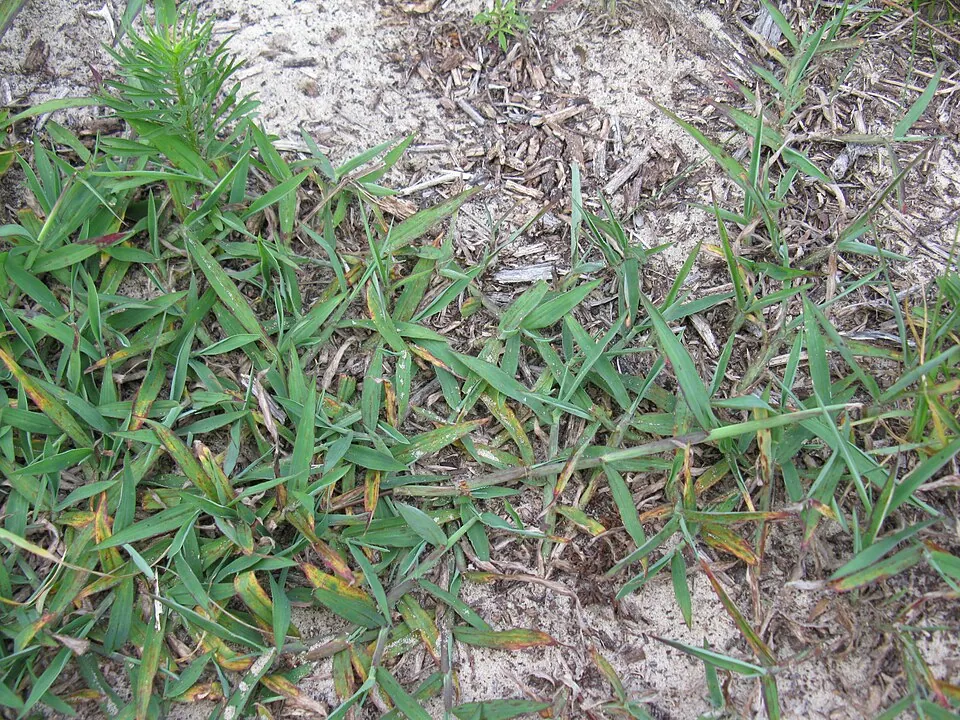
Identification limits & photo credit
A whole-plant example from Australia, with surrounding vegetation. Ligule, sheath hair and seedhead details are not resolved well enough here to separate every similar grass.
Hairy crabgrass growing along the ground. Photo: Harry Rose from South West Rocks, Australia. CC BY 2.0. Original source · CC BY 2.0 & details
Sources for this section
Differences that change the decision
A similar-looking organism can need a different response. Compare the evidence and what it changes.
Compare every column. On a narrow screen, scroll the table sideways.
| Type | What to check | What changes |
|---|---|---|
| Annual grasses and broadleaf weeds | Crabgrass and many small broadleaf weeds occupy open soil and can seed quickly. | Remove young plants before seed set, then reduce bare ground and the condition allowing establishment. |
| Dandelion and other rooted perennials | Regrowth can arise from retained underground tissue. | Remove the relevant root where practical and revisit regrowth; cutting leaves once is unlikely to finish the job. |
| Yellow and purple nutsedge | Sedge-like foliage arises from underground rhizomes and tubers, often in wet sites. | Correct excess moisture and remove young shoots repeatedly before new tubers develop; moving infested soil spreads the problem. |
| Field bindweed | Twining perennial with arrow-shaped leaves and trumpet flowers. | Persistent roots and fragments can regenerate. Avoid scattering fragments; plan repeated suppression and protect neighbouring plants. |
| Suspected invasive plants | Unfamiliar plants or a species regulated locally may require a specific disposal method. | Confirm with a local authority before digging, transporting or composting material. |
What else could it be?
Desired seedlings or native plants
A volunteer plant is not automatically harmful; establish identity and the site's purpose before removal.
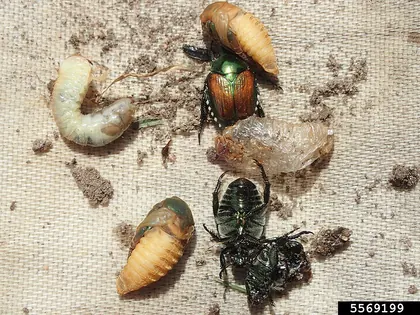
Plant pests causing thin cover
Weeds may occupy gaps left by drought, shade, disease or insects rather than cause the initial decline.
Compare lawn pests & grubsSources for this section
Inspect the right places
Map the source
Record patches, irrigation leaks, exposed soil and imported compost or soil. Check whether growth originates from separate seedlings or connected underground parts.
Check local status
Confirm whether a plant is protected, useful habitat or regulated invasive in your region. A foreign weed list does not establish local legal duties.
Sources for this section
UC Statewide IPM Program · Australian Department of Agriculture, Fisheries and Forestry
Choose a proportionate response
For pesticides, the local product label determines the allowed pest, site, precautions and timing. Check safety and regional guidance.
Remove at the useful stage
Hand-pull or shallow-hoe young annuals before seeding where it will not damage roots of desired plants. For established perennials, use a species-specific plan and expect regrowth.
Close opportunities
Use suitable mulch or dense planting in beds, appropriate turf care and targeted irrigation. Mulch suppresses many seedlings but does not reliably stop every established rhizome or tuber.
Use herbicides only when justified
Match any locally authorised product to the weed, desired plants and site. Respect drift, water, reseeding and edible-crop limits; a total vegetation killer can injure plants you want to retain.
Sources for this section
UC Statewide IPM Program · UC Statewide IPM Program · UC Statewide IPM Program · UC Statewide IPM Program · US Environmental Protection Agency
Avoid these mistakes
- Do not till mature bindweed or nutsedge indiscriminately; fragments or tubers can be redistributed.
- Do not use salt or homemade chemical mixtures as weed killers.
- Do not assume removing visible tops once eliminates perennial roots.
Sources for this section
UC Statewide IPM Program · UC Statewide IPM Program · UC Statewide IPM Program · US Environmental Protection Agency
Check whether it is working
Suggested practice: inspect disturbed soil and mulched beds after rain or irrigation and remove new annuals before seed set. Repeat perennial management according to species and local growth, not a promised eradication date.
Fewer new seedlings or perennial shoots and improving desired cover; recurrence from stored seed or roots can require continued attention.
Get help when…
- Unknown plant, suspected invasive species or uncertain disposal: local extension or plant-health authority.
- Large persistent infestations beside desirable trees, waterways or crops: qualified local vegetation adviser.
Sources for this section
UC Statewide IPM Program · Australian Department of Agriculture, Fisheries and Forestry
Prevent a return
- Use clean stock, mulch and soil and clean machinery before moving between sites.
- Prevent seed production and maintain planting conditions suited to desired vegetation.
Sources for this section
Common questions
Why do weeds return after pulling?
Seeds may remain in soil, or perennial roots, rhizomes and tubers may survive. Identify which mechanism is operating.
Should my lawn contain no weeds?
Total eradication is not necessary for most lawns. Set a practical tolerance and correct the conditions weakening the grass.
Sources for this section
Sources & scope
References retain their geography and dates. A source-check date is not a claim of independent specialist review.
- Weed Management in Landscapes
UC Statewide IPM Program. California, United States; biology may transfer, management timing and permitted products require local verification; source date 2018-09; source check, not expert review Checked 2026-10-15.
- Weed Management in Lawns
UC Statewide IPM Program. California, United States; adapt season and methods to local climate, plant identity and product law; source check, not expert review Checked 2026-10-15.
- Nutsedge
UC Statewide IPM Program. California, United States; adapt season and methods to local climate, plant identity and product law; source check, not expert review Checked 2026-10-15.
- Field Bindweed
UC Statewide IPM Program. California, United States; adapt season and methods to local climate, plant identity and product law; source check, not expert review Checked 2026-10-15.
- Weeds exotic to Australia
Australian Department of Agriculture, Fisheries and Forestry. Australia; unusual or exotic plants, import risk and reporting; source check, not expert review Checked 2026-10-15.
- Do's and Don'ts of Pest Control
US Environmental Protection Agency. United States; source check, not expert review Checked 2026-10-15.
Individual medical or veterinary diagnosis, structural assessment, uncertain species identification and local treatment permissions require the appropriate professional. About our editorial process.
Keep investigating
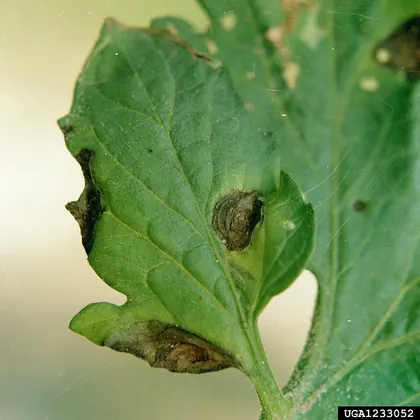
Plant disease & stress
Start with the plant, the pattern and its growing conditions.
Suspected invasive pests
Photograph, record the location and pause movement of suspect plants, wood or equipment.