
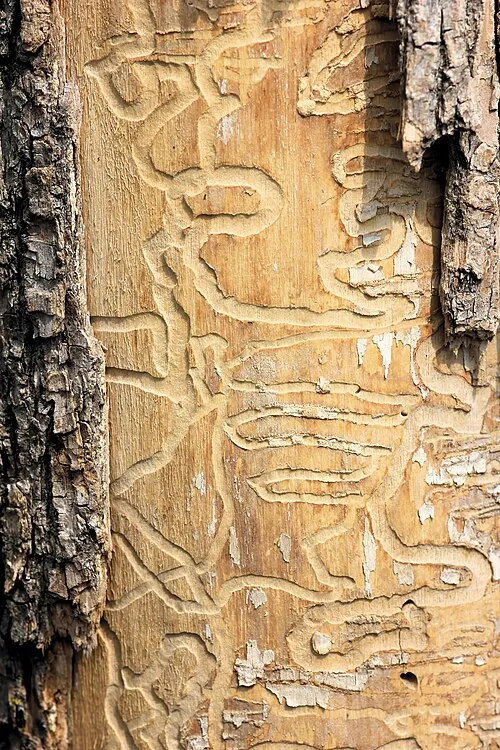
Correct avoidable stress
Check irrigation, root-zone compaction, trunk ties and mechanical injuries. Care must match the tree and site; repeated shallow lawn watering may not meet tree needs.
Sources for this section
UC Statewide IPM Program · UC Statewide IPM Program · UC Statewide IPM Program · USDA APHIS · USDA APHIS
Recognize the signs
- Evidence
- Fresh boring dust, sap, galleries, larvae or emergence holes support a borer investigation. Holes can persist after insects leave.
- Context
- Host species, height of damage, crown condition and recent drought or injury help narrow the cause. Hole shape alone is insufficient for species identification.
Sources for this section
Differences that change the decision
A similar-looking organism can need a different response. Compare the evidence and what it changes.
Compare every column. On a narrow screen, scroll the table sideways.
| Type | What to check | What changes |
|---|---|---|
| Bark beetles | Small holes and galleries beneath bark; host and gallery pattern help distinguish species. | Assess tree stress and the extent of attack. Heavily infested trunks may require removal; spraying cannot reliably restore killed tissue. |
| Flatheaded borers | Larvae have an enlarged flattened area behind the head; exits may be D-shaped or other shapes. | Host matters: bronze birch borer is associated with birches; emerald ash borer with ash. Suspected invasive borers require local reporting and assessment. |
| Roundheaded borers | Longhorned-beetle larvae can tunnel in woody tissue; rounded holes overlap with other borers. | Seek a specimen and host-specific diagnosis rather than treating by hole shape. |
| Clearwing moths | Larger frass-producing tunnels, sap and sometimes protruding pupal cases; adults can resemble wasps. | Peachtree borer injury centres near the trunk base of stone-fruit hosts. Lilac-ash borer is a moth, distinct from emerald ash borer. |
Sources for this section
UC Statewide IPM Program · UC Statewide IPM Program · UC Statewide IPM Program · USDA APHIS
What else could it be?
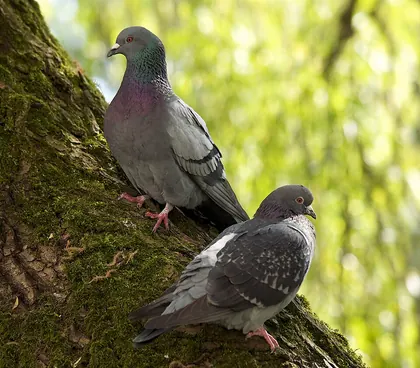
Woodpecker or sapsucker activity
Bird-made holes or bark removal may be primary activity or a response to insects. Observe the bird and pattern.
Compare birds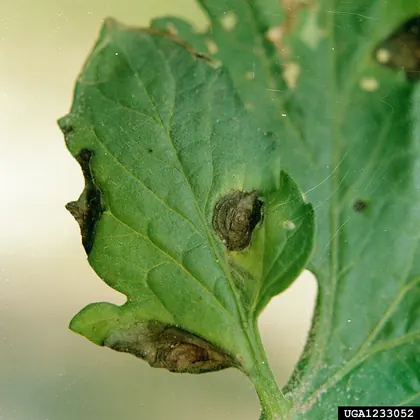
Canker, root disease or drought
Sap and crown decline are not exclusive to insects.
Compare plant disease & stress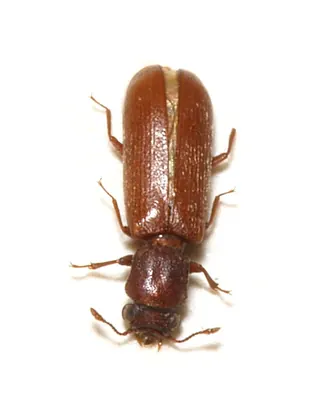
Structural wood pests
Insects in furniture or buildings require a different inspection and moisture assessment.
Compare wood boring beetlesSources for this section
UC Statewide IPM Program · Virginia Cooperative Extension · UC Statewide IPM Program
Inspect the right places
Record without damaging the tree
Photograph the whole crown, trunk injury and fresh dust with a size reference. Identify the tree; do not peel healthy bark or make exploratory wounds.
Assess safety and movement
Keep people away from failing limbs. Leave suspect wood at the site pending local disposal or quarantine advice.
Sources for this section
Choose a proportionate response
For pesticides, the local product label determines the allowed pest, site, precautions and timing. Check safety and regional guidance.
Correct avoidable stress
Check irrigation, root-zone compaction, trunk ties and mechanical injuries. Care must match the tree and site; repeated shallow lawn watering may not meet tree needs.
Obtain a severity assessment
An arborist can distinguish localised branch attack from extensive trunk damage and advise pruning, preservation or removal. Damaged limbs require safe professional work.
Protect neighbouring trees when justified
Any preventive treatment needs the identified pest, local emergence timing, tree condition and authorised product/application method. Some invasive borers warrant specialist treatment of trees that remain viable.
Sources for this section
UC Statewide IPM Program · UC Statewide IPM Program · UC Statewide IPM Program · USDA APHIS · USDA APHIS
Avoid these mistakes
- Do not promise to save a heavily infested or structurally failing tree with a surface spray.
- Do not probe trunks indiscriminately or pour pesticide into holes.
- Do not move firewood or infested nursery stock to another location.
Sources for this section
Check whether it is working
Suggested practice: photograph marked signs and inspect nearby susceptible hosts regularly during the locally relevant activity season. An arborist should set the follow-up for treated or unstable trees.
No new attack signs and stable canopy growth, interpreted over the appropriate season; old exits and bark scars remain.
Get help when…
- Large dead limbs, trunk weakness or rapid crown decline: qualified arborist promptly.
- Possible emerald ash borer or other regulated borer: plant-health or forestry authority; obtain movement/disposal instructions.
Sources for this section
Prevent a return
- Choose site-adapted trees, protect roots and bark and maintain appropriate water supply.
- Buy firewood where it will be burned and obey current movement restrictions.
Sources for this section
Common questions
Do D-shaped holes prove emerald ash borer?
No. Host identity and the insect matter; other flatheaded borers can leave similar exits.
Is lilac-ash borer another name for emerald ash borer?
No. Lilac-ash borer is a clearwing moth; emerald ash borer is a beetle. Their identification and management differ.
Sources for this section
Sources & scope
References retain their geography and dates. A source-check date is not a claim of independent specialist review.
- Flatheaded Borers
UC Statewide IPM Program. California, United States; biology may transfer, management timing and permitted products require local verification; source check, not expert review Checked 2026-10-15.
- Bark Beetles
UC Statewide IPM Program. California, United States; biology may transfer, management timing and permitted products require local verification; source date 2008-11; newer Quick Tips also displayed; source check, not expert review Checked 2026-10-15.
- Clearwing Moths
UC Statewide IPM Program. California, United States; biology may transfer, management timing and permitted products require local verification; source check, not expert review Checked 2026-10-15.
- Emerald Ash Borer
USDA APHIS. United States; consult current state restrictions and local treatment advice; source check, not expert review Checked 2026-10-15.
- Help Protect America’s Trees: Buy Firewood Where You Burn It
USDA APHIS. United States; check current local firewood movement requirements; source check, not expert review Checked 2026-10-15.
- Diagnosing Plant Problems
Virginia Cooperative Extension. Virginia, United States; general diagnostic method; source date 2023-11 review; source check, not expert review Checked 2026-10-15.
- Woodpeckers
UC Statewide IPM Program. California, US; source date 2022-04; source check, not expert review Checked 2026-10-15.
Individual medical or veterinary diagnosis, structural assessment, uncertain species identification and local treatment permissions require the appropriate professional. About our editorial process.
Keep investigating
Plant disease & stress
Start with the plant, the pattern and its growing conditions.
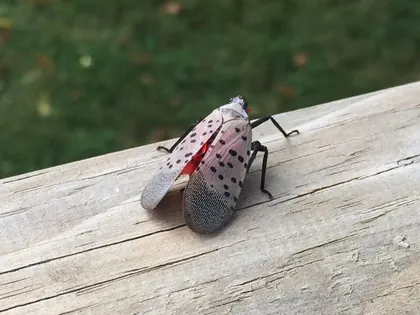
Suspected invasive pests
Photograph, record the location and pause movement of suspect plants, wood or equipment.
Birds
Confirm which bird is using the site and whether eggs, chicks or dependent young are present.