
Reduce resources
Clean spilled grain, feed and refuse; secure food stores.
Sources for this section
Find the local decision-maker
In the United States, use the Association of Fish & Wildlife Agencies’ state directory to reach your wildlife agency. Ask about the species, occupied nests, dependent young, allowed methods and the operator’s authorization. Elsewhere, use the regional authority routes. Do not assume another region’s rules apply.
Recognize the signs
- Species before intervention
- A small brown bird is not necessarily a house sparrow. Use clear photographs, behaviour and local expert identification before acting.
- Activity and nest status
- Distinguish feeding, roosting, drumming and nesting. An apparently empty cavity may contain young out of view.
Look more closely
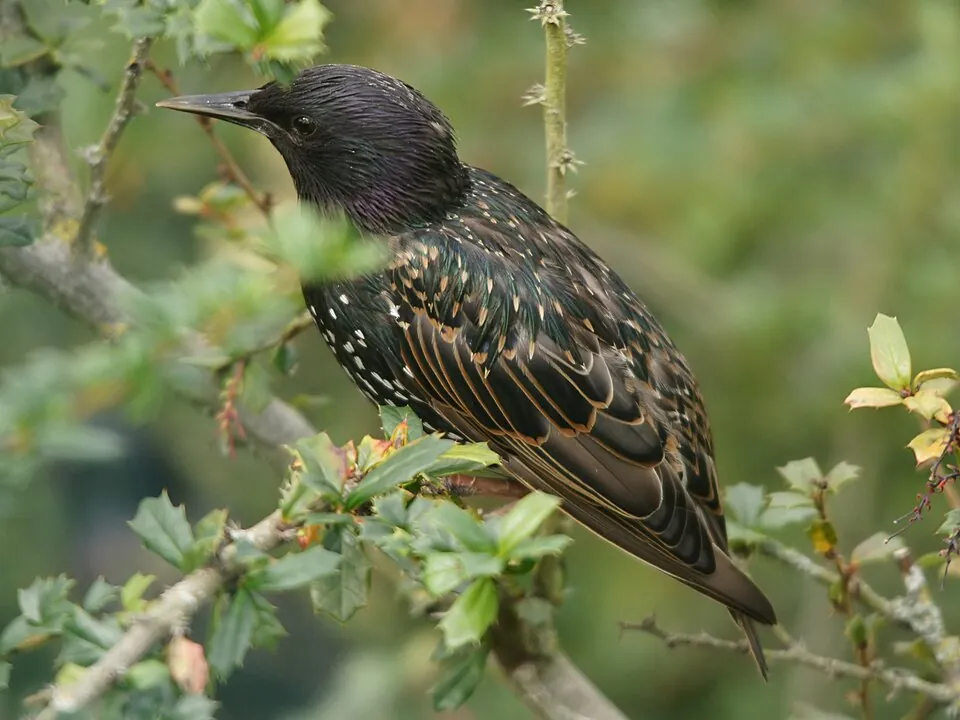
Compare the labeled examples and their limits. Images are independently enlarged, not shown at a common scale.
Identification limits & photo credit
One starling showing dark plumage and pale feather edges. Plumage and bill colour change with age and season. Native status and legal protection differ by region.
Common starling at Chester Zoo, England. Photo: Hans Hillewaert. CC BY-SA 3.0. Original source · CC BY-SA 3.0 & details
Sources for this section
Differences that change the decision
A similar-looking organism can need a different response. Compare the evidence and what it changes.
Compare every column. On a narrow screen, scroll the table sideways.
| Type | What to check | What changes |
|---|---|---|
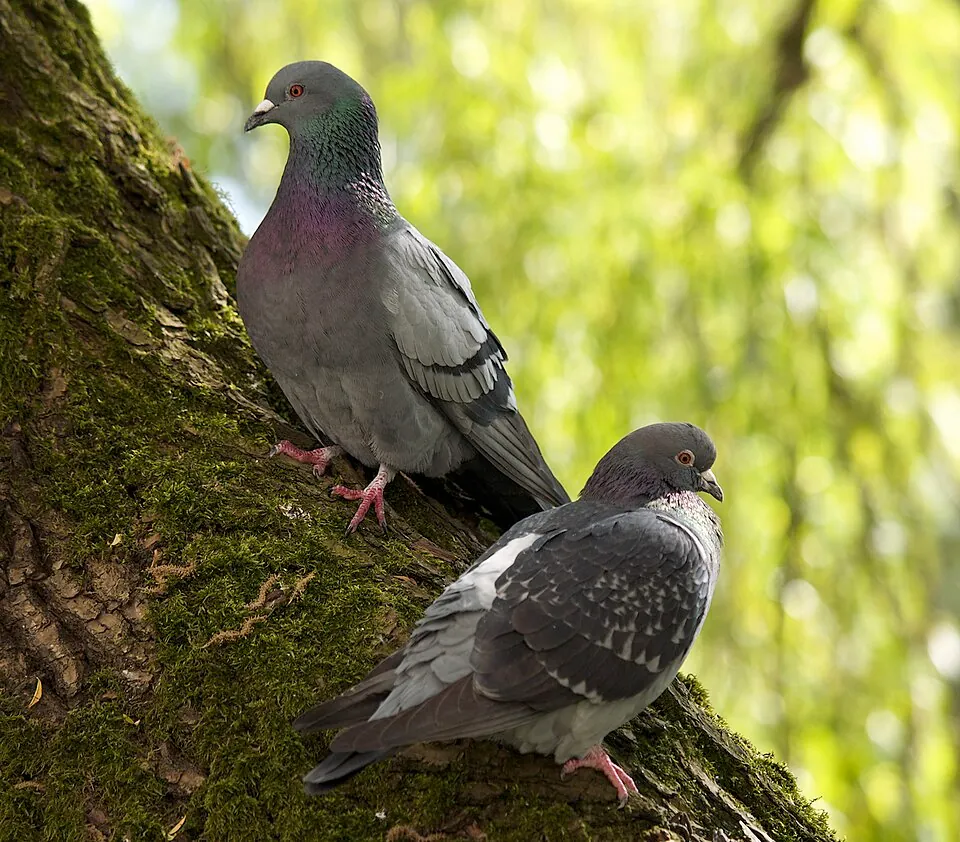
| Rock pigeons | Often use sheltered ledges and flat structures. | Exclude roost sites with a professionally designed barrier and remove food rewards. |
| European starlings | Often use cavities; flocks may visit fruit or feed stores. | Protect openings and food access, with a nest-status check. |
| House sparrows | Use building cavities and sheltered tangles; easily confused with native small birds. | Confirm species before relying on any legal exemption. |
| Woodpeckers, sapsuckers and flickers | Pecking can be for food, a nest or resonant territorial drumming. | Drumming does not prove wood insects. Protect surfaces without harming birds or active nests. |
Sources for this section
What else could it be?
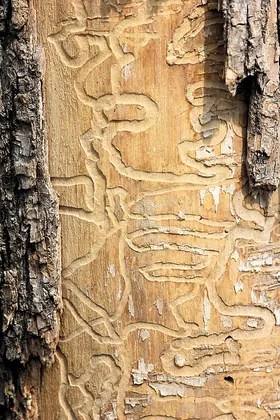
Wood-boring insects
Insect exit holes differ from pecking, but damage alone needs assessment.
Compare tree borersSources for this section
Inspect the right places
Watch from a distance
Record entry, carried food or nest materials and the affected surface. Do not probe cavities or disturb eggs.
Check local protection
US federal migratory-bird protections and eagle rules differ from exceptions for some introduced birds; other countries have their own laws.
Sources for this section
Choose a proportionate response
For pesticides, the local product label determines the allowed pest, site, precautions and timing. Check safety and regional guidance.
Reduce resources
Clean spilled grain, feed and refuse; secure food stores.
Exclude without entangling
Use fitted mesh or other appropriate barriers after occupancy and legality are resolved. Loose net pockets can trap birds; high work is for a qualified installer.
Match the woodpecker problem
Repair vulnerable wood and investigate insect evidence if present. A drumming surface may need physical protection, not pesticide.
Sources for this section
Avoid these mistakes
- Do not remove an active nest just because the bird is inconvenient.
- Do not assume pigeons, starlings or sparrows have the same legal status worldwide.
- Do not rely on a plastic owl as permanent protection or use sticky materials that foul feathers.
Sources for this section
Check whether it is working
Suggested practice: check installed barriers for gaps or entanglement and record renewed use; nesting and legal checks precede each intervention.
Birds cannot enter the protected structure and no animals are trapped; nearby birds can remain part of the landscape.
Get help when…
- Active nest, protected/uncertain species or trapped bird: local wildlife authority or licensed rehabilitator.
- Large roost, accumulated droppings or work at height: specialist assessment.
Sources for this section
Prevent a return
- Maintain building openings and humane exclusion systems.
- Avoid leaving accessible livestock, pet or bird feed spills.
- Plan renovations outside occupied-nest periods where lawful.
Sources for this section
Common questions
Do woodpecker holes prove termites?
No. Woodpeckers also drum, build nest cavities and store food; investigate the actual evidence.
Can I remove an old nest?
Confirm it is inactive, identify the species and check local law. Some nests, including eagle nests in the US, have protections even when unoccupied.
Sources for this section
Sources & scope
References retain their geography and dates. A source-check date is not a claim of independent specialist review.
- Nuisance Birds: Damage Management
Iowa State University Extension. Iowa, US; species-specific legal statements require local confirmation; source check, not expert review Checked 2026-10-15.
- Bird nests
US Fish and Wildlife Service. United States federal guidance; state/local requirements may add protection; source check, not expert review Checked 2026-10-15.
- Woodpeckers
UC Statewide IPM Program. California, US; source date 2022-04; source check, not expert review Checked 2026-10-15.
Individual medical or veterinary diagnosis, structural assessment, uncertain species identification and local treatment permissions require the appropriate professional. About our editorial process.
Keep investigating
Bats
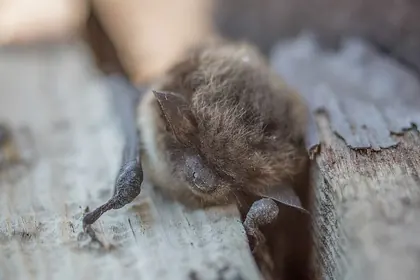
A bat in a living space needs an exposure assessment before release.
Tree Borers
Identify the tree and document fresh boring evidence.
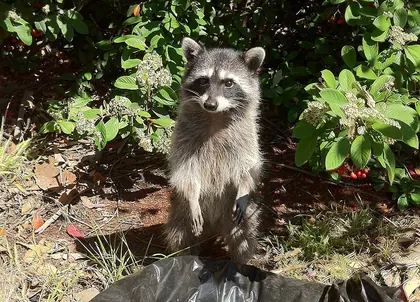
Raccoons, skunks & opossums
An occasional visitor usually calls for removing food access and avoiding contact.