
Remove without crushing
Collect with a container or vacuum, considering odor and staining when choosing equipment. Empty or contain the collected insects so they cannot crawl back into the living space.
Sources for this section
University of Minnesota Extension · University of Minnesota Extension · University of Minnesota Extension
Recognize the signs
- Body shape
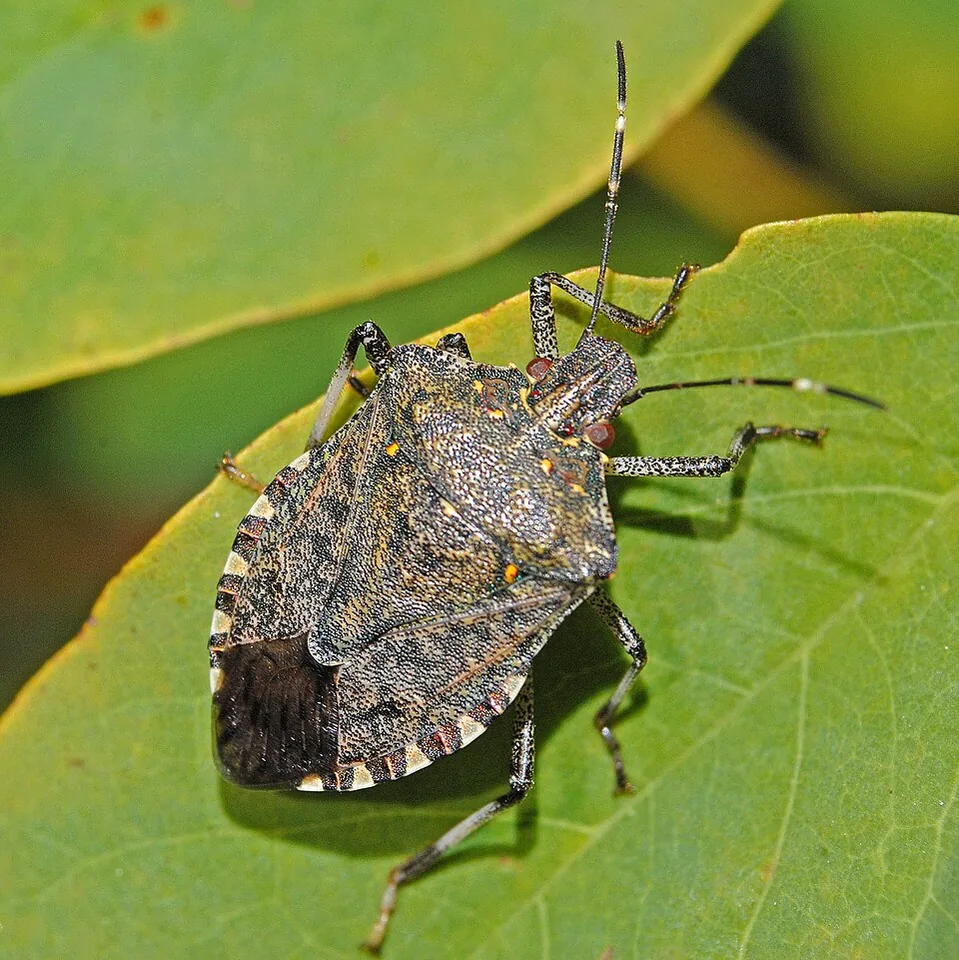
- Stink bugs are broadly shield-shaped; boxelder bugs are more elongated and black with red markings; lady beetles are rounded beetles with a central wing-cover seam.
- Timing and stages
- These common winter shelter-seekers arrive as adults. Their eggs and immature stages normally develop outside on host plants or among prey, rather than in a wall merely because adults are resting there.
- Pattern is not a complete identification
- Several native and beneficial bugs resemble the familiar invaders. A clear view of antennae, body outline and markings matters before an invasive-species report or garden treatment.
Look more closely
Compare the labeled examples and their limits. Images are independently enlarged, not shown at a common scale.
Identification limits & photo credit
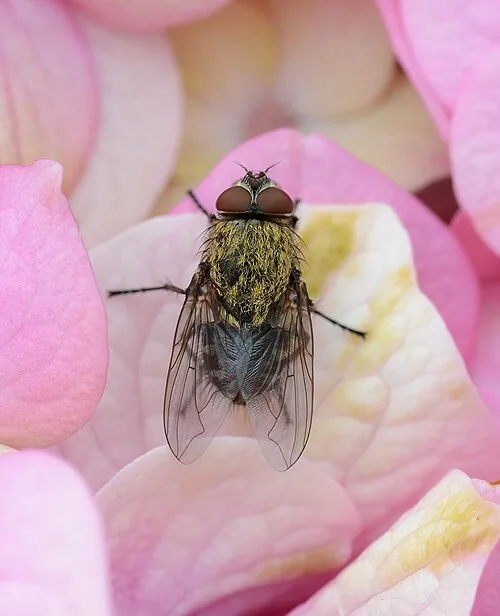
An adult photographed outside. Golden hairs can be worn or hard to see on a household specimen; an indoor fly is not automatically a cluster fly or evidence of indoor breeding.
Cluster fly on a flower. Photo: Alvesgaspar. CC BY-SA 3.0. Original source · CC BY-SA 3.0 & details
Identification limits & photo credit
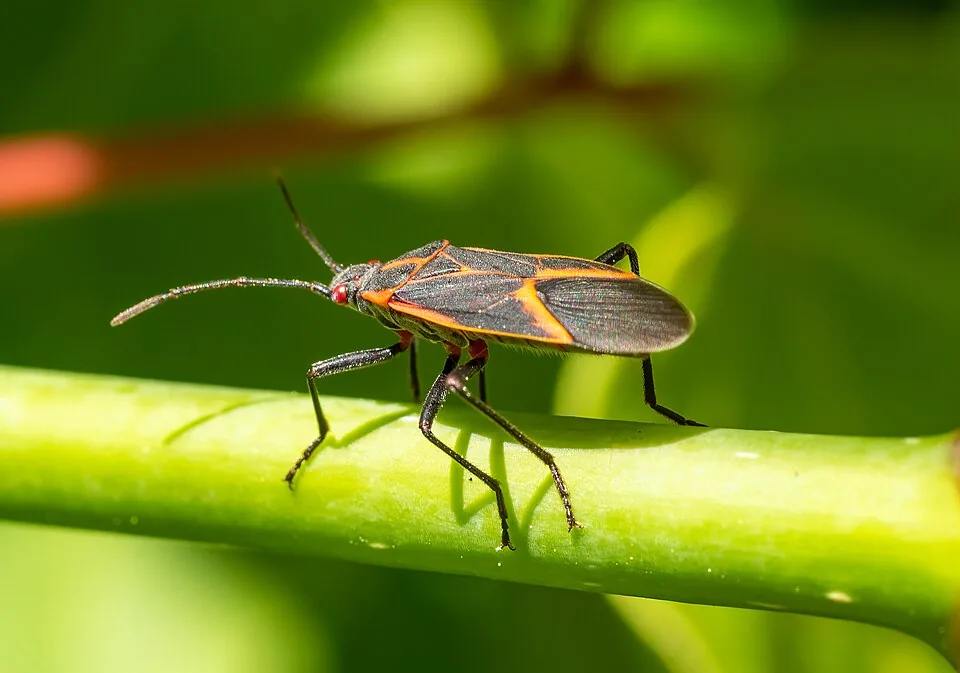
One adult photographed in New York. Nymphs are smaller, redder and lack full wings. Other red-and-black bugs require different identification; this image is not a key for all nuisance bugs.
Adult eastern boxelder bug. Photo: Rhododendrites. CC BY-SA 4.0. Original source · CC BY-SA 4.0 & details
Identification limits & photo credit
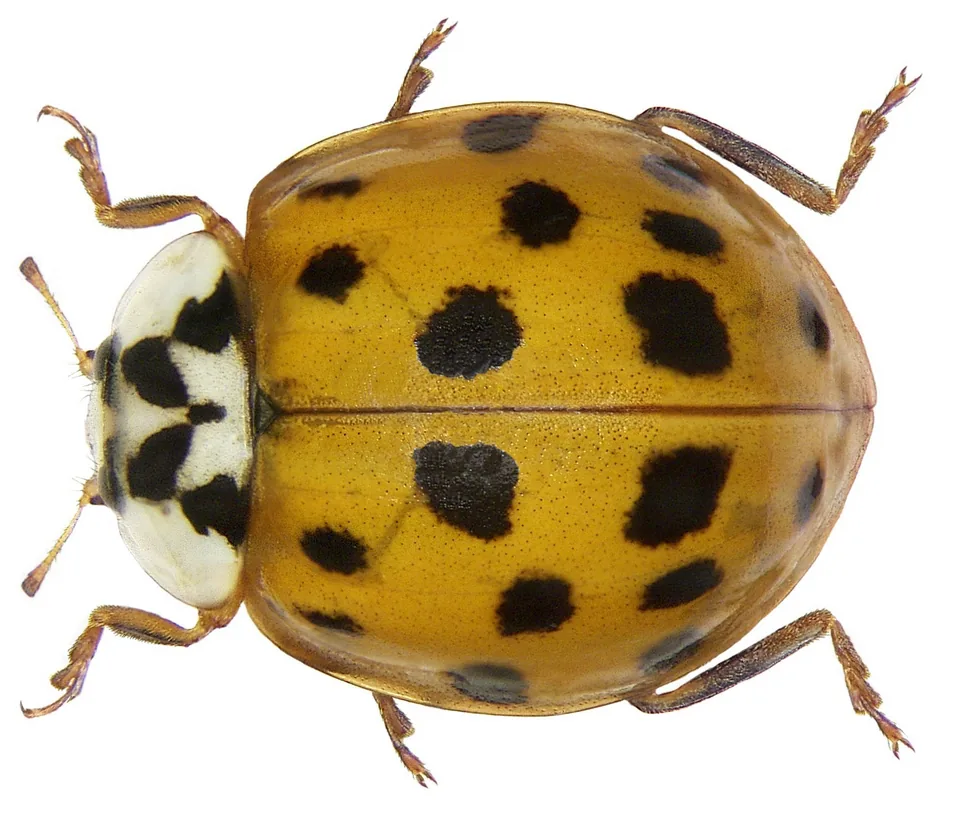
A preserved adult showing one color form. Spot number and color vary widely, and other lady beetles can resemble it. Do not identify this species from orange color alone.
Multicolored Asian lady beetle, dorsal specimen view. Photo: URSchmidt. CC BY-SA 4.0. Original source · CC BY-SA 4.0 & details
Sources for this section
University of Minnesota Extension · University of Minnesota Extension · University of Minnesota Extension
Differences that change the decision
A similar-looking organism can need a different response. Compare the evidence and what it changes.
Compare every column. On a narrow screen, scroll the table sideways.
| Type | What to check | What changes |
|---|---|---|
| Brown marmorated stink bug | Adults have mottled brown shields and alternating light and dark markings on the antennae and abdomen edge. Younger stages look different. | Indoors, use physical removal and exclusion. Outdoors, assess actual plant injury separately and follow local reporting guidance where the species is monitored. |
| Other stink bugs | Some similar shield bugs are plant feeders; others are predators. | Do not identify all brown shield-shaped insects as the invasive species. Ask extension about a clear specimen if the distinction changes action. |
| Boxelder bugs | Adults show red lines on a dark body; young are red with developing dark wing pads. Outdoor populations are associated with suitable seed-producing trees. | A house entry problem generally needs sealing and removal, not automatic tree removal. Check the outside congregation and entry route. |
| Multicolored Asian lady beetles | Harmonia axyridis varies in color and spot count; many have a pale area with a dark M-like pattern behind the head. | They are beneficial predators outside but may cluster indoors. Avoid crushing because defensive secretions can stain; a few may pinch or contribute to allergy symptoms. |
| Other lady beetles | Numerous species share a rounded shape, with variable colors and spots. | Keep beneficial beetles in the garden. Indoor aggregation and a good photograph are more useful than assuming every spotted beetle is the Asian species. |
Sources for this section
University of Minnesota Extension · University of Minnesota Extension · University of Minnesota Extension
What else could it be?
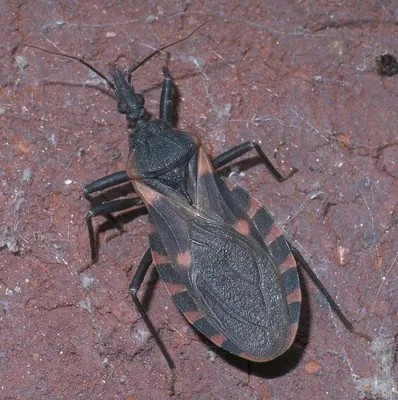
Kissing bugs
Generally more elongated with a distinct narrow head and different feeding-beak structure. Do not handle a suspected specimen or identify it solely by red edges.
Compare kissing bugsCockroaches
A different flattened body, long antennae and life-stage evidence require a separate indoor source inspection.
Carpet beetles
Small beetles with fabric-associated larvae require different checks; rounded adult shape alone does not establish a lady beetle.
Sources for this section
University of Minnesota Extension · Texas A&M University Kissing Bug Research
Inspect the right places
Find the outer route
Watch which sunny wall, frame or soffit has arriving adults. Inspect accessible screen edges, door seals and service gaps. Do not climb or open a wall merely to pursue a few insects.
Check what is actually inside
Record live adults by room and date. An adult emerging from a void during warm weather can be an earlier arrival; repeated juvenile stages or another kind of damage should prompt renewed identification.
If plants are damaged
Photograph the feeding insects and fresh injury on the specific host. Do not use a winter house sighting as proof of what damaged fruit in summer.
Sources for this section
University of Minnesota Extension · University of Minnesota Extension · University of Minnesota Extension
Choose a proportionate response
For pesticides, the local product label determines the allowed pest, site, precautions and timing. Check safety and regional guidance.
Remove without crushing
Collect with a container or vacuum, considering odor and staining when choosing equipment. Empty or contain the collected insects so they cannot crawl back into the living space.
Repair before the next entry period
Use durable weather seals, repaired screens and appropriate gap repairs before local seasonal movement begins. Preserve required vents and drainage openings with suitable screening or professional repairs.
Coordinate a severe influx
For repeated large numbers, ask a qualified professional to identify entry routes and explain timing and any narrowly targeted exterior work. A treatment after insects are hidden in wall voids may offer little benefit.
Use a separate garden decision
Brown marmorated stink bugs can damage crops; lady beetles often consume pests. Confirm the species, host and present injury before considering a plant treatment.
Sources for this section
University of Minnesota Extension · University of Minnesota Extension · University of Minnesota Extension
Avoid these mistakes
- Do not crush visitors against curtains, paint or furnishings if staining or odor is a concern.
- Do not interpret every warm-day emergence as a new indoor generation.
- Do not expect indoor fogging or repeated room spraying to repair outside entry routes.
- Do not cut down a healthy host tree solely because boxelder bugs entered a building; nearby sources and openings can remain.
Sources for this section
University of Minnesota Extension · University of Minnesota Extension
Check whether it is working
Editorial suggestion: note sightings and the affected side of the building during the local entry season and occasional warm winter days. Recheck repaired gaps before the next seasonal movement.
Fewer new arrivals follow exclusion, and existing sheltered adults gradually emerge or disappear. An immediately insect-free house cannot be promised while earlier arrivals remain in inaccessible voids.
Get help when…
- A recurring large influx or difficult roof-level entry needs building or pest-professional assessment.
- An unfamiliar shield bug in an area monitoring an invasive species should be submitted through the local reporting route.
- Persistent allergy symptoms deserve medical advice; their cause should not be assumed from a beetle sighting.
Sources for this section
University of Minnesota Extension · University of Minnesota Extension · University of Minnesota Extension
Prevent a return
- Inspect and repair the building envelope before adult shelter-seeking begins locally.
- Maintain screens and door sweeps, including little-used upper-floor windows.
- Keep source and entry records so the next repair targets the actual route.
Sources for this section
Common questions
Are they eating the house while inside?
The common overwintering adults described here are sheltering, not feeding on structural wood. If you see wood damage, investigate it separately.
Are all lady beetles household pests?
No. Many are useful predators, and even Asian lady beetles feed on plant pests outdoors. The household concern is unwanted aggregation, staining and occasional irritation.
Sources for this section
University of Minnesota Extension · University of Minnesota Extension
Sources & scope
References retain their geography and dates. A source-check date is not a claim of independent specialist review.
- Brown Marmorated Stink Bug
University of Minnesota Extension. Minnesota identification, home shelter and plant damage; local reporting rules and range differ. Checked 2026-10-15.
- Boxelder Bugs
University of Minnesota Extension. Minnesota seasonal biology, host association and exclusion. Checked 2026-10-15.
- Multicolored Asian Lady Beetles
University of Minnesota Extension. Minnesota beneficial role, overwintering nuisance, staining and management; reviewed 2026. Checked 2026-10-15.
- Kissing Bug Identification Sheet
Texas A&M University Kissing Bug Research. US distinction from boxelder and other lookalike bugs. Checked 2026-10-15.
Individual medical or veterinary diagnosis, structural assessment, uncertain species identification and local treatment permissions require the appropriate professional. About our editorial process.
Keep investigating
Kissing Bugs
Photograph a suspected kissing bug and keep it safely contained if this can be done without contact.
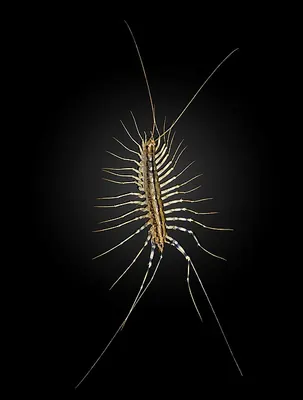
Moisture-loving visitors
These sightings often point to moisture, outdoor shelter or available prey rather than damage to the home.
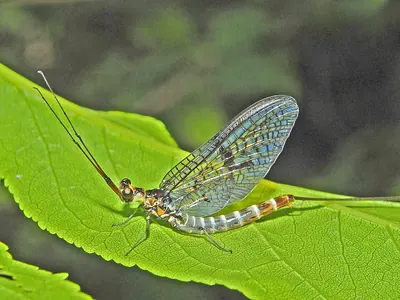
Seasonal flyers
Many insects gathering at lights developed in nearby water or soil and are not breeding inside the house.