
Contain without touching
Avoid bare-hand contact and crushing the bug. If safe, use a container or bag without handling it directly, close securely, and keep it away from people and pets. Wash hands and clean contacted surfaces as advised by the submission service.
Sources for this section
Texas A&M University Kissing Bug Research · Texas A&M University Kissing Bug Research · US CDC
Recognize the signs
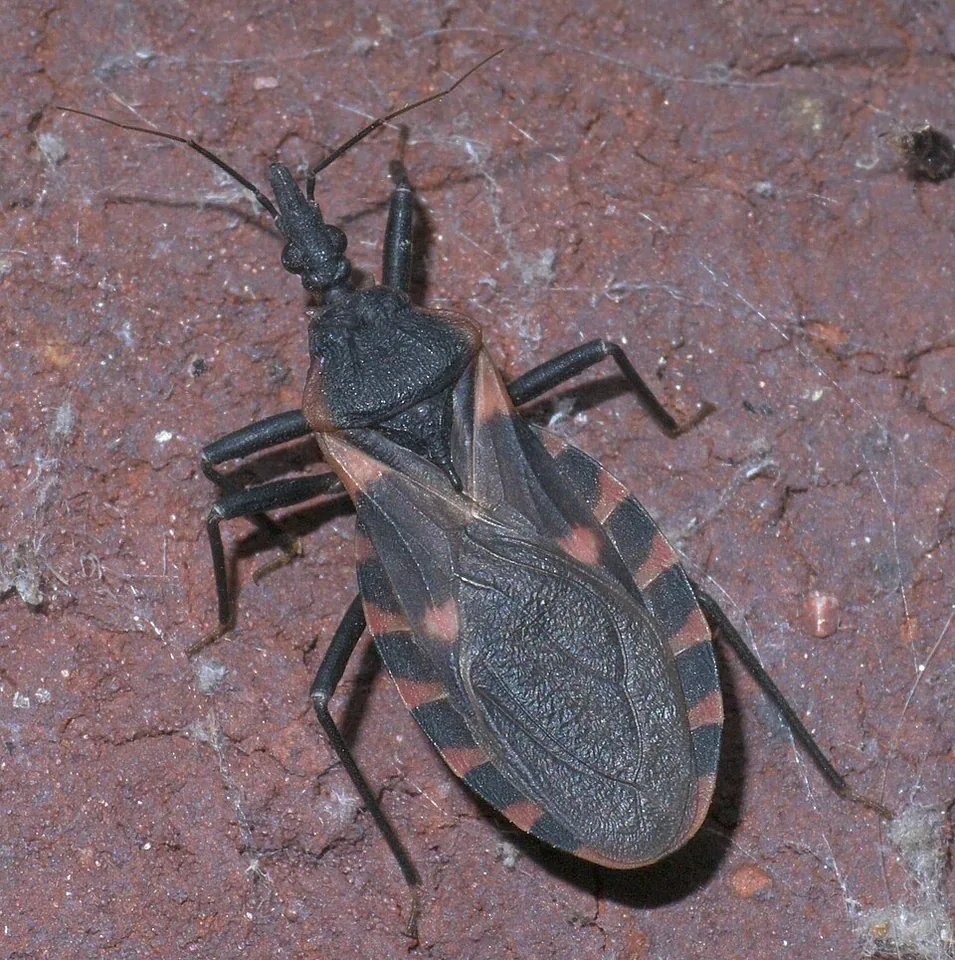
- Adult anatomy
- Kissing bugs have an elongated body and cone-like head, with a narrow feeding beak folded underneath. Many US species have pale, orange or reddish markings along the exposed abdomen edge, but color patterns vary.
- Immature stages
- Nymphs are wingless and develop through several molts before adulthood. Both nymphs and adults feed on blood; a wingless individual should not be excluded simply because the reference shows an adult.
- Evidence limits
- A photograph of a bite, a red-edged insect or a black speck cannot establish a triatomine. Clear photographs of the entire bug, including the head and legs, are more useful.
Look more closely
Compare the labeled examples and their limits. Images are independently enlarged, not shown at a common scale.
Identification limits & photo credit
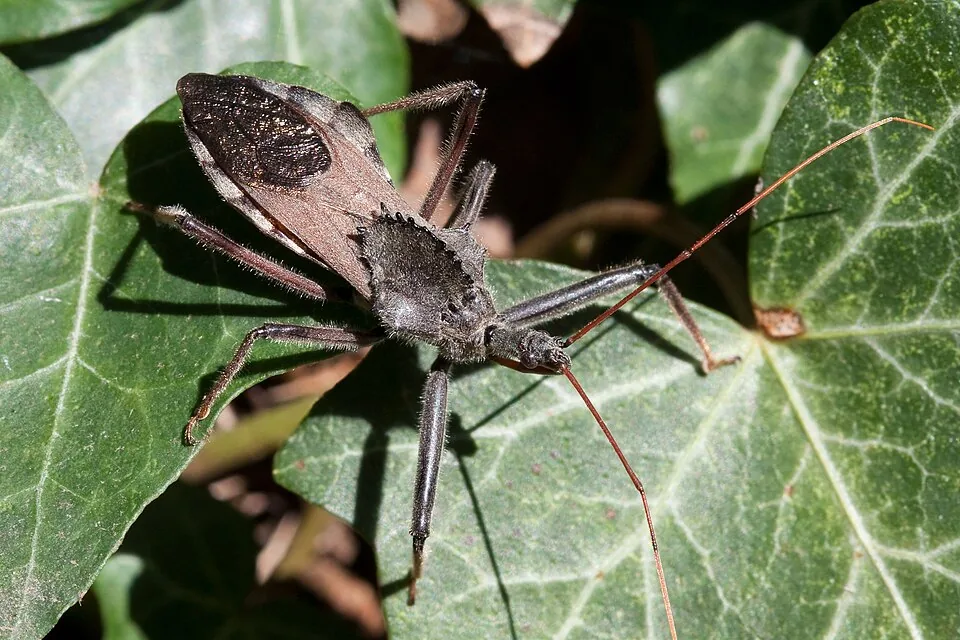
Adult wheel bug showing its raised coglike crest. Wheel-bug nymphs lack this adult crest. This predatory assassin bug is a lookalike, not a triatomine; do not handle either group.
Adult wheel bug, a kissing-bug lookalike. Photo: Ryan Kaldari. Public domain. Original source · Public domain & details
Sources for this section
Differences that change the decision
A similar-looking organism can need a different response. Compare the evidence and what it changes.
Compare every column. On a narrow screen, scroll the table sideways.
| Type | What to check | What changes |
|---|---|---|
| Triatoma gerstaeckeri and T. sanguisuga | These are among the species encountered in parts of the US, with overlapping general coloration. | Use a local diagnostic service rather than making a species decision from abdominal bands alone. Record the actual location. |
| Triatoma protracta and other triatomines | Some look more uniformly brown and lack the conspicuous color expected from popular photographs. | Absence of orange bands does not rule the group out. Geography and detailed morphology guide confirmation. |
| Wheel bugs and other predatory assassin bugs | An adult wheel bug has a conspicuous cog-like crest; many predators have a stout curved beak. Some immature predators look different from adults. | These consume other arthropods and are not equivalent to kissing bugs. Avoid handling because a defensive bite is possible. |
| Masked hunter | Dust-covered nymphs can look like moving debris; adults are dark predatory assassin bugs. | Do not assume a dusty indoor nymph is a blood-feeding kissing bug. Identification may instead lead to an ordinary prey and entry investigation. |
Sources for this section
Texas A&M University Kissing Bug Research · Texas A&M University Kissing Bug Research · Penn State Extension
What else could it be?
Leaf-footed bugs
Some have expanded, leaf-like sections on the hind legs and feed on plants. Other members lack prominent expansions, so inspect the whole insect.
Boxelder bugs
Black-and-red seasonal visitors have a different body and head pattern; many gather near windows without feeding on people.
Compare overwintering insectsStink bugs
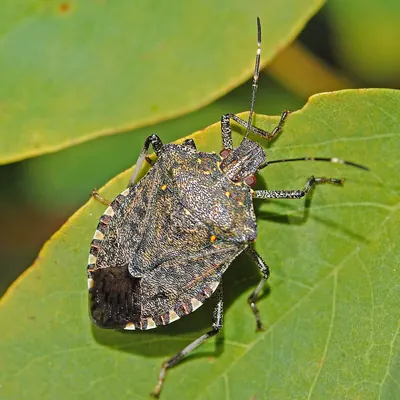
Usually broader and shield-shaped. A dark insect indoors is not sufficient evidence of kissing bugs.
Compare overwintering insectsSources for this section
Inspect the right places
Save the context
Note date, exact place found, indoor or outdoor location and proximity to a sleeping person or animal. Photograph through a closed container if possible. Follow the receiving laboratory or health department's specimen instructions.
Check sleeping and animal areas
Inspect screens, exterior gaps, nearby resting animals and outdoor kennel surroundings. Do not dismantle wildlife nests or create a bite risk while looking for a source.
Separate sighting from contact
Tell the clinician or public-health service whether a bite was witnessed, an insect was crushed, or material may have touched an eye, mouth or broken skin. Finding one outside does not establish human infection.
Sources for this section
Texas A&M University Kissing Bug Research · Texas A&M University Kissing Bug Research
Choose a proportionate response
For pesticides, the local product label determines the allowed pest, site, precautions and timing. Check safety and regional guidance.
Contain without touching
Avoid bare-hand contact and crushing the bug. If safe, use a container or bag without handling it directly, close securely, and keep it away from people and pets. Wash hands and clean contacted surfaces as advised by the submission service.
Get identification and exposure advice
Contact local public health, extension or an accepted diagnostic program. Ask a clinician about relevant exposure or symptoms; a bug's infection result cannot diagnose or clear a person.
Protect animals
Prevent pets from playing with or eating the insect. A veterinarian should assess a possible animal exposure, particularly around kennels; do not give a human medicine or a home pesticide remedy.
Reduce access
Repair screens and appropriate gaps, reduce clutter and animal resting opportunities immediately against the home, and adjust unnecessary lights near entrances. Use qualified pest help for repeated or confirmed indoor activity.
Sources for this section
Texas A&M University Kissing Bug Research · Texas A&M University Kissing Bug Research · US CDC
Avoid these mistakes
- Do not squeeze the insect on skin or handle it to examine the beak.
- Do not assume Chagas disease is injected with every kissing-bug bite. A key route is infected fecal material entering a wound or mucous membrane.
- Do not treat a positive bug test as proof that a person or pet is infected, or a negative result as a complete exposure assessment.
- Do not use a universal geographic reassurance; travel, residence and individual exposure history matter.
Sources for this section
Texas A&M University Kissing Bug Research · Texas A&M University Kissing Bug Research · US CDC
Check whether it is working
Editorial suggestion: record each confirmed or suspected insect and the identification result, preserving dates and location. Follow clinical advice for testing or symptoms; there is no household observation period that rules out infection.
Identification clarifies whether triatomine-specific action is needed, and exclusion reduces repeated entry. Human or animal health questions require the respective clinician or veterinarian, not a pest-count threshold.
Get help when…
- Possible contact with insect fecal material, relevant illness or concern after exposure warrants clinical/public-health advice.
- A severe allergic reaction or breathing difficulty after any bite requires emergency care.
- Repeated indoor triatomines, nymphs in sleeping areas or kennel-associated activity warrants coordinated pest, veterinary and public-health assessment.
Sources for this section
Prevent a return
- Keep sleeping areas screened and doors fitted well.
- Manage clutter and animal shelter near the building while respecting wildlife protections.
- When travelling in affected regions, use current public-health advice for lodging and prevention.
Sources for this section
Common questions
Does finding a kissing bug mean I have Chagas disease?
No. Disease diagnosis requires a healthcare assessment and appropriate tests. The insect finding is useful exposure information, not a diagnosis.
Why should I not crush it?
Avoiding direct contact limits exposure to material from the bug and preserves identification evidence. Use a securely closed container if safe, or keep a clear photograph and ask the receiving service what to do.
Sources for this section
Texas A&M University Kissing Bug Research · Texas A&M University Kissing Bug Research · US CDC
Sources & scope
References retain their geography and dates. A source-check date is not a claim of independent specialist review.
- Kissing Bug Identification Sheet
Texas A&M University Kissing Bug Research. US triatomine and lookalike anatomy; regional species vary. Checked 2026-10-15.
- Frequently Asked Questions
Texas A&M University Kissing Bug Research. US research context, exposure routes and animal concerns; not individual clinical diagnosis. Checked 2026-10-15.
- Kissing Bugs and Chagas Disease
Texas A&M University Kissing Bug Research. US specimen precautions and household prevention. Checked 2026-10-15.
- About Chagas Disease
US CDC. Disease biology, international context and clinical diagnosis; individual testing belongs to healthcare professionals. Checked 2026-10-15.
- Masked Hunter
Penn State Extension. Pennsylvania predatory lookalike and life-stage differences. Checked 2026-10-15.
- Anaphylaxis
UK NHS. Emergency symptom recognition; local emergency services apply. Checked 2026-10-15.
Individual medical or veterinary diagnosis, structural assessment, uncertain species identification and local treatment permissions require the appropriate professional. About our editorial process.
Keep investigating
Overwintering insects
Seasonal clusters at a sunny wall or window often involve adults seeking shelter.
Bed Bugs
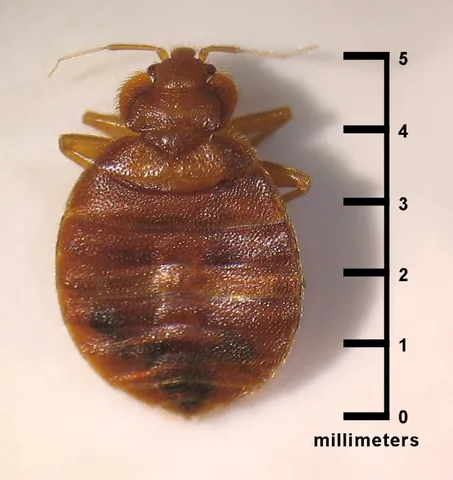
Start with a specimen or physical evidence near a sleeping place.
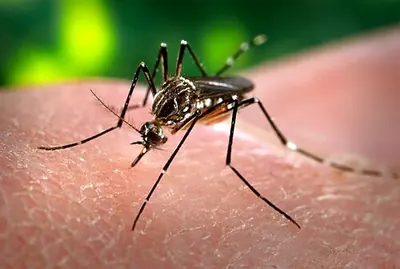
Mosquitoes
Start with water-holding containers and protection from bites.