
Break the local cycle
Promptly collect affected and fallen fruit. For spotted wing drosophila, do not put infested fruit in an open home compost where larvae may survive; use locally recommended contained disposal.
Sources for this section
UC Statewide IPM Program · University of Minnesota Extension · University of Minnesota Extension
Recognize the signs
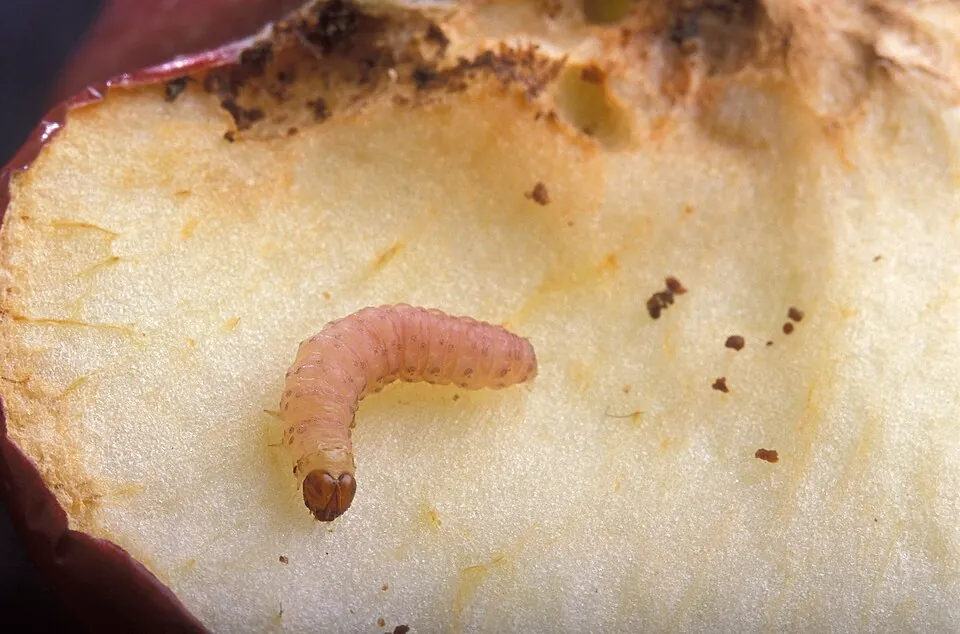
- Inside the fruit
- Photograph the entry point, tunnel or soft area before cutting a sample. Record whether fruit was intact and ripening or already damaged and fermenting.
- Larva
- A maggot lacks obvious legs; a caterpillar has a distinct head and legs visible under magnification. A small white larva alone rarely establishes species.
Sources for this section
UC Statewide IPM Program · University of Minnesota Extension
Differences that change the decision
A similar-looking organism can need a different response. Compare the evidence and what it changes.
Compare every column. On a narrow screen, scroll the table sideways.
| Type | What to check | What changes |
|---|---|---|
| Codling moth | Caterpillars tunnel toward the core of apples and pears; frass may mark the entry. | Remove infested and fallen fruit promptly. Protect clean young fruit before entry; local flight timing matters. |
| Apple maggot | Fly larvae tunnel through apple flesh; dimples and internal breakdown may follow egg laying. | Bagging or appropriate netting and removal of fallen fruit can help. Monitoring flies requires identification against similar species. |
| Spotted wing drosophila | Can lay eggs in intact ripening thin-skinned fruit such as berries and cherries; males have a dark wing spot, females do not. | Harvest frequently, remove infested or overripe fruit and consider exclusion after pollination. A male wing spot is not a test for every fly present. |
| Ordinary vinegar flies | Often associated with damaged, fermenting fruit rather than a newly attacked intact crop. | Remove decaying sources; do not automatically label every kitchen or garden fruit fly as spotted wing drosophila. |
| Tomato fruitworm | A caterpillar can make a messy cavity within tomato fruit. | Inspect the entry and larva; fruit-feeding treatment differs from managing a leaf-chewing hornworm. |
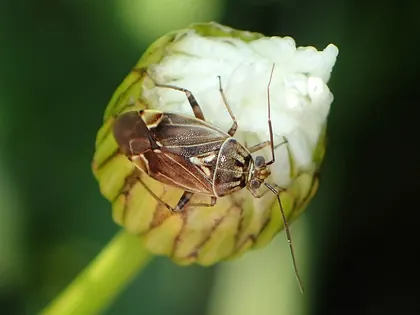
What else could it be?
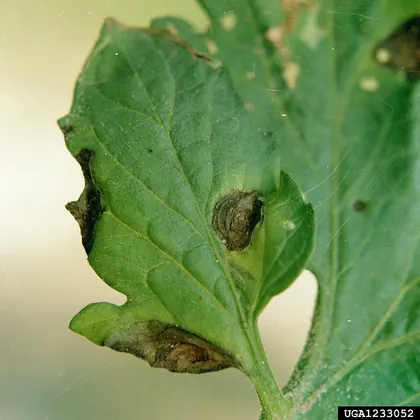
Cracking, rot and pollination disorders
Damaged fruit can attract insects secondarily; investigate the original cause.
Compare plant disease & stressSources for this section
Inspect the right places
Sample several fruit
Check intact ripening fruit, damaged fruit and drops separately. Keep observations tied to host and date; do not move suspect regulated fruit off-site without advice.
Use monitoring purposefully
Pheromone or visual traps target particular adults. Catches guide inspection or local timing decisions; a trap does not remove larvae already inside fruit.
Sources for this section
UC Statewide IPM Program · University of Minnesota Extension
Choose a proportionate response
For pesticides, the local product label determines the allowed pest, site, precautions and timing. Check safety and regional guidance.
Break the local cycle
Promptly collect affected and fallen fruit. For spotted wing drosophila, do not put infested fruit in an open home compost where larvae may survive; use locally recommended contained disposal.
Exclude at the correct time
Bag sound young apples or use suitable insect netting where practical. Provide pollination first, close gaps, and account for pest stages already within the enclosure.
Plan before the next entry period
Once larvae are protected inside fruit, rescue options are limited. Use local extension guidance for species, adult activity, susceptible fruit stage and any legally labelled treatment.
Sources for this section
UC Statewide IPM Program · University of Minnesota Extension · University of Minnesota Extension
Avoid these mistakes
- Do not assume a common fly trap eradicates an orchard pest.
- Do not spray near harvest without checking the specific crop label and required harvest interval.
- Do not move unusual infested fruit to a new area to ask for identification.
Sources for this section
UC Statewide IPM Program · US Environmental Protection Agency
Check whether it is working
UMN recommends checking spotted-wing-drosophila traps once or twice weekly, more often as fruit ripens. Harvest and sanitation should track ripening; other trap checks and treatment timing follow local species guidance.
A declining share of newly sampled fruit is infested, and protective bags or netting remain intact. Old infested fruit will not recover.
Get help when…
- Persistent losses or uncertain larvae: local fruit-crop adviser or diagnostic service.
- Possible exotic fruit fly or pest outside local known distribution: plant-health authority.
Sources for this section
Prevent a return
- Harvest promptly and clear fallen fruit throughout the susceptible period.
- Plan fruit bags, netting and crop sanitation before fruit becomes vulnerable.
Sources for this section
UC Statewide IPM Program · University of Minnesota Extension · University of Minnesota Extension
Common questions
Why are there larvae despite trapping adults?
Traps may monitor rather than control, attract only one sex, or miss immigrants. Eggs or larvae can already be in the fruit.
Do all maggots in berries mean spotted wing drosophila?
No. Host, fruit condition and adult identification are needed; other flies can use damaged fruit.
Sources for this section
UC Statewide IPM Program · University of Minnesota Extension · University of Kentucky Extension Entomology
Sources & scope
References retain their geography and dates. A source-check date is not a claim of independent specialist review.
- Codling Moth
UC Statewide IPM Program. California, United States; biology may transfer, management timing and permitted products require local verification; source check, not expert review Checked 2026-10-15.
- Apple maggot
University of Minnesota Extension. Minnesota, United States; season dates and field thresholds are not universal; source date reviewed 2026; source check, not expert review Checked 2026-10-15.
- Spotted wing drosophila
University of Minnesota Extension. Minnesota, United States; season dates and field thresholds are not universal; source check, not expert review Checked 2026-10-15.
- Tomato Fruitworm
UC Statewide IPM Program. California agriculture; used for identification and damage, not commercial pesticide prescriptions; source check, not expert review Checked 2026-10-15.
- Fruit Flies
University of Kentucky Extension Entomology. Kentucky, United States; nonchemical principles more widely applicable; source date 2026-03; source check, not expert review Checked 2026-10-15.
- Diagnosing Plant Problems
Virginia Cooperative Extension. Virginia, United States; general diagnostic method; source date 2023-11 review; source check, not expert review Checked 2026-10-15.
- Do's and Don'ts of Pest Control
US Environmental Protection Agency. United States; source check, not expert review Checked 2026-10-15.
Individual medical or veterinary diagnosis, structural assessment, uncertain species identification and local treatment permissions require the appropriate professional. About our editorial process.
Keep investigating
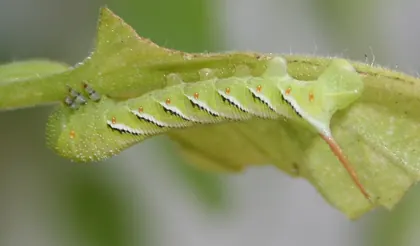
Caterpillars
Find the larva, its waste and its feeding site before acting on holes.
Plant bugs & leafhoppers
Start with the host and the insect, not a pale spot or wilted leaf.
Plant disease & stress
Start with the plant, the pattern and its growing conditions.