
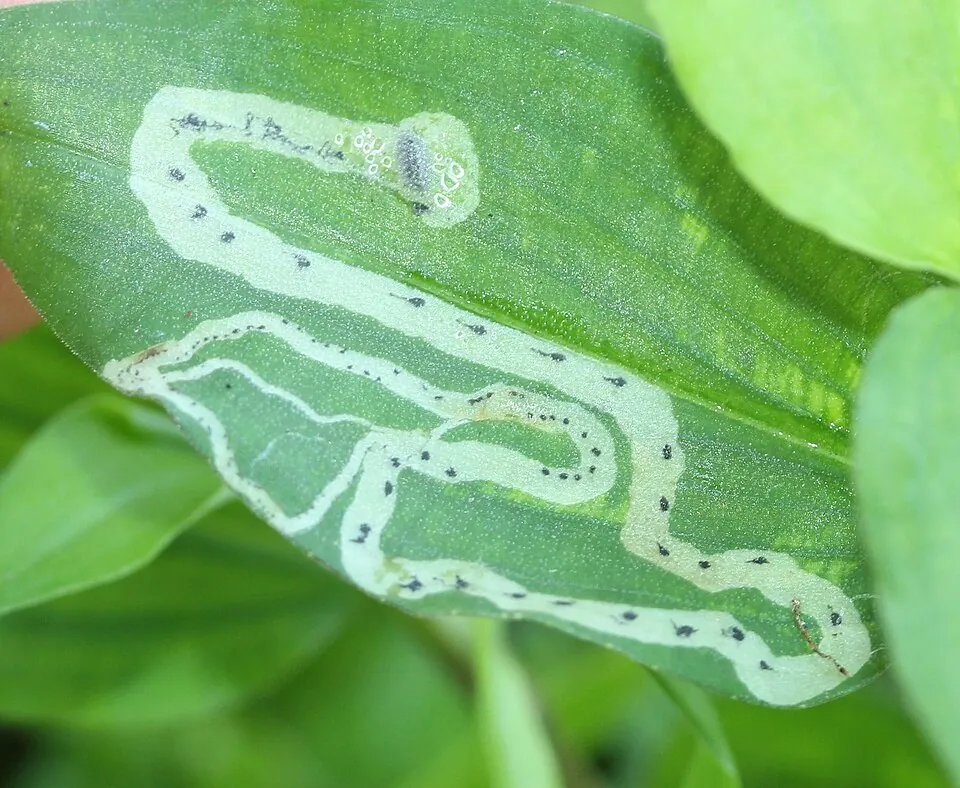
Remove a limited active source
Pick off a few occupied leaves while preserving enough foliage for growth. Do not strip an established plant just to remove old marks.
Sources for this section
UC Statewide IPM Program · University of Minnesota Extension · UC Statewide IPM Program
Recognize the signs
- Mines
- Winding trails or expanding pale blotches within a leaf can contain a larva and dark waste. Damage is inside tissue rather than an open chewed hole.
- Activity
- Hold a leaf to the light and look for a live occupant. An empty mine will remain visible after the insect leaves.
Sources for this section
Differences that change the decision
A similar-looking organism can need a different response. Compare the evidence and what it changes.
Compare every column. On a narrow screen, scroll the table sideways.
| Type | What to check | What changes |
|---|---|---|
| Serpentine vegetable leafminers | Liriomyza fly larvae make narrow, winding mines on many vegetables. | Small plants and crops harvested for leaves merit closer attention than a mature plant with limited mined foliage. |
| Spinach and beet leafminers | Pegomya larvae create broader blotches in spinach, chard, beets and related hosts. | Protect the edible leaf crop early; a beet grown for its root can tolerate some leaf injury. |
| Woody-plant foliage miners | Mines on particular trees or shrubs can come from different flies, moths or other insects. | Host identity and mine shape narrow the search. Do not apply vegetable advice to a tree without identifying the miner. |
Sources for this section
UC Statewide IPM Program · University of Minnesota Extension
What else could it be?
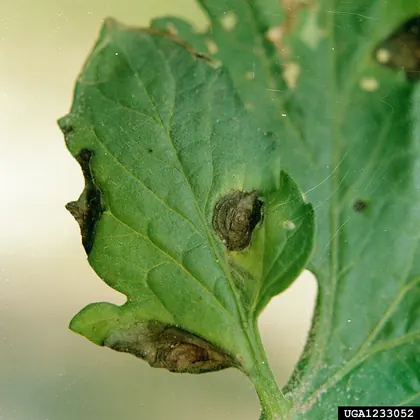
Leaf spots, scorching or physical abrasion
These do not form a tunnel containing a larva or waste, although damaged tissue can later break apart.
Compare plant disease & stress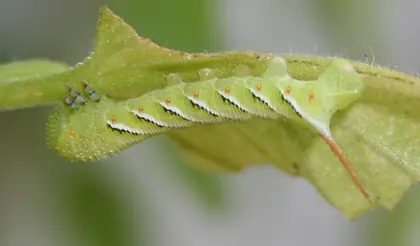
External caterpillars
Chewed holes, webbed leaves and exposed frass suggest feeding outside the leaf.
Compare caterpillarsSources for this section
Inspect the right places
Check whether the mine is occupied
Photograph the whole leaf, its underside and a backlit close-up; include the plant name and growth stage.
Review last year's bed
A cover can trap emerging miners beneath it if a susceptible crop or infested residue occupied the same soil previously.
Sources for this section
University of Minnesota Extension · Virginia Cooperative Extension
Choose a proportionate response
For pesticides, the local product label determines the allowed pest, site, precautions and timing. Check safety and regional guidance.
Remove a limited active source
Pick off a few occupied leaves while preserving enough foliage for growth. Do not strip an established plant just to remove old marks.
Exclude before infestation
Appropriate insect mesh or row cover can protect susceptible vegetables, provided pests are not already underneath. Account for heat and any crop pollination needs.
Keep natural control intact
Many miners are parasitised. Broad insecticides can remove those enemies while leaving larvae protected inside leaves; seek host-specific advice for serious damage.
Sources for this section
UC Statewide IPM Program · University of Minnesota Extension · UC Statewide IPM Program
Avoid these mistakes
- Do not treat every empty mine.
- Do not assume a sticky adult trap controls larvae within leaves.
- Do not expect a cover placed over an infested crop to remove insects already present.
Sources for this section
Check whether it is working
Suggested practice: revisit the same leaves and inspect newly expanded leaves at least weekly, more often on vulnerable seedlings or a rapidly affected leaf crop.
Fewer new occupied mines and adequate healthy growth; old trails do not heal.
Get help when…
- Repeated crop loss or uncertain tree/shrub miner: local extension or plant clinic.
- A new or unusual pest on imported plants: local plant-health authority before moving material.
Sources for this section
Prevent a return
- Inspect transplants and remove infested crop debris according to local advice.
- Rotate susceptible beds where practical and time protective covers before adult access.
Sources for this section
UC Statewide IPM Program · University of Minnesota Extension
Common questions
Are all mined leaves a reason to spray?
No. Plant age, live larvae, injury level and whether the leaf itself is harvested determine the useful response.
Why did leafminers appear under my net?
They may have entered before covering, through gaps, or emerged from infested material or soil already inside.
Sources for this section
Sources & scope
References retain their geography and dates. A source-check date is not a claim of independent specialist review.
- Vegetable Leafminers
UC Statewide IPM Program. California, United States; biology may transfer, management timing and permitted products require local verification; source check, not expert review Checked 2026-10-15.
- Leafminers
University of Minnesota Extension. Minnesota, United States; season dates and field thresholds are not universal; source check, not expert review Checked 2026-10-15.
- Biological Control and Natural Enemies of Invertebrates
UC Statewide IPM Program. California, United States; biology may transfer, management timing and permitted products require local verification; source check, not expert review Checked 2026-10-15.
- Diagnosing Plant Problems
Virginia Cooperative Extension. Virginia, United States; general diagnostic method; source date 2023-11 review; source check, not expert review Checked 2026-10-15.
Individual medical or veterinary diagnosis, structural assessment, uncertain species identification and local treatment permissions require the appropriate professional. About our editorial process.
Keep investigating
Caterpillars
Find the larva, its waste and its feeding site before acting on holes.
Plant disease & stress
Start with the plant, the pattern and its growing conditions.
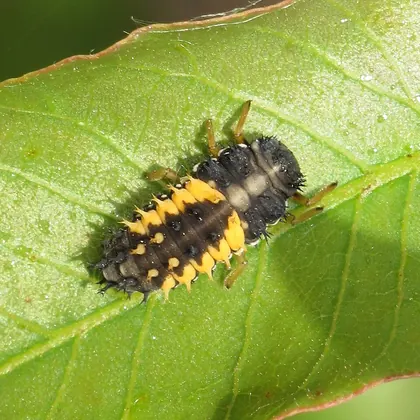
Beneficial Insects
Before removing an insect, check what it is eating and which life stage you are seeing.